
Decibels measure how loud sounds are, with lower levels like 30-50 dB being quiet and higher levels above 80 dB becoming disruptive. In your home office, understanding decibel levels helps you gauge whether background noises, such as traffic or household sounds, are tolerable or distracting. For example, a neighboring construction site peaking at 80 dB can interfere with concentration. Learning how to interpret these levels can help you create a more focused workspace—keep exploring to get more tips.
Key Takeaways
- Noise levels are measured in decibels (dB), with 50-60 dB typical for home offices.
- Sounds above 80 dB, like construction noise, can significantly disrupt concentration.
- Using a decibel meter helps assess if background noise is within acceptable limits.
- Soft furnishings and noise-canceling devices can reduce disruptive sound levels.
- Recognizing the sound frequency (high or low pitch) aids in identifying and managing distracting noises.

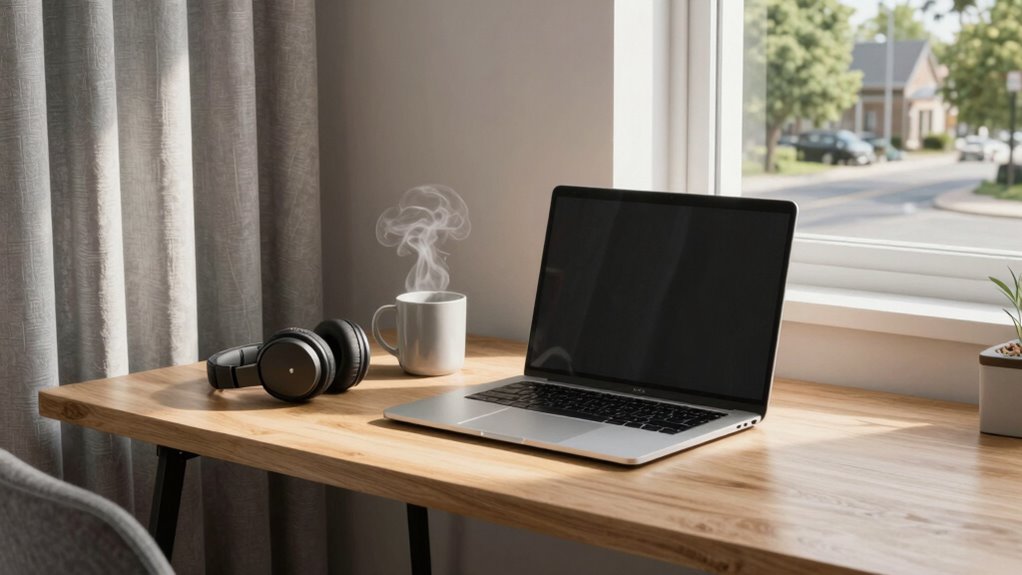
Have you ever wondered how we measure the loudness of sounds? It’s a question that taps into how we comprehend noise, especially in a home office setting where clarity matters. When we talk about loudness, we’re really referring to a sound’s intensity, but that’s just part of the story. The full picture involves understanding sound frequency and noise measurement. Sound frequency, which is measured in hertz (Hz), determines how high or low a sound is. For example, a dog’s bark has a different frequency than a whisper. When considering noise in your workspace, knowing the sound frequency can help you identify whether a noise is distracting or harmless. High-frequency sounds, like a ringing phone or a notification alert, can be sharp and intrusive, while low-frequency sounds, such as humming appliances, tend to be more constant and less disruptive. Noise measurement tools, like decibel meters, are designed to quantify how loud a sound is, providing a numerical value that helps you gauge whether a noise level might interfere with your focus or productivity. Additionally, understanding free floating noise can be crucial in environments where background sounds are unpredictable or inconsistent, impacting concentration. In your home office, noise measurement becomes an essential part of managing your environment. For instance, if your workspace is filled with background noise from traffic or household activities, understanding the decibel levels can help you decide whether you need soundproofing or a noise-canceling headset. It also helps you set realistic expectations for what’s tolerable. Sounds measured in decibels (dB) range from a quiet room at around 30 dB to a loud concert at over 100 dB. A typical home office might hover around 50-60 dB, which is moderate but can still be distracting if you’re trying to concentrate on detailed tasks. Noise measurement allows you to identify which sounds are within acceptable ranges and which ones might warrant action. For example, if the noise from a neighbor’s construction reaches 80 dB, that’s quite loud and could hinder your concentration, prompting you to seek solutions. Understanding sound frequency and noise measurement isn’t just about numbers; it’s about gaining control over your environment. When you recognize what levels and types of noise are problematic, you can implement strategies to reduce distraction, like adding soft furnishings to absorb sound or using noise-canceling devices. By paying attention to these factors, you’re better equipped to create a workspace that promotes focus and comfort. Ultimately, knowing how to interpret sound frequency and noise measurement empowers you to manage home office noise effectively, making your work-from-home experience more productive and less stressful.
Frequently Asked Questions
How Do Decibel Levels Differ Between Indoor and Outdoor Environments?
Indoor environments typically have lower decibel levels than outdoor ones due to sound insulation, which blocks noise pollution from outside sources. You’ll notice that outdoor decibel levels are higher because they’re exposed to more noise pollution, like traffic or construction. To keep your home office quiet, improve sound insulation, reducing external noise. Understanding these differences helps you create a more peaceful workspace, free from distracting outdoor sounds.
What Are Typical Decibel Ranges for Common Household Appliances?
You’ll find that household appliances typically produce decibel levels ranging from 40 to 80 dB. For effective noise mitigation, consider sound insulation strategies like sealing gaps and adding insulation to walls, especially around noisy appliances like dishwashers or vacuum cleaners. These measures help reduce indoor noise levels, making your home quieter and more comfortable. Understanding these decibel ranges aids in choosing appliances and implementing soundproofing for a peaceful environment.
How Do Decibels Relate to Perceived Loudness Across Different Frequencies?
Think of decibels as a painter’s palette, where different colors represent frequencies. Your ears are like art critics, more sensitive to certain hues—high or low frequencies. This frequency sensitivity influences loudness perception; a sound at the same decibel level can seem louder or softer depending on its pitch. So, your perception of loudness varies with frequency, making some noises seem more intense even at identical decibel levels.
Can Decibel Measurements Accurately Compare Noise Sources in Different Settings?
Decibel measurements can accurately compare noise sources if you guarantee proper sound level calibration and measurement accuracy. You need to use calibrated equipment and consistent procedures across different settings to get reliable results. Keep in mind that environmental factors and frequency responses can affect measurements, so always validate your tools and methods. This way, you can confidently assess and compare noise levels in various environments.
What Equipment Is Best for Measuring Home Office Noise Levels?
You should use sound level meters to measure your home office noise levels accurately. Look for noise measurement devices that are easy to operate and provide digital readings for precise results. A good sound level meter will help you identify loud spots and monitor changes over time. Choose a device with a wide measurement range and features like data logging to better understand and manage your workspace noise environment.
Conclusion
Understanding decibels helps you manage your home office noise better. Remember, silence isn’t always achievable, but controlling loud sounds makes a world of difference. Think of it like watering a plant—you don’t need to drown it, just give it enough to thrive. By paying attention to noise levels and making small adjustments, you create a focused workspace. After all, a little effort now pays off in productivity and peace of mind later.