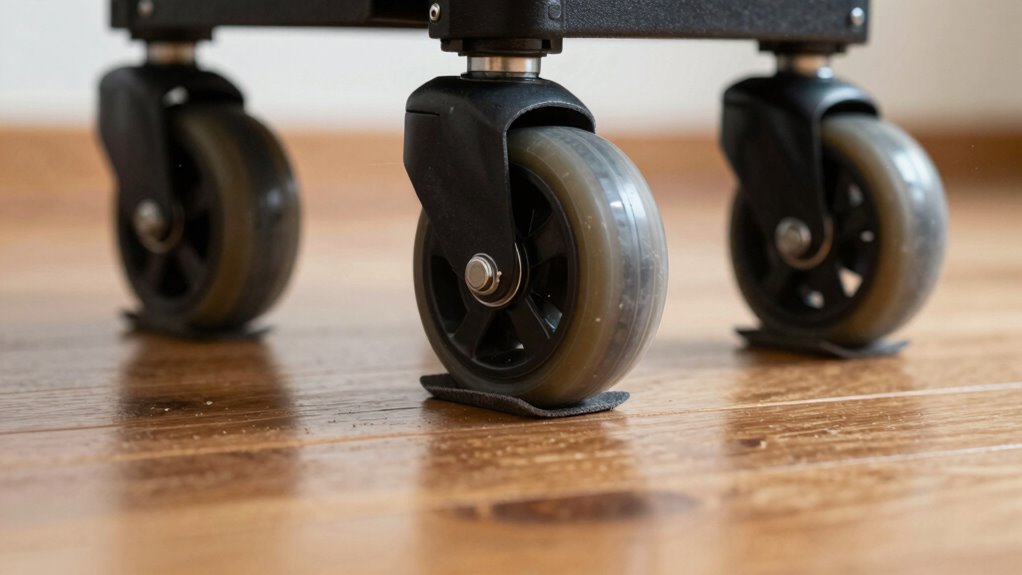

To stop floor damage and rolling frustration, choose wheels suited for your flooring type. Soft rubber or polyurethane wheels glide smoothly on hardwood, tile, or laminate, preventing scratches and dents. Larger or specialized wheels work better on carpets to avoid fiber damage. Proper wheel selection not only protects your floors but also improves mobility and reduces strain. Want to discover how to pick the best wheels for your space? Keep going to find out more.
Key Takeaways
- Use soft rubber or polyurethane wheels to reduce surface damage on hard floors.
- Select larger or specialized wheels to improve mobility and prevent carpet fiber damage.
- Avoid hard plastic or metal wheels that can scratch or dent delicate flooring surfaces.
- Consider anti-static and non-marking wheels for sensitive environments like labs or cleanrooms.
- Regularly inspect and replace worn wheels to maintain floor protection and smooth rolling.

Have you ever wondered how chair wheels can impact your floors? It’s a common question, especially if you’re tired of scuffed surfaces or the constant noise of wheels rolling across different flooring types. The truth is, the type of chair wheels you choose can make a significant difference in preserving your flooring materials and enhancing your overall workspace comfort. Ergonomic benefits also come into play here, as proper wheels can reduce strain on your body while promoting better posture and ease of movement. When selecting wheels, it’s essential to weigh the flooring materials in your environment. For example, hard floors like hardwood, tile, or laminate are more prone to scratches and dents caused by traditional plastic or metal wheels. In contrast, carpeted surfaces generally tolerate wheels better but can still suffer from indentations or debris buildup that hampers mobility. Understanding these nuances helps you choose the right wheels that will protect your floors while supporting your ergonomic needs. Additionally, selecting appropriate wheel materials can significantly extend the lifespan of your flooring and improve overall workspace efficiency.
Soft rubber or polyurethane wheels are excellent options for hard flooring materials because they distribute weight more evenly and minimize surface damage. These wheels are designed to glide smoothly without scratching or gouging delicate surfaces, which is especially important if you want to maintain a pristine look over time. Additionally, softer wheels tend to produce less noise, creating a quieter, more comfortable workspace. On the other hand, if your floors are primarily carpeted, you might opt for wheels with larger diameters or specialized tread patterns that prevent digging into the fibers or leaving marks. This choice helps improve mobility and reduces the effort needed to roll your chair around. Some advanced wheel designs even feature anti-static or non-marking properties, which are beneficial in sensitive environments like laboratories or cleanrooms.
Choosing the right chair wheels not only preserves your flooring but also enhances your ergonomic benefits by making movement easier and less tiring. When wheels glide smoothly and effortlessly, you’re less likely to strain your back or shoulders as you shift positions or reach for items around your workspace. Proper wheels also reduce the need for excessive force, which can lead to discomfort or injury over time. Investing in quality, floor-appropriate wheels can transform your workspace into a safer, more efficient environment. It’s a small change with a big impact—protecting your floors and promoting better ergonomics simultaneously. So, next time you’re considering your office setup, give some thought to the wheels under your chair. The right choice can save you money, extend the life of your flooring materials, and make your daily work routine more comfortable and productive.
Frequently Asked Questions
What Types of Floor Surfaces Are Most Vulnerable to Chair Wheel Damage?
You should watch out for hardwood floors and carpets, as they’re most vulnerable to chair wheel damage. Hardwood scratches easily due to high friction, especially if your wheels aren’t smooth or protective. Carpets face wear and tear from constant rolling, causing friction that can lead to fraying or indentations. To protect these surfaces, consider using wheel mats or switching to softer, rubberized wheels that reduce friction and prevent damage.
How Can I Identify Worn-Out or Damaged Chair Wheels?
You can tell if your chair wheels are worn out or damaged by inspecting them closely for flat spots, cracks, or excessive wobbling. When you notice rough rolling or difficulty moving, it’s time for wheel replacement. Regularly check for debris that might cause damage, and use floor protection mats to reduce wear. Keeping an eye on these signs guarantees smooth movement and helps prevent floor damage.
Are There Eco-Friendly or Sustainable Options for Chair Wheels?
Yes, you can choose eco-friendly chair wheels made from biodegradable materials or recycled options. These wheels help reduce environmental impact while providing durability. Look for products labeled as biodegradable or made from recycled plastics and metals. Switching to sustainable wheels not only supports eco-conscious practices but also minimizes waste and promotes greener office or home environments. Making this choice aligns with your commitment to sustainability without sacrificing functionality.
What Is the Average Lifespan of High-Quality Chair Wheels?
You can expect high-quality chair wheels to last around 1 to 3 years, depending on usage and wheel material choices. Opt for ergonomic benefits by choosing wheels made from durable materials like polyurethane or rubber, which resist wear and floor damage. Regular maintenance and avoiding rough surfaces can extend their lifespan, ensuring smooth rolling and protecting your floors while supporting your comfort and productivity.
How Do I Properly Maintain and Clean Chair Wheels to Prevent Damage?
You’d think maintaining chair wheels is rocket science, but just a bit of regular cleaning and inspection does the trick. Remove debris from cushioning materials and guarantee the wheels spin smoothly to avoid damage. Keep the ergonomic design intact by avoiding harsh chemicals. A quick wipe with a damp cloth and occasional lubrication can extend their life, preventing costly replacements and keeping your workspace rolling smoothly.
Conclusion
By choosing the right chair wheels and taking care of your floors, you can avoid costly damages and frustrating rolling rage. Remember, it’s like steering a vintage car through a cobblestone street—smooth wheels make the ride enjoyable, while the wrong ones turn every move into a battle. So, don’t wait for your floors to cry out for help. Act now, embrace the upgrade, and keep your workspace rolling effortlessly—just like a well-oiled machine.