

OCR transforms your scanned documents from static images into dynamic, searchable, and editable data. It automatically extracts key information, making it easy to find, analyze, and integrate into workflows. This shifts their value from mere images to powerful digital assets that boost efficiency, accuracy, and automation. As a result, you can access insights and streamline processes more effectively. Explore further to discover how OCR truly revolutionizes the way you handle documents.

Prime made for students and young adults
- Fast, free delivery for dorm and study essentials
- Prime Video and Amazon Music included
- Member-only deals
Key Takeaways
- Converts static images into searchable, editable digital data, increasing document accessibility and utility.
- Automates data extraction, reducing manual effort and improving accuracy in information retrieval.
- Integrates scanned documents into digital workflows, enhancing operational efficiency and decision-making speed.
- Transforms documents into strategic assets for analysis, sharing, and automation across systems.
- Elevates the value of scanned documents from static images to dynamic, valuable information resources.
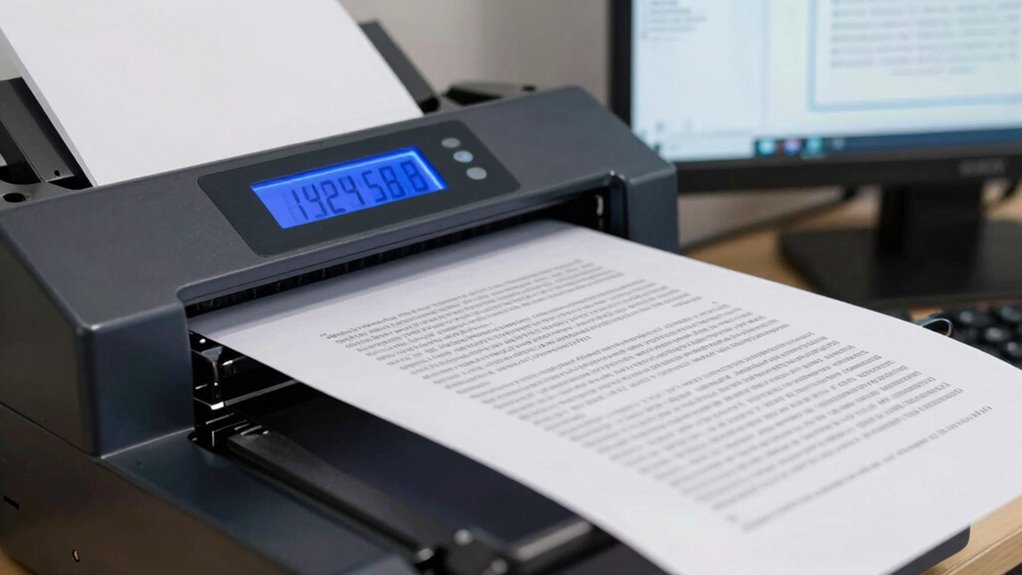
Have you ever wondered how paper documents transform into editable digital files? That process is at the heart of digital transformation, where traditional paper-based information becomes accessible, searchable, and manageable in digital formats. At the core of this shift is Optical Character Recognition (OCR), a technology that revolutionizes how we handle scanned documents. Without OCR, scanned images remain static, essentially just pictures of text. But with OCR, those images become dynamic, machine-readable data that can be edited, searched, and integrated into various digital workflows. This change considerably amplifies the value of scanned documents, turning them from mere images into powerful information assets.
Data extraction is the key to accessing the full potential of scanned documents. When you scan a paper, you’re creating a visual replica, but the information is embedded inside an unsearchable image. OCR acts as a bridge, converting these images into structured data that software can understand and manipulate. This conversion allows you to easily locate specific information within large document repositories and automatically extract relevant data points. For example, invoices, contracts, or forms—once digitized with OCR—can be processed in bulk, saving hours of manual data entry. This automation not only enhances efficiency but also reduces errors, ensuring your data is accurate and reliable. Additionally, OCR transforms static images into searchable text, making information retrieval significantly more efficient.
As you implement OCR for your scanned documents, you’ll notice how it transforms your business operations. You can quickly search through thousands of files to find specific keywords or data fields, making information retrieval faster than ever. This ability speeds up decision-making, compliance checks, and reporting processes. Furthermore, integrating OCR with other digital tools enables seamless workflows, where extracted data flows directly into databases, spreadsheets, or enterprise systems. This seamless integration underscores how OCR fuels digital transformation efforts by turning static images into dynamic, actionable data. Recognizing the importance of data extraction highlights how OCR enhances your overall digital capabilities. Incorporating digital transformation strategies alongside OCR implementation can further maximize your document management efficiency. Recognizing the importance of digital transformation emphasizes how OCR is a crucial component of modernizing document workflows.
The value of scanned documents skyrockets once OCR is in play because it turns a once static record into a versatile resource. Instead of dealing with cumbersome paper files or static images, you gain the ability to analyze, share, and automate processes based on the extracted data. This shift not only streamlines operations but also liberates new insights, making your data more valuable and accessible. In short, OCR fundamentally changes the way you perceive and utilize scanned documents, elevating their importance from simple images to crucial components of your digital ecosystem.
As an affiliate, we earn on qualifying purchases.
Frequently Asked Questions
How Accurate Is OCR With Handwritten Versus Typed Text?
OCR typically performs better with typed text, achieving higher accuracy due to consistent fonts and clear characters. Handwriting recognition, however, tends to be less accurate because of varied handwriting styles and inconsistencies. You’ll find typed text accuracy often exceeds 95%, while handwritten OCR may range between 60-85%, depending on clarity and handwriting quality. For best results, clear, legible typing is ideal, but advanced handwriting recognition still improves over time.
Can OCR Process Documents in Multiple Languages Simultaneously?
Think of OCR as a multilingual symphony conductor, harmonizing different languages in one scan. Yes, OCR can process documents in multiple languages simultaneously, thanks to advances in multilingual recognition. It can identify diverse scripts and characters, enabling real-time translation and seamless understanding. This capability transforms your documents into global conversations, breaking language barriers effortlessly and making communication across cultures instant and intuitive.
What Are Common Challenges Faced When Implementing OCR Technology?
When implementing OCR technology, you often face challenges like ensuring data security and managing cost implications. Data security is vital because OCR processes sensitive information, so you need robust measures to prevent breaches. Additionally, the costs of software, hardware, and ongoing maintenance can add up, making it essential to plan your budget carefully. Balancing security and expenses helps you maximize the benefits of OCR while minimizing risks and financial strain.
How Does OCR Handle Damaged or Poorly Scanned Documents?
Did you know that OCR systems can correctly process damaged or poorly scanned documents up to 85% of the time? When handling issues like image distortion and noise, OCR uses advanced noise reduction techniques to clean up the image, making characters more recognizable. It also employs algorithms to correct distortions, helping you extract accurate data despite subpar scans, ultimately saving time and reducing manual corrections.
Is OCR Effective on Documents With Complex Layouts or Graphics?
OCR can be quite effective on documents with complex layouts or graphics, but its success depends on the software’s ability to handle layout complexity and graphic recognition. You’ll find that advanced OCR tools use intelligent algorithms to distinguish text from images and manage multi-column or layered layouts. While challenging, proper software enhances accuracy, ensuring you can extract meaningful data even from intricate documents with graphics and diverse formatting.
As an affiliate, we earn on qualifying purchases.
Conclusion
So, here’s the irony: OCR promises to make your scanned documents more accessible and editable, yet it often completely transforms their original value. Instead of a faithful replica, you get a digital version that might be almost unrecognizable. Just when you think technology will preserve accuracy, it surprises you with its quirks. In the end, OCR reminds us that no matter how advanced, it’s still human oversight that keeps our documents truly reliable.
As an affiliate, we earn on qualifying purchases.
As an affiliate, we earn on qualifying purchases.
Fall Picks
fall essentials
As an affiliate, we earn on qualifying purchases.