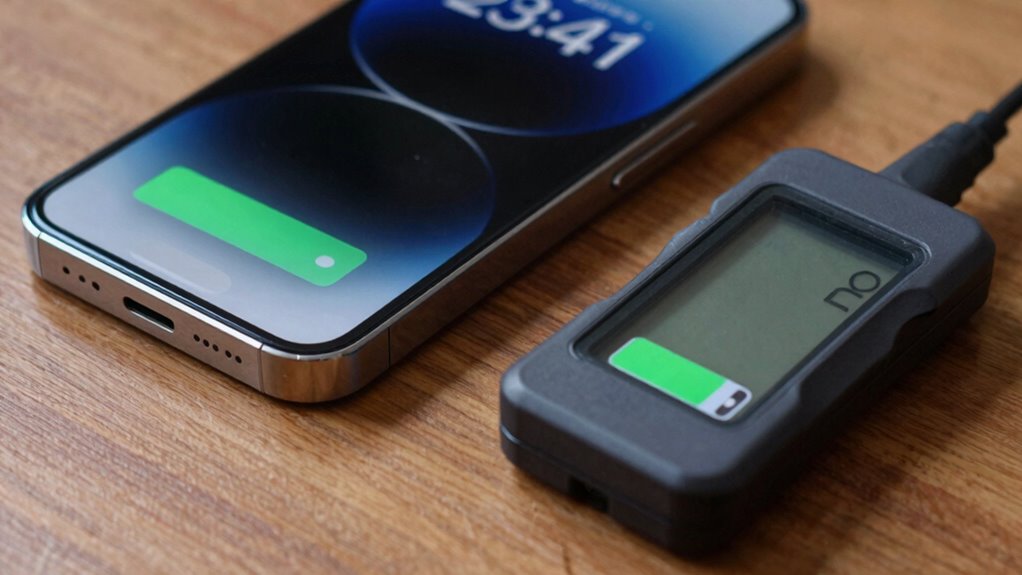

Relying solely on battery capacity numbers can be misleading because they only show the total energy content, not how well the battery performs in real life. Capacity doesn’t account for efficiency, charging speeds, or how quickly the battery degrades over time. A high capacity may not mean longer use if charging is slow or the battery wears out quickly. To get the full picture, it’s important to take into account other factors—keep exploring to learn more.

Get school and study supplies delivered free — and shop member deals
- Fast, free delivery on millions of items
- Access to Prime Big Deal Days deals on October 6–7
- Prime Video, Amazon Music and more included
Key Takeaways
- Battery capacity measures energy storage, not actual usage or efficiency during device operation.
- High capacity doesn’t guarantee longer usage if the device is inefficient or consumes power rapidly.
- Capacity ratings don’t reflect charging speed, which impacts usability and convenience.
- Battery lifespan and degradation affect real-world performance, making initial capacity less reliable over time.
- Focusing solely on capacity can overlook important factors like charging speed and energy efficiency, leading to misleading expectations.
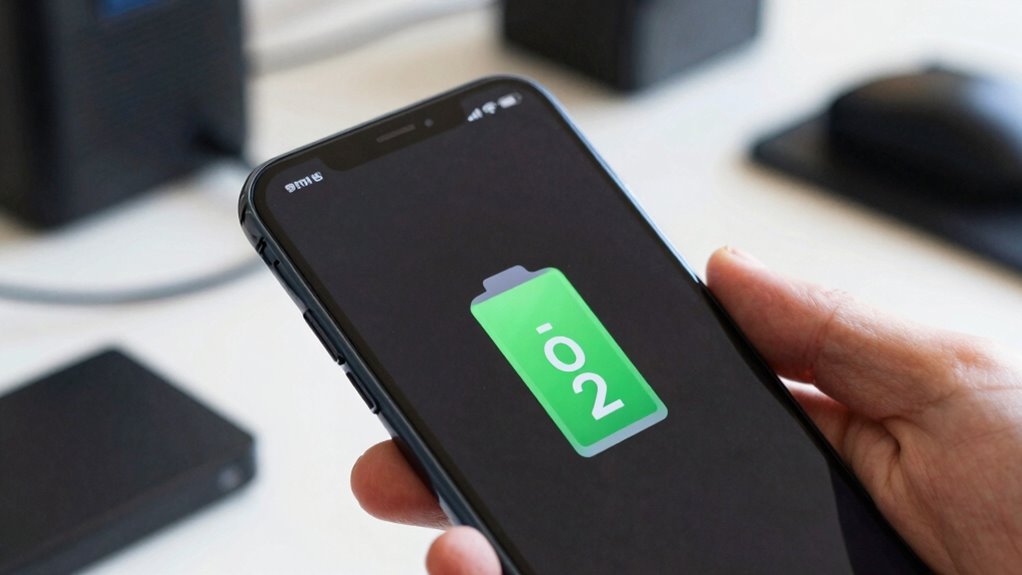
When shopping for an electric vehicle or portable device, you might focus on the battery capacity number, assuming it directly indicates how far you’ll go or how long it will last. While a bigger number often suggests more energy storage, it doesn’t tell the whole story. The capacity number primarily measures the total energy in watt-hours or milliamp-hours, but it doesn’t account for real-world factors like how efficiently that energy is used or how fast the battery can be replenished. This means that a high capacity doesn’t always translate to longer range or better performance. For example, if a battery has a large capacity but a slow charging speed, you could be waiting a long time to recharge, limiting your overall usability. Conversely, a smaller capacity with rapid charging capabilities might get you back on the road faster than a larger, slower-charging battery.
Battery capacity alone doesn’t guarantee longer range or better performance; efficiency and charging speed matter too.
Battery lifespan is another crucial aspect that capacity numbers often overlook. A battery with a high capacity might seem attractive initially, but if it degrades quickly over time, your effective range will diminish faster than expected. Many batteries lose their ability to hold a charge after a certain number of cycles, regardless of their capacity. So, when comparing batteries, it’s vital to consider how long they can maintain their capacity before needing replacement or significant charging time. A battery with a longer lifespan ensures you get consistent performance over years, saving you money and frustration in the long run. Additionally, battery degradation can significantly impact overall performance, making it essential to evaluate how well a battery retains its capacity over time. Understanding how battery longevity varies between models can help prevent premature replacements and added costs. Moreover, the battery management system also plays a key role in maintaining the health and efficiency of the battery, impacting its actual lifespan.
Charging speed also plays a pivotal role. Two batteries with the same capacity can perform very differently depending on how fast they can recharge. Fast-charging technology means you spend less time tethered to a charger, boosting convenience and practicality. If your daily routine demands quick top-ups, a battery with a high capacity but slow charging speed might not serve your needs well. On the other hand, a battery with moderate capacity but rapid charging capabilities might be more suitable for busy schedules, even if it doesn’t hold as much energy at once.
A balanced approach considering all these factors will help you select the most suitable battery for your specific needs and avoid disappointment in the long run.
high capacity rechargeable batteries
As an affiliate, we earn on qualifying purchases.
As an affiliate, we earn on qualifying purchases.
Frequently Asked Questions
How Does Battery Capacity Relate to Real-World Driving Distance?
Battery capacity directly impacts your real-world driving distance, but factors like battery degradation and charging speed also play roles. Over time, batteries lose capacity, reducing range. Faster charging can generate heat, potentially accelerating degradation. So, a higher capacity doesn’t always mean longer distance if the battery is aging or if you frequently charge quickly. Keep these factors in mind to better understand how your battery’s capacity affects your driving experience.
Do Higher Capacity Batteries Always Mean Better Performance?
Higher capacity batteries don’t always mean better performance, as battery technology and charging speed play essential roles. A larger battery may provide longer driving range, but it can also add weight, reducing agility and acceleration. Faster charging speeds allow you to recharge quickly, enhancing usability. So, focus on overall battery technology, including efficiency and charging options, rather than just capacity numbers, to find a vehicle that truly meets your performance needs.
How Does Battery Efficiency Affect Overall Vehicle Range?
Battery efficiency directly impacts your vehicle’s range, even if the capacity stays the same. As batteries degrade over time, efficiency drops, reducing how far you can go on a charge. Fast charging speeds can also cause efficiency losses if not managed properly. So, a higher capacity doesn’t always mean longer range—your vehicle’s efficiency, affected by degradation and charging habits, plays a vital role in your overall driving distance.
Can Two Batteries With the Same Capacity Perform Differently?
Yes, two batteries with the same capacity can perform differently because of variations in battery chemistry and charging speed. Battery chemistry impacts how efficiently the battery delivers power and ages over time, while faster charging speeds can affect longevity and performance. You might notice one battery offering better range or durability despite identical capacity ratings, so it’s essential to take these factors into account alongside capacity when evaluating vehicle performance.
What Other Factors Influence a Vehicle’s Actual Range?
Don’t judge a book by its cover; many factors affect your vehicle’s range. Battery lifespan impacts performance, as older batteries hold less charge. Charging speed influences how quickly you can replenish power, affecting daily use. Driving habits, temperature, and terrain also play roles. You might have a high-capacity battery, but if it’s aging or charges slowly, your actual range could be much less than expected. Keep these factors in mind for a realistic view.
As an affiliate, we earn on qualifying purchases.
Conclusion
Remember, while higher battery capacity numbers might seem better, they don’t always signify longer real-world usage. Manufacturers often test under ideal conditions, so your actual experience could differ. Don’t rely solely on the numbers—consider factors like device efficiency, usage habits, and real-world reviews. By looking beyond the specs, you’ll make smarter choices and avoid disappointment. Capacity numbers are a starting point, but understanding the full picture ensures you get a device that truly fits your needs.
As an affiliate, we earn on qualifying purchases.
battery efficiency testing tools
As an affiliate, we earn on qualifying purchases.
As an affiliate, we earn on qualifying purchases.
Halloween Picks
halloween
As an affiliate, we earn on qualifying purchases.