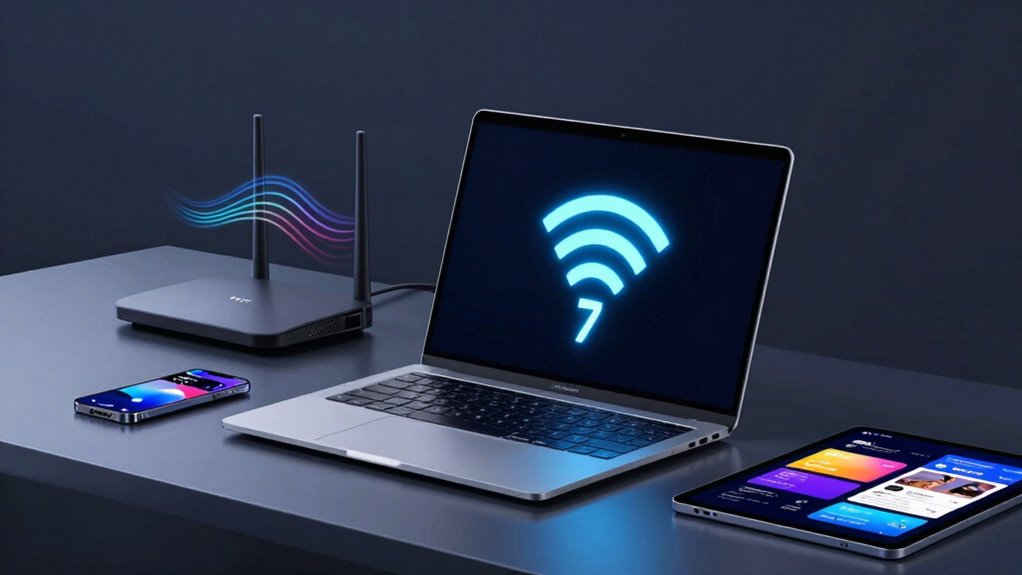

Wi-Fi 7 is more important than it seems because it tackles real issues like network congestion and device overload, ensuring you get faster, more stable connections. It introduces wider channels and smarter data management, which lead to less lag, buffering, and delays during your favorite activities. As device demands grow, Wi-Fi 7’s innovations will become even more essential for a smoother digital experience. Keep exploring to discover how this new technology could transform your home or office network.

Prime made for students and young adults
- Fast, free delivery for dorm and study essentials
- Prime Video and Amazon Music included
- Member-only deals
Key Takeaways
- Wi-Fi 7 addresses real network congestion issues, improving stability and reducing delays during peak usage.
- It offers broader benefits beyond speed, like enhanced reliability and smarter data management.
- The technology supports future-proofing by increasing device compatibility and fostering innovation.
- Its impact is more significant as more devices adopt Wi-Fi 7, transforming wireless connectivity experiences.
- Recognizing Wi-Fi 7’s improvements helps consumers understand its potential for long-term digital infrastructure.

As we become increasingly reliant on high-speed internet for work, entertainment, and smart devices, Wi-Fi 7 is set to revolutionize your connected experience. While the hype around Wi-Fi 7 sounds promising, it’s easy to wonder whether it truly lives up to the buzz or if it’s just another upgrade in a long line of faster wireless standards. The truth is, Wi-Fi 7 addresses some real issues that many users face today, especially network congestion and device compatibility. These aren’t just tech jargon; they directly impact how smoothly your devices perform, whether you’re streaming, gaming, or working from home.
Network congestion is one of the biggest frustrations for anyone relying on Wi-Fi. When multiple devices connect to your router—smartphones, laptops, smart TVs, or IoT gadgets—they all compete for bandwidth. This can cause buffering, lag, or slow downloads, especially during peak usage times. Wi-Fi 7 aims to tackle this problem by offering increased bandwidth and smarter data management. It introduces wider channels and more efficient transmission techniques, allowing more data to flow simultaneously. This means fewer delays and a more stable connection even when your network is crowded. If you’ve ever experienced your video call dropping or your game lagging just as your friends join the party, Wi-Fi 7’s improvements could make those issues a thing of the past. Additionally, as Wi-Fi 7 incorporates advanced transmission techniques, it enhances overall network efficiency and performance. A tech ecosystem that supports Wi-Fi 7 will further amplify these benefits, making your entire home or office network more resilient. Moreover, the adoption of Wi-Fi 7 will likely drive innovation in household devices, encouraging manufacturers to develop smarter, more integrated products that can fully utilize its capabilities. As more devices become compatible, the benefits of Wi-Fi 7 will become more widespread and noticeable in everyday life. Recognizing the importance of network management can help you optimize your setup and ensure a seamless online experience.
Wi-Fi 7 reduces buffering and lag by handling more data simultaneously through wider channels and smarter management.
Device compatibility is another key factor that makes Wi-Fi 7 more significant than it might seem at first glance. Many current devices are limited to older Wi-Fi standards, which means they can’t fully benefit from the latest technology. As Wi-Fi 7 becomes more common, newer devices will be designed to leverage its faster speeds and improved reliability. This creates a cycle: the more devices that support Wi-Fi 7, the more you’ll notice its advantages in everyday use. However, it also means that your existing devices may not immediately benefit until they’re upgraded or updated. So, understanding device compatibility helps you plan your tech upgrades and ensures you don’t get left behind as Wi-Fi 7 adoption grows. Staying informed about Wi-Fi standards and their evolution can help you make smarter decisions about your home network setup.
In essence, Wi-Fi 7 isn’t just about faster download speeds; it’s about creating a smarter, more reliable wireless environment. It addresses real issues like network congestion that can cripple your experience and ensures future-proofing through device compatibility. While it might seem like just another tech upgrade, the improvements it brings could significantly elevate how you connect, stream, and work. Recognizing why Wi-Fi 7 matters more than it often appears helps you appreciate its potential to transform your digital life, especially as our demands on wireless networks continue to grow.
As an affiliate, we earn on qualifying purchases.
Frequently Asked Questions
Will Wi-Fi 7 Be Compatible With Older Devices?
Wi-Fi 7 may not be fully compatible with older devices, which could lead to upgrade challenges. You’ll likely need new hardware or firmware updates to harness its full potential, as device compatibility varies. While some devices might work with Wi-Fi 7, expecting seamless performance isn’t realistic yet. Prepare for potential upgrades, and keep in mind that future-proofing your network might require replacing or updating existing equipment.
How Much Faster Is Wi-Fi 7 Compared to Wi-Fi 6?
Wi-Fi 7 offers considerably faster speeds than Wi-Fi 6, with potential peak bandwidth growth up to 46 Gbps, compared to Wi-Fi 6’s 9.6 Gbps. This boost enhances device scalability, allowing more devices to connect seamlessly at higher speeds. You’ll notice quicker downloads, smoother streaming, and improved gaming experiences, especially as your network grows and demands increase, making Wi-Fi 7 an essential upgrade for future-proofing your connectivity.
What Are the Security Benefits of Wi-Fi 7?
You’ll find Wi-Fi 7 offers stronger security through advanced encryption protocols, making your data much harder for hackers to access. It also enhances device authentication, ensuring only trusted gadgets connect to your network. This coincidence of improved encryption and robust authentication means your online activities stay private and protected. With Wi-Fi 7, you gain peace of mind knowing your connections are more secure, even as cyber threats grow more sophisticated.
When Will Wi-Fi 7 Be Widely Available?
Wi-Fi 7 is expected to be widely available around 2024 or 2025, but device compatibility remains a key factor. As manufacturers adopt the new standard, you’ll see more devices supporting Wi-Fi 7, enhancing network optimization. Keep an eye on updates from device makers and your internet provider, because early adoption will improve your connection speed and stability as Wi-Fi 7 becomes mainstream.
Will Wi-Fi 7 Reduce Internet Latency Significantly?
Wi-Fi 7 will substantially reduce internet latency, enhancing your online experience. With latency improvements, you’ll notice faster response times, smoother streaming, and better gaming performance. It also boosts network efficiency, allowing more devices to connect without slowing down. This means your connection will be more reliable, especially in busy households or offices. Overall, Wi-Fi 7’s advancements aim to make your internet faster, more responsive, and capable of handling increasing device demands.
As an affiliate, we earn on qualifying purchases.
Conclusion
Imagine upgrading from a quiet, bumpy dirt road to a sleek, fast highway—Wi-Fi 7 is that new road for your digital life. It promises smoother streaming, quicker downloads, and more reliable connections. As more devices flood your home, this upgrade becomes crucial, like adding lanes to prevent traffic jams. Don’t overlook its importance—think of Wi-Fi 7 as the essential infrastructure that keeps your online world running seamlessly, transforming chaos into clarity.
high bandwidth Wi-Fi 7 mesh system
As an affiliate, we earn on qualifying purchases.
As an affiliate, we earn on qualifying purchases.
As an affiliate, we earn on qualifying purchases.
Halloween Picks
halloween
As an affiliate, we earn on qualifying purchases.