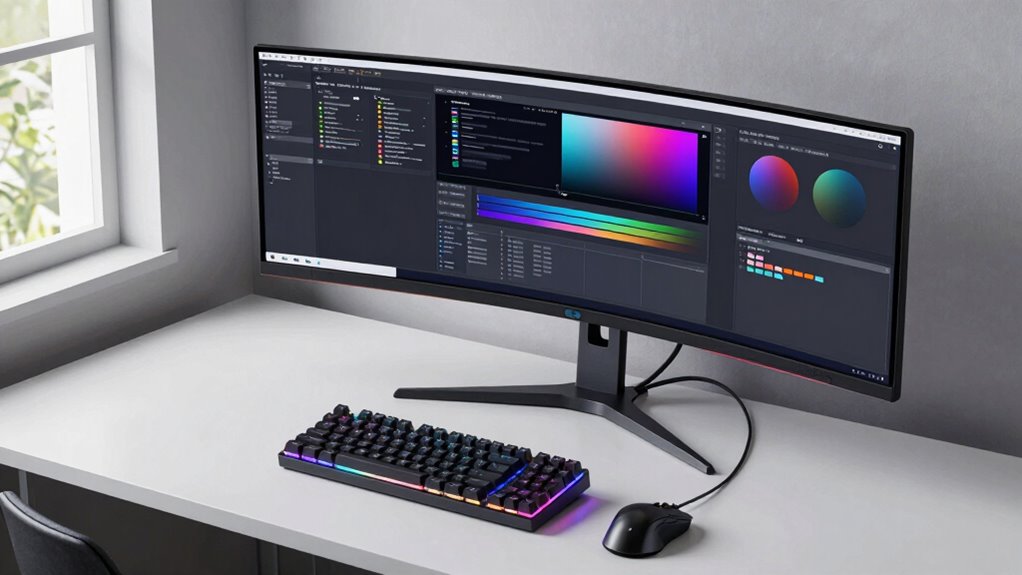

To pick a computer for workflows instead of just benchmarks, focus on matching hardware to your specific tasks and future needs. Opt for systems that are customizable, allowing upgrades to RAM, storage, or graphics as your workload grows. Verify software compatibility before buying, and choose peripherals that support your work style. Prioritize reliable brands with solid support to keep downtime minimal. Keep these factors in mind to make a smarter, more long-term investment — and you’ll discover how to choose the best fit for your work.
Open a free Amazon Business account
Business pricing, bulk buying and tax-exempt orders.
As an affiliate, we earn on qualifying purchases.
Key Takeaways
- Prioritize hardware customization options to ensure the system can grow with evolving workload demands.
- Verify software compatibility to prevent workflow disruptions and ensure essential applications run smoothly.
- Choose peripherals and accessories that enhance productivity, such as high-quality displays and ergonomic input devices.
- Select reputable brands with reliable support and easy servicing to minimize downtime and long-term costs.
- Focus on long-term flexibility and support features over raw benchmarks for sustained work efficiency.
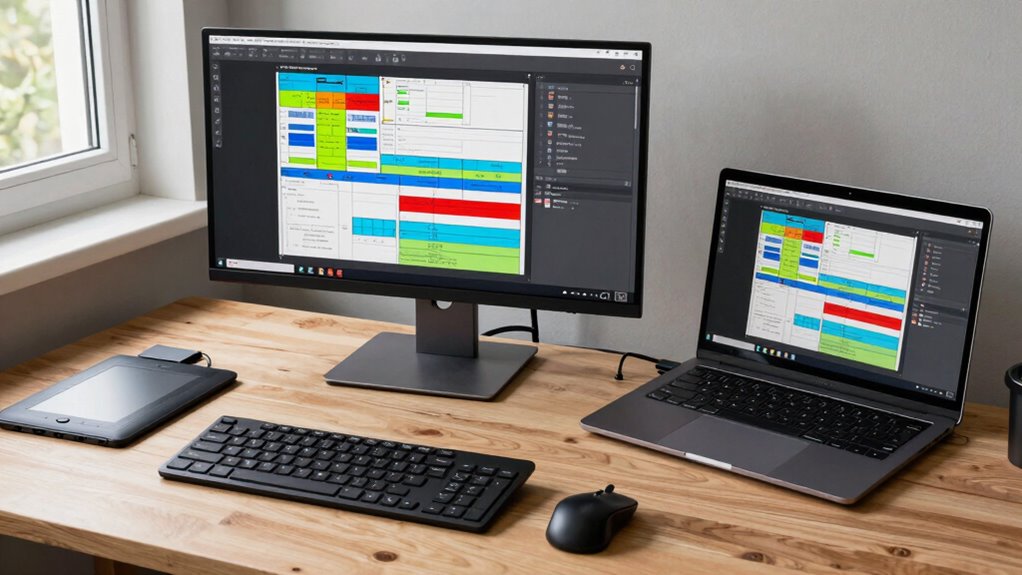
Selecting the right computer for your workflows is crucial to guarantee efficiency and productivity. When choosing a machine, you shouldn’t rely solely on specifications or benchmark scores. Instead, focus on how well the computer aligns with your specific tasks and needs. Hardware customization becomes a key factor here. You want to pick a system that allows you to upgrade components like RAM, storage, or graphics, so it can grow with your workload. This flexibility ensures your machine remains relevant as your demands evolve, saving you money and time in the long run. Don’t settle for a one-size-fits-all solution; look for a computer that offers options to tailor its hardware to your work environment.
Choose a customizable computer that adapts to your evolving workflow for lasting efficiency and value.
Equally important is software compatibility. A powerful processor or ample memory won’t matter if your essential applications don’t run smoothly on your chosen device. Before making a purchase, verify that your primary software tools are compatible with the operating system and hardware specifications. Check for updates or specific system requirements, especially if you work with specialized software for design, development, or data analysis. Compatibility issues can lead to frustrating delays and productivity loss, so it’s better to identify and address these concerns upfront. This guarantees your workflows are uninterrupted and efficient. Additionally, understanding how hardware components work together can help you optimize system performance.
Another aspect to consider is how your workflow demands influence your choice of peripherals and accessories. For example, if you work with high-resolution graphics or video editing, a high-quality display and graphics card are indispensable. If you’re frequently on the move, portability and battery life become more relevant. Think about ergonomic features like keyboard comfort or multiple ports for connecting peripherals, which can streamline your daily tasks. These choices impact not only your productivity but also your comfort during long work sessions. Additionally, understanding your workload can help you prioritize upgradeability and ensure your setup remains adaptable over time.
Lastly, don’t overlook the importance of choosing a reliable brand and after-sales support. A computer that’s easy to service and upgrade minimizes downtime and ensures your workflow remains consistent. Remember, the goal isn’t just to buy a powerful machine but to select one that integrates seamlessly into your daily routine. Prioritize flexibility, compatibility, and support, and you’ll find a device that truly enhances your work efficiency rather than just impressing with benchmark scores. Making thoughtful decisions based on your workflow needs ensures your investment delivers long-term value and keeps your productivity on track.

Dell Optiplex 7050 SFF Desktop PC Intel i7-7700 4-Cores 3.60GHz 32GB DDR4 1TB SSD WiFi BT HDMI Duel Monitor Support Windows 11 Pro Excellent Condition(Renewed)
- Model: Dell OptiPlex 7050 SFF
- Processor: Intel Core i7-7700 3.60 GHz
- Memory: 32GB DDR4 RAM
As an affiliate, we earn on qualifying purchases.
As an affiliate, we earn on qualifying purchases.
Frequently Asked Questions
How Do I Determine the Specific Hardware Needs for My Workflow?
You determine your hardware needs by analyzing your specific workflow requirements. Focus on hardware customization options that match your tasks—like faster CPUs for rendering or more RAM for multitasking. Assess the software you use and identify hardware bottlenecks. By understanding your user-specific needs, you can select or customize components accordingly, ensuring your computer efficiently supports your work without unnecessary features or costs.
Should I Prioritize Upgradeability or Out-Of-The-Box Performance?
Think of your computer as a sturdy ship. Prioritizing upgradeability is like choosing a vessel with modular parts, ready for future storms, aligning with future proofing considerations. Out-of-the-box performance is a sleek, fast sailboat, ideal for immediate voyages. If you value long-term adaptability and want your investment to last, go for upgradeability, especially if brand reputation factors assure quality. Balance your needs, and steer wisely towards sustainable performance.
What Software Compatibility Considerations Are Crucial When Choosing a Computer?
You should prioritize software compatibility and integration when choosing a computer. Make certain it supports the operating systems and applications you rely on daily. Compatibility testing beforehand helps identify potential issues with hardware or software conflicts. Consider the software’s system requirements, especially for specialized tools, to prevent performance problems. This way, your workflow remains smooth, and you avoid costly adjustments later on, guaranteeing your new computer seamlessly fits your software ecosystem.
How Can I Assess the Real-World Performance of a Computer for My Tasks?
You can assess real-world performance by testing the computer with your typical tasks and observing the user experience. Don’t rely solely on hardware benchmarks; instead, note how smoothly programs run, how fast files load, and if multitasking feels seamless. Try running your most-used applications to see if they perform well. This hands-on approach gives you a clearer picture of how the system will handle your workflow daily.
What Are the Best Practices for Balancing Cost and Workflow Efficiency?
Think of choosing your computer as balancing a tightrope walk between a sturdy pole and a graceful dancer. You want budget constraints to guide your steps, ensuring affordability, while aesthetic appeal adds the elegance. Prioritize components that boost workflow efficiency—like a fast processor or ample RAM—without overspending. This way, you maintain harmony between cost and performance, creating a setup that’s both practical and pleasing to the eye.
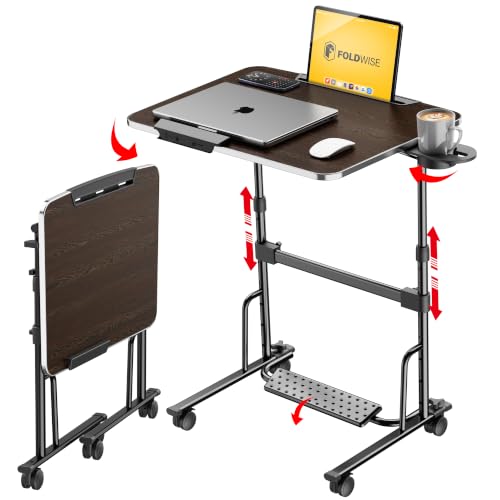
FoldWise Foldable Standing & Rolling Desk, Upgraded Portable Desk on Wheels
- Adjustable Height and Tilt: 7 height levels, 3 tilt angles for ergonomic use
- Mobility and Stability: Locking wheels for easy movement and stability
- Space-Saving Foldable Design: Folds flat in seconds for compact storage
As an affiliate, we earn on qualifying purchases.
As an affiliate, we earn on qualifying purchases.
Conclusion
Think of choosing a computer like selecting the right tool for a craft. You wouldn’t pick a hammer for fine embroidery, just as you shouldn’t choose a machine based solely on raw benchmarks. Instead, focus on how well it fits your unique workflow, much like a tailor selecting the perfect thread. When you match your tools to your tasks, your work becomes a masterpiece—efficient, precise, and truly your own.

Laptop with Windows 11,15.6 inch Laptop Computer with Intel 12-Core i5 Processor (Up to 4.5GHZ),16GB RAM 512GB SSD,WiFi 6, Webcam,Intel Iris Xe Graphics,High Performance Laptops for Student,Business
- Powerful Processor: Intel 12th Gen i5 with 12 cores
- Expandable Memory & Storage: Up to 64GB RAM, 4TB SSD support
- Long Battery Life: 54.72Wh battery for all-day use
As an affiliate, we earn on qualifying purchases.
As an affiliate, we earn on qualifying purchases.

TECKNET Wireless Mouse, 2.4G Ergonomic Computer Mouse, 2600 DPI, Black
- Compact and Travel-Friendly: Portable size for travel convenience
- Ergonomic Comfort Design: Contoured shape with rubber side-grips
- Adjustable DPI Settings: 5 levels from 800 to 2600 DPI
As an affiliate, we earn on qualifying purchases.
As an affiliate, we earn on qualifying purchases.
Grilling season Picks
grills
As an affiliate, we earn on qualifying purchases.