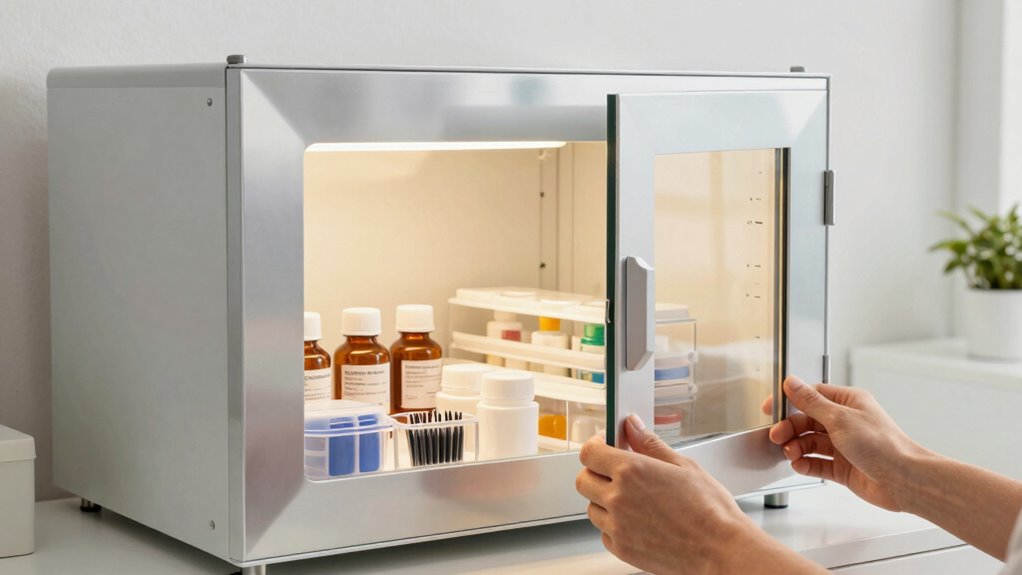

To protect yourself from future harm, develop a safe access habit by securely storing hazardous items and practicing mindful handling. Focus your attention on how you access and store dangerous objects, creating physical barriers like lockable cabinets or safety boxes. Establish routines that reinforce safety, turning them into habits that prevent impulsive mistakes. By prioritizing safety over convenience, you build a proactive mindset that keeps risks at bay. Keep going to discover practical steps to strengthen this essential habit.

Prime made for students and young adults
- Fast, free delivery for dorm and study essentials
- Prime Video and Amazon Music included
- Member-only deals
Key Takeaways
- Develop consistent routines for storing dangerous items securely to prevent impulsive or accidental access later.
- Use physical barriers like lockable containers to create a reliable safeguard against self-temptation.
- Practice mindful awareness during storage to reinforce the importance of responsible access and reduce risky behaviors.
- Establish designated, organized safety spots for hazardous items to strengthen automatic safety habits over time.
- Cultivate a safety-conscious mindset that prioritizes prevention and responsible handling in daily routines.

Developing a safe access habit is crucial for protecting yourself and others in any environment. When you’re mindful of how you handle and store items—especially those that could be dangerous—you reduce the risk of accidents and unintended harm. Mindful awareness means paying close attention to what you’re doing, staying present, and making deliberate choices about access and storage. It’s about being conscious of the potential consequences of your actions and guaranteeing you take steps to minimize risks. By cultivating this awareness, you become more intentional about controlling access to hazardous items, whether it’s medications, sharp tools, or cleaning supplies. Creating a safe environment by managing access to dangerous items is an essential part of fostering a safety-conscious mindset. Secure storage plays an essential role in maintaining a safe access habit. When you consistently store items properly, you create a physical barrier that prevents impulse access or accidental misuse. Think of secure storage as a safeguard—you’re actively reducing the chances that someone, including yourself, will access something at the wrong time or in the wrong context. This practice not only protects others, such as children or coworkers, but also helps you develop an organized approach to safety routines, making it easier to remember and follow through consistently. For example, using lockable cabinets or safety boxes for dangerous substances ensures that only authorized or responsible individuals can reach them. This practice not only protects others, such as children or coworkers, but also keeps you accountable for managing your own safety. When you develop a routine of secure storage, it becomes second nature, and you’re less likely to forget or overlook safety precautions. Building this habit requires intentionality. It starts with recognizing which items require extra caution and then establishing a designated, secure place for them. Each time you put something away, you reinforce your commitment to safety. Over time, this creates a mental association that accessing dangerous items is a serious matter, not something to be taken lightly. You’ll find that with regular mindful awareness, you naturally become more diligent and consistent. An important aspect of Mindful awareness is understanding how habits influence behavior, which can help you create lasting safety routines. It also involves being aware of the risks associated with improper storage, which can help you better prioritize safety measures. Recognizing the significance of physical barriers can further reinforce your efforts to prevent unauthorized access. It’s not just about the physical act of locking something away, but also about cultivating a mindset that prioritizes safety over convenience. This mindset helps you catch potential hazards before they become problems. In essence, developing a safe access habit is about creating a routine grounded in mindful awareness and secure storage. When you stay present and deliberate in your actions, you’re less likely to make impulsive decisions that could lead to harm. Secure storage acts as a physical reminder to respect the potential dangers and handle items responsibly. Together, these practices form a proactive approach that protects you from yourself later, ensuring that safety remains a priority in your daily life. Over time, this habit becomes second nature, giving you confidence in your ability to manage access safely and responsibly.
As an affiliate, we earn on qualifying purchases.
Frequently Asked Questions
How Long Does It Take to Establish a Safe Access Habit?
It typically takes about 21 to 66 days for you to establish a safe access habit, but this varies based on your consistency and the complexity of the behavior. Through habit formation, you’ll gradually replace old routines with new, safer ones. Focus on daily practice and making small, intentional changes—these efforts support sustainable behavioral change. Stay patient and persistent, and you’ll solidify your safe access habits over time.
Can Safe Access Habits Be Broken or Forgotten?
Safe access habits can be broken or forgotten, especially during a memory lapse or stressful moments. You might slip back into old habits without realizing it, leading to habit relapse. To prevent this, stay mindful and consistent, reinforcing your routines. Regularly reviewing your safety protocols helps solidify your habits, reducing the risk of forgetting or accidentally disrupting them. Staying vigilant ensures your safety remains a priority.
What Tools Best Support a Safe Access Routine?
You’re guided by gentle tools that support your safe access routine. Using secure medication storage guarantees your supplies stay out of reach when needed, while thoughtful accessibility planning makes access straightforward yet controlled. Consider lockable containers or labeled compartments, which help you stay organized and mindful. These tools create a reliable system, helping you maintain consistency, prevent accidental misuse, and honor your commitment to safe, responsible access every day.
How Do I Stay Motivated to Maintain Safe Access Habits?
To stay motivated, focus on behavior reinforcement by celebrating small wins and tracking your progress. Enlist accountability partners who can support and remind you of your commitment, making it easier to stay consistent. When you feel tempted to skip your safe access routine, remember your reasons for establishing it. Regularly reviewing your goals and sharing achievements with trusted individuals keeps your motivation high and helps you stick to your habits.
Are Safe Access Habits Effective for All Age Groups?
Coincidentally, safe access habits are effective across all age groups, including children. You can integrate technology, like child safety locks and monitoring apps, to enhance protection. For kids, these habits prevent accidents, while adults benefit from mindful access to prevent misuse. By adapting tools and routines to each age’s needs, you guarantee safety at every stage, making these habits universally valuable and practical for everyone.
As an affiliate, we earn on qualifying purchases.
Conclusion
By adopting the safe access habit, you shield yourself from future regret and danger. It’s a simple act—yet powerful—that keeps you secure today and resilient tomorrow. Without it, you’re vulnerable to impulsive choices that could cost you dearly; with it, you build a fortress of mindfulness and protection. In the end, safeguarding yourself now creates a foundation of confidence and peace, proving that small habits hold the greatest power to shape your future.
As an affiliate, we earn on qualifying purchases.
As an affiliate, we earn on qualifying purchases.
Evergreen bestsellers Picks
bestsellers
As an affiliate, we earn on qualifying purchases.