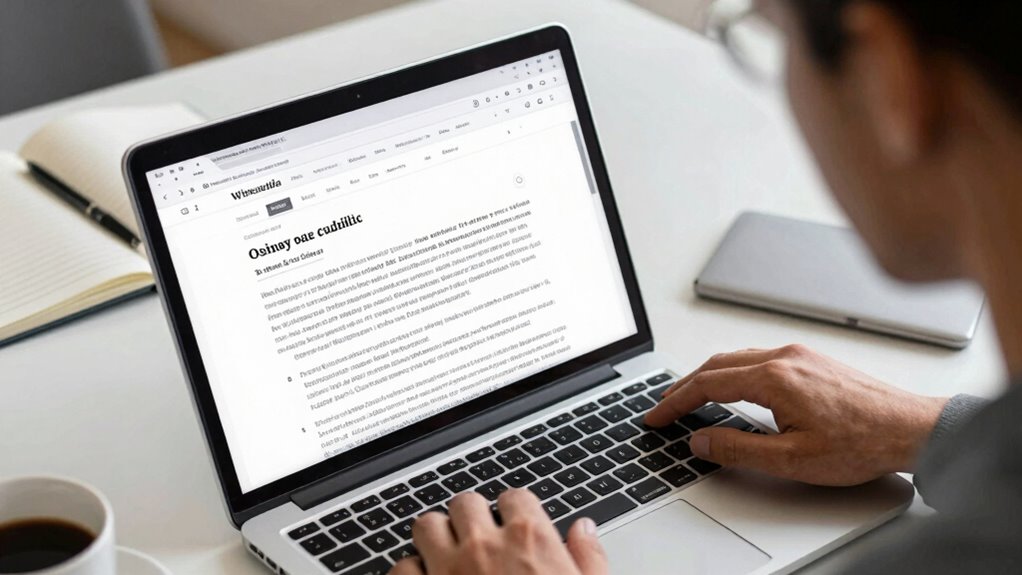

To avoid being misled on Wikipedia, you should critically evaluate its sources by checking citations from reputable organizations or experts, ensuring they support the statements made. Verify key facts with trusted books, scholarly articles, or official websites, and review editing histories and talk pages for ongoing disputes or potential biases. Remember, Wikipedia is a starting point; cross-check information to confirm accuracy and develop a fuller understanding. If you’d like, there’s more to learn on how to navigate it effectively.

Get school and study supplies delivered free — and shop member deals
- Fast, free delivery on millions of items
- Access to Prime Big Deal Days deals on October 6–7
- Prime Video, Amazon Music and more included
Key Takeaways
- Always verify information with reputable sources before accepting it as fact.
- Check citations for credibility, ensuring they come from trusted organizations or scholarly publications.
- Use Wikipedia’s talk pages and editing histories to assess content reliability and identify disputes.
- Cross-reference key facts with additional books, articles, or official websites for confirmation.
- View Wikipedia as a starting point, not an authoritative source, and approach it with a critical mindset.

Have you ever relied on Wikipedia for quick information only to wonder if it’s entirely accurate? It’s a common experience, especially since Wikipedia is so accessible and covers an incredible range of topics. However, because anyone can edit its pages, it’s essential to approach the site with a critical eye. To avoid being misled, you need to evaluate the quality of the information you find. One of the most effective ways is to check the reliable sources cited within the article. Reliable sources are usually published by reputable organizations, academic institutions, or well-known experts. If a Wikipedia page lacks citations or relies heavily on dubious sources, it’s a red flag that the information may not be trustworthy. Citation accuracy is crucial because it shows that the content is backed by verifiable evidence. When you see citations, take a moment to verify them—are they from credible publications? Are they up-to-date? Do they support the statements made? If the references are obscure, outdated, or missing altogether, you should question the accuracy of the information.
Beyond just checking citations, it’s helpful to cross-reference the key facts with other sources. Don’t rely solely on Wikipedia for your research; consult books, scholarly articles, or official websites to confirm details. This habit ensures that you’re not accepting potentially biased or inaccurate information at face value. Remember, Wikipedia’s open editing model means that some pages can be temporarily biased or vandalized, so taking the extra step of verifying facts can save you from spreading misinformation or forming misconceptions. Additionally, understanding the importance of projector technology can help you better evaluate technical information related to displays and imaging.
Another way to use Wikipedia responsibly is to examine the talk pages and editing histories associated with articles. The talk pages often reveal ongoing debates about the accuracy of certain statements, highlighting areas where information might be contested or uncertain. If you notice frequent edits or disputes over a topic, it’s wise to be extra cautious about trusting that particular section without further verification.
Ultimately, Wikipedia can serve as a useful starting point—an overview that guides you toward more reliable sources. By paying attention to citation accuracy, verifying references, and cross-checking facts, you can leverage Wikipedia’s wealth of information without falling prey to inaccuracies. Approaching it critically transforms Wikipedia from a quick answer machine into a valuable tool for informed research.
Top picks for "wikipedia without gett"
As an affiliate, we earn on qualifying purchases.
Frequently Asked Questions
How Can I Verify Wikipedia Sources for Accuracy?
You can verify Wikipedia sources for accuracy by checking citation verification and evaluating source credibility. Look at the references listed and ensure they come from reputable, authoritative sources. Cross-check the information with other trusted sources or academic publications. Be cautious of citations from biased or outdated materials, and consider the date and author of each source. This helps you determine whether the information is reliable and well-supported.
What Should I Do if I Find Biased or Incorrect Information?
Imagine your knowledge as a ship charting stormy seas. When you spot biased or incorrect info, anchor yourself with fact-checking methods and bias detection tools. Cross-reference sources, consult reputable references, and scrutinize the language for loaded terms. Don’t hesitate to update or flag the content if you find errors. By staying vigilant, you help steer Wikipedia back on course, ensuring the information remains a trustworthy beacon for everyone.
Can Wikipedia Be Trusted for Academic Research?
You can’t fully trust Wikipedia for academic research because citation reliability varies, and editorial bias may influence content. Always cross-check Wikipedia information with reputable sources and peer-reviewed articles. Use Wikipedia as a starting point for your research, but don’t rely solely on it. Be critical of potential biases and guarantee that the references cited are credible, which helps maintain accuracy and scholarly integrity.
How Do I Identify Biased Editors or Vandalism?
Did you know that around 1.2 million articles are edited daily on Wikipedia? To spot biased editors or vandalism, look for sudden, drastic changes or repetitive edits that don’t cite reliable sources. Check the edit history for patterns of biased editor behavior or vandalism detection alerts. Trust articles with balanced, well-sourced information, and be cautious when you see unexplained, suspicious edits—these often signal biased or vandalized content.
Are There Tools to Track Wikipedia Article Edit Histories?
Yes, you can use Wikipedia’s edit history and revision tracking tools to monitor article changes. Simply click on the “View history” tab at the top of any article, and you’ll see all past edits with timestamps and editor details. This allows you to track how an article has evolved, spot vandalism or biased edits, and verify the reliability of the information. Regularly reviewing revision history helps ascertain you’re accessing trustworthy content.
Conclusion
By staying vigilant and cross-referencing sources, you can navigate Wikipedia like a seasoned explorer avoiding treacherous waters. Always check citations and verify information with reputable sources—think of it as wielding a superpower against misinformation. Remember, Wikipedia is a treasure trove, but without careful eyes, you might fall into a pit of inaccuracies. Use these tips, and you’ll be unstoppable—like a knowledge superhero, saving the day from falsehoods and myths!
Halloween Picks
halloween
As an affiliate, we earn on qualifying purchases.