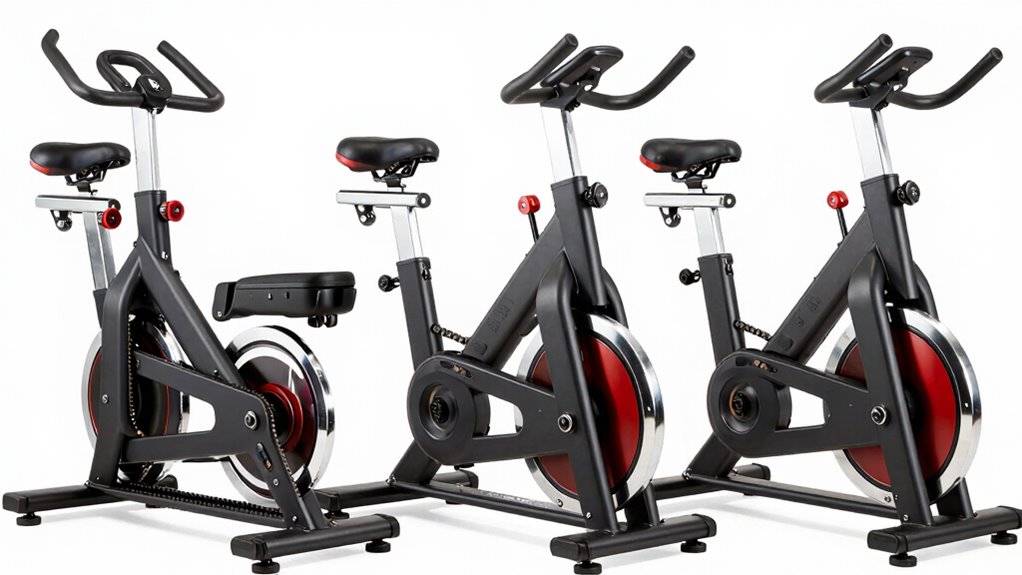

When choosing an exercise bike drive system, consider noise, maintenance, responsiveness, and authenticity. Belt drives are quiet and low-maintenance, making them great for casual riders. Chain drives offer a more authentic cycling feel but need regular upkeep and can be noisier. Direct drives provide smooth, quick responsiveness and are durable, ideal for serious workouts. To discover which option best suits your needs, explore the details behind each drive type and their benefits.
Listen free for 30 days with Audible
Thousands of audiobooks and originals — cancel anytime.
As an affiliate, we earn on qualifying purchases.
Key Takeaways
- Belt drives operate quietly, require minimal maintenance, and provide smooth cadence control, ideal for casual users.
- Chain drives offer a more authentic cycling feel with responsive cadence adjustments but need regular lubrication and upkeep.
- Direct drives deliver the quietest operation, superb responsiveness, and durability, making them suitable for advanced training and high-end models.
- Compatibility with resistance mechanisms varies; all types support smooth, seamless resistance adjustments for different training intensities.
- Durability and longevity are highest in direct drives, with belt systems being low-maintenance and chain drives offering a traditional riding experience.
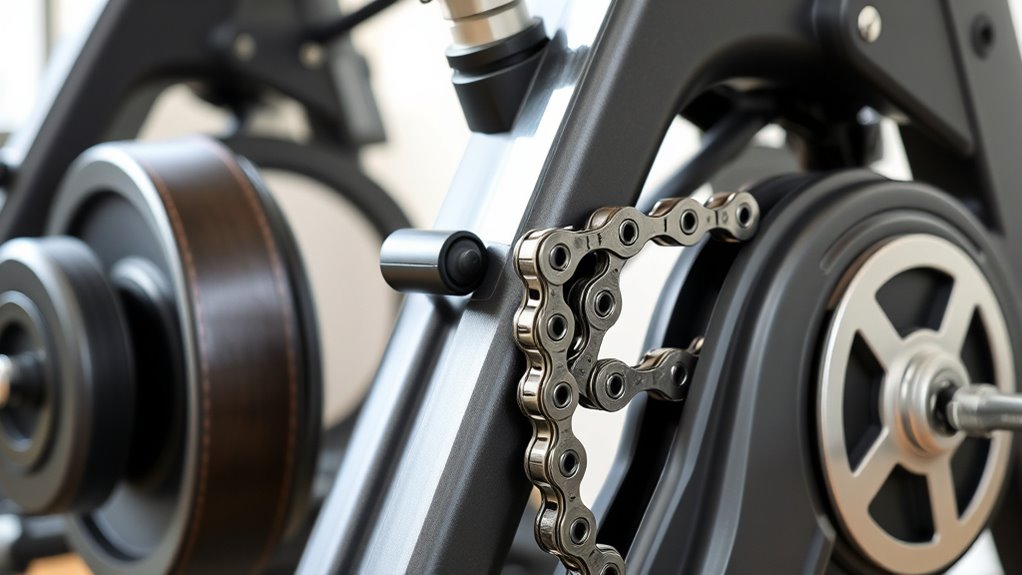
Exercise bike drives are vital components that power the movement of your stationary bike’s pedals. They connect the pedals to the resistance system, translating your pedaling effort into smooth motion. When it comes to choosing the right drive, understanding how different systems influence cadence control and resistance mechanisms is fundamental. Your choice affects how smoothly you can maintain your cadence, how easily you adjust resistance levels, and ultimately, how effective your workout is.
Belt drives are popular for their quiet operation and low maintenance. They use a rubber belt that connects the pedals to the flywheel, providing a smooth and consistent ride. Because belts tend to slip less and vibrate less than other systems, they give you more precise cadence control, allowing you to maintain a steady pace without sudden jumps or drops. Resistance mechanisms work seamlessly with belt drives, offering quick, responsive adjustments. This setup is ideal if you prefer a quieter workout environment or want minimal upkeep, making it easier to focus on your cadence and resistance changes without distraction.
Belt drives offer quiet operation and precise cadence control with minimal maintenance.
Chain drives, on the other hand, mimic the mechanism found in traditional bicycles. They use a metal chain that links the pedals to the flywheel. Chain drives typically deliver a more direct and powerful transfer of energy, which can translate into a more realistic cycling feel. However, they tend to be noisier and require more maintenance, such as lubrication and occasional chain tightening. When it comes to cadence control, chain drives can offer a very responsive feel, allowing you to fine-tune your pedaling speed with precision. Resistance mechanisms work well here too, with some models providing manual or electronic resistance adjustments. If you value a more authentic riding experience and don’t mind regular maintenance, a chain drive can be a solid choice.
Direct drive systems are often found in high-end models and are considered the pinnacle of exercise bike drives. They eliminate the need for belts or chains altogether by connecting the flywheel directly to the drive motor or the pedals themselves. This design results in an incredibly smooth, whisper-quiet operation, giving you superb cadence control. Resistance mechanisms in direct drive bikes are typically advanced, offering a wide range of adjustable levels that respond instantly to your input. This setup allows for precise simulation of various terrains and workout intensities, making it perfect for serious cyclists or those seeking a highly controlled workout environment. Because direct drives minimize mechanical parts, they also tend to require less maintenance and last longer. Additionally, European cloud innovation emphasizes the importance of reliable and sustainable systems, which aligns with the durability and low-maintenance benefits of direct drive mechanisms.
As an affiliate, we earn on qualifying purchases.
Frequently Asked Questions
Which Drive Type Requires the Least Maintenance?
You’ll find that direct drive systems require the least maintenance, as they have minimal moving parts and don’t need frequent lubrication. Their maintenance frequency is low, so you won’t have to worry about regular lubrication like with belt or chain drives. Belt drives need occasional lubrication, while chain drives require more frequent maintenance. So, if low maintenance is your priority, a direct drive setup is your best choice.
Are Belt Drives Quieter Than Chain Drives?
Honestly, belt drives are the quiet ninjas of exercise bikes. They produce lower noise levels and minimal vibration impact, making your workout less like a construction site and more like a peaceful retreat. Unlike chain drives that roar like a beast, belts glide smoothly, whispering instead of shouting. So, if you crave tranquility and a serene spin session, go belt — your ears will thank you.
Do Direct Drive Systems Offer Better Power Transfer?
Yes, direct drive systems offer better power transfer because they eliminate gear misalignment and reduce energy loss. Since there’s no chain or belt involved, you experience smoother, more efficient rides. Plus, direct drives contribute to noise reduction, making your workout quieter. You’ll notice improved responsiveness and consistent power delivery, which helps you stay focused and get the most out of each session.
How Do Drive Types Affect Exercise Bike Durability?
You’ll find that the drive system greatly influences your bike’s durability—belt drives are surprisingly fragile, like glass slippers, while chain drives are nearly indestructible, handling anything you throw at them. Direct drives excel in longevity, but their complex design and higher manufacturing costs mean they demand more maintenance and can be less compatible with certain bikes. Your choice impacts how long your bike lasts and how often you’ll need repairs.
Can Drive Type Influence Overall Bike Weight?
Yes, drive type influence can affect your exercise bike’s overall weight. Belt drives tend to be lighter because they use less heavy-duty components, making the bike easier to move and store. Chain drives are typically heavier due to metal parts that provide durability. Direct drive systems might add weight because they integrate the flywheel directly with the resistance system. So, your choice of drive type can impact how much your bike weighs overall.
As an affiliate, we earn on qualifying purchases.
Conclusion
Choosing the right drive for your exercise bike can boost your workout experience. Belt drives are quiet and low-maintenance, while chain drives offer durability and a traditional feel. Direct drives provide smooth, direct power transfer for maximum efficiency. Did you know that belt drives make up 70% of home exercise bikes? So, consider your noise preference and maintenance needs—your perfect ride is just a drive away!
As an affiliate, we earn on qualifying purchases.
As an affiliate, we earn on qualifying purchases.
College move-in / dorm season Picks
dorm essentials
As an affiliate, we earn on qualifying purchases.