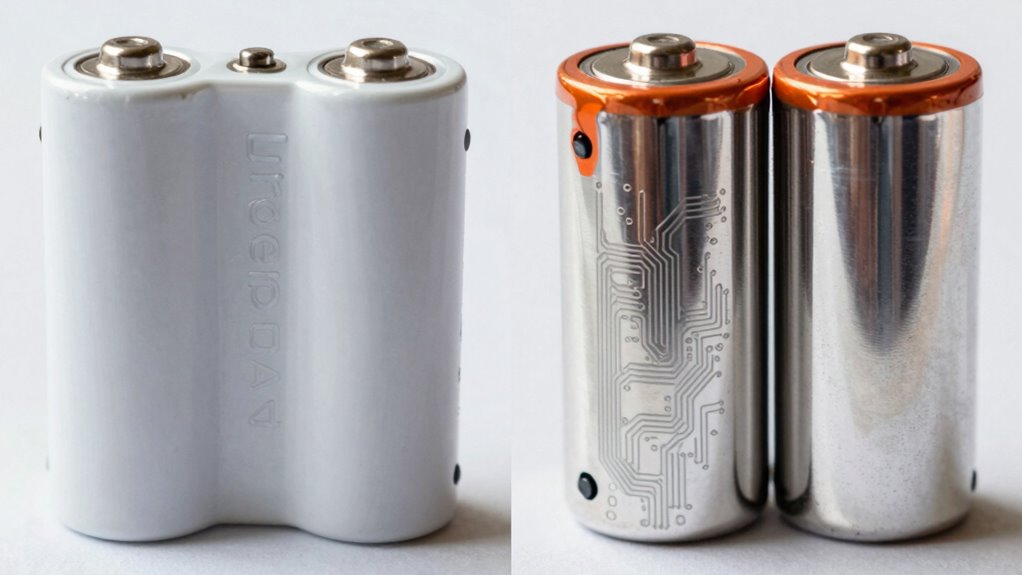

If you’re comparing LiFePO4 and lithium-ion batteries, it’s important to know that they use different chemicals for storing energy. LiFePO4 batteries have a stable phosphate-based cathode, making them safer, longer-lasting, and less prone to overheating. Lithium-ion batteries typically offer higher energy density, which means more power in a smaller package. Understanding these chemistry differences helps you choose the right battery for safety, lifespan, or performance. Keep exploring to learn more about what makes each type unique.

Prime made for students and young adults
- Fast, free delivery for dorm and study essentials
- Prime Video and Amazon Music included
- Member-only deals
Key Takeaways
- Lithium-ion batteries use liquid electrolytes and graphite anodes for high energy density and fast charging.
- LiFePO4 batteries feature a phosphate cathode, offering greater stability and safety but slightly lower energy capacity.
- LiFePO4’s chemistry reduces overheating and fire risk, making it safer for long-term use.
- Lithium-ion batteries generally deliver more power and are better suited for portable electronics.
- The choice depends on safety, lifespan, and energy needs: LiFePO4 for safety, lithium-ion for higher energy.
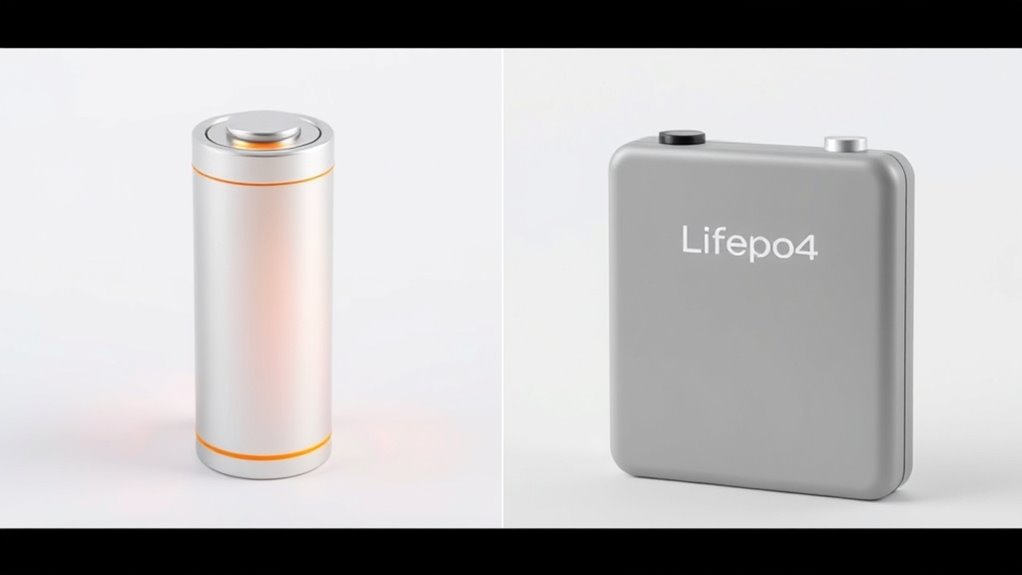
Understanding battery chemistry is essential if you want to grasp how rechargeable devices power your daily life. The inner workings of batteries involve complex chemical reactions, but at their core, they rely on specific materials and compositions to store and release energy efficiently. Two popular types—LiFePO4 (Lithium Iron Phosphate) and Lithium-Ion batteries—use distinct chemistries that influence their performance, safety, and lifespan. To understand these differences, it’s helpful to start with the basics of their electrolytes and anode materials.
Your battery’s electrolyte composition acts as the medium that allows charged particles to move between electrodes during charging and discharging. In lithium-ion batteries, the electrolyte is typically a liquid organic solvent infused with lithium salts. This liquid electrolyte enables fast ion flow, which is key for high power output and quick charging. Conversely, LiFePO4 batteries also use a liquid electrolyte, but their chemistry is more stable due to their unique electrode materials. This stability translates to lower risks of overheating or catching fire, making them safer for many applications.
LiFePO4 batteries have a stable electrolyte, reducing overheating risks and enhancing safety.
The anode materials are equally critical. Lithium-ion batteries often use graphite as their anode, which allows for a high energy density and efficient charge cycles. When you charge a lithium-ion battery, lithium ions move from the cathode to the graphite anode, embedding themselves within the graphite layers. This process is reversible, allowing for repeated charging cycles. In LiFePO4 batteries, however, the anode is typically made of carbon or other stable materials that work in tandem with the phosphate-based cathode. The iron phosphate cathode provides a more stable and safer chemistry, especially under high temperatures or stress. Additionally, the thermal stability of LiFePO4 batteries makes them particularly suited for applications where safety and durability are priorities.
Understanding these fundamental differences helps explain why LiFePO4 batteries tend to have a longer lifespan and better thermal stability, though they usually offer slightly lower energy density than traditional lithium-ion batteries. The electrolyte composition in both types plays a *crucial* role in their overall performance, but the choice of anode materials largely determines their safety and durability. If you’re choosing a battery for a specific application, consider these chemistry elements: a lithium-ion with graphite anodes provides higher energy but requires careful management to prevent overheating, while LiFePO4’s stable anode and cathode chemistry make it a safer, more reliable option for long-term use.
In short, understanding the electrolyte composition and anode materials gives you insight into why different batteries perform the way they do. It’s these fundamental chemistry distinctions that influence everything from safety and lifespan to how quickly they can be charged or discharged.
As an affiliate, we earn on qualifying purchases.
Frequently Asked Questions
How Do Battery Chemistries Affect Environmental Impact?
You should know that battery chemistries markedly impact the environment through recycling challenges and toxic materials. Lithium-ion batteries often contain rare metals that are hard to recycle and can release toxins if not disposed of properly. In contrast, Lifepo4 batteries are safer, with fewer toxic materials and easier recycling processes. Choosing the right chemistry reduces environmental harm, minimizes toxic waste, and helps promote sustainable energy storage solutions.
Can Lifepo4 Batteries Be Recycled Easily?
Yes, LiFePO4 batteries can be recycled, but the recycling processes are still evolving. You should know that environmental recycling of these batteries involves safely extracting materials like lithium, iron, and phosphate. While it’s possible to recycle them, the infrastructure isn’t as widespread as for other chemistries, which can make the process less convenient. Improving environmental recycling methods for LiFePO4 batteries remains a priority to reduce waste and environmental impact.
What Are the Safety Concerns for Lithium-Ion Batteries?
You should know that lithium-ion batteries pose a fire risk if damaged or mishandled, with nearly 80% of battery-related fires linked to overheating or punctures. Their chemical stability can be compromised, leading to thermal runaway. To stay safe, avoid puncturing, overcharging, or exposing them to extreme heat. Proper handling and storage help minimize risks, ensuring your safety and protecting your devices from potential hazards.
How Do Temperature Variations Impact Battery Performance?
Temperature variations directly impact your battery’s performance by affecting thermal stability and temperature efficiency. When it gets too hot, your battery may degrade faster or become unsafe, while cold temperatures reduce capacity and make charging less effective. To keep your battery performing well, avoid extreme temperatures and store it in a controlled environment. Proper temperature management ensures peak thermal stability and maintains your battery’s overall efficiency and lifespan.
Are Lifepo4 Batteries Suitable for High-Drain Devices?
Think of Lifepo4 batteries as steady horses in a race—they handle high-drain devices with impressive high drain efficiency. You’ll find their power delivery reliable, keeping up with rapid bursts of energy without faltering. While they may not be as lightning-fast as some lithium-ion options, their ability to sustain consistent power makes them ideal for high-drain applications. Trust Lifepo4 to deliver steady, dependable energy when you need it most.
As an affiliate, we earn on qualifying purchases.
Conclusion
So, after all this talk about LiFePO4 and lithium-ion batteries, you’d think choosing a winner is straightforward. But surprise! The perfect battery depends on your needs—sometimes safer, sometimes more powerful. Ironically, what seems like a simple choice can get pretty complicated. So next time you pick a battery, remember: the “best” isn’t always the flashiest. Sometimes, it’s just the one that quietly does its job without burning out or blowing up.
As an affiliate, we earn on qualifying purchases.
high capacity lithium-ion batteries
As an affiliate, we earn on qualifying purchases.
As an affiliate, we earn on qualifying purchases.
Halloween Picks
halloween
As an affiliate, we earn on qualifying purchases.