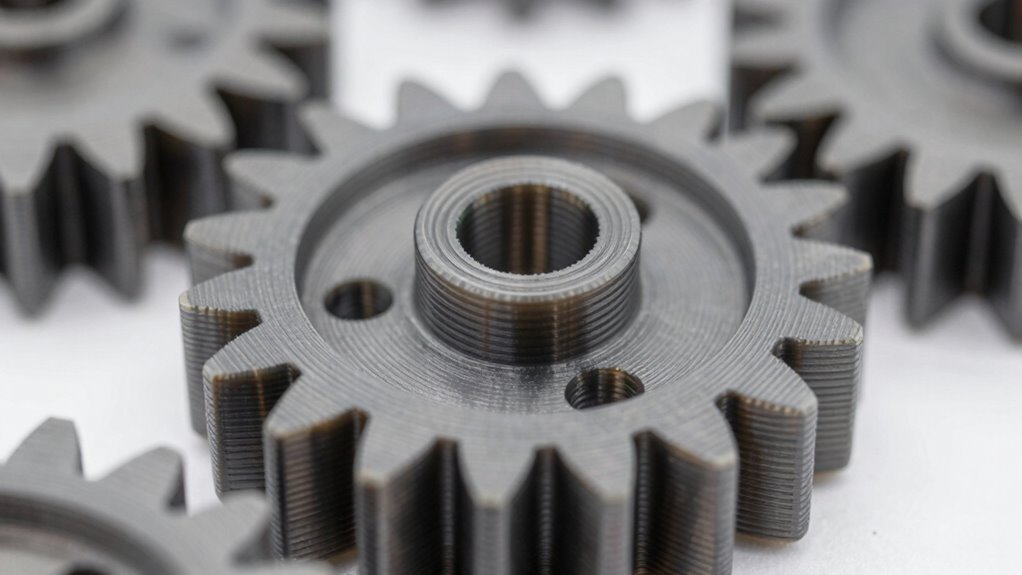

To produce strong, functional 3D printed parts, you should carefully select durable materials like ABS, PETG, or Nylon, and adjust print speeds to guarantee good layer bonding. Proper orientation aligns layers with load directions, boosting strength. Balancing material choice, speed, and orientation is key to achieving reliable results that withstand real-world use. If you keep exploring, you’ll discover how to optimize each factor for the best performance.

Prime made for students and young adults
- Fast, free delivery for dorm and study essentials
- Prime Video and Amazon Music included
- Member-only deals
Key Takeaways
- Selecting durable materials like ABS, PETG, or Nylon enhances the strength and longevity of functional 3D printed parts.
- Proper print orientation aligns layers with stress directions, minimizing weaknesses and improving part durability.
- Slower print speeds improve layer adhesion and overall strength, crucial for load-bearing components.
- Balancing material choice, print speed, and orientation ensures reliable, functional parts suited for real-world use.
- Understanding material properties and optimal settings helps produce strong, realistic prototypes and final functional components.
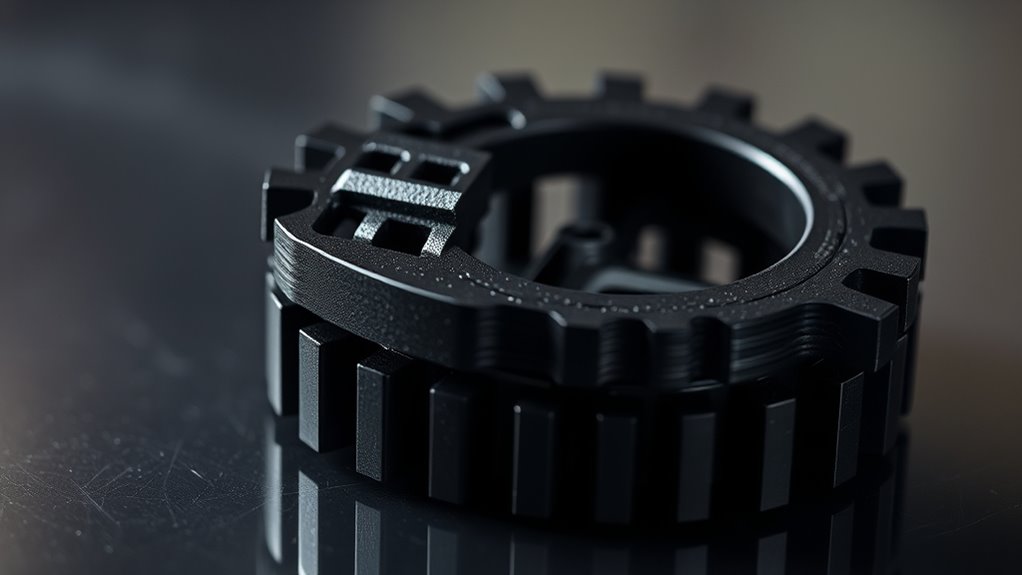
3D printing has revolutionized how you create functional parts, offering a quick and cost-effective alternative to traditional manufacturing methods. When designing these parts, your choice of material is essential. Different materials provide varying levels of strength, flexibility, and temperature resistance, which directly impact the part’s performance. For functional applications, you’ll want to select materials like ABS, PETG, or Nylon, known for their durability and strength. The material you choose determines not only the part’s mechanical properties but also influences print speed. Some materials, such as PLA, print faster and with less fuss, making them ideal for rapid prototyping, while others like Nylon require more careful handling and slower print speeds to achieve ideal results. Striking a balance between material properties and print speed is key to producing parts that meet your specific needs efficiently.
As you set up your printer, understanding how print speed affects the quality and strength of your parts becomes essential. Faster printing can save time but may compromise layer adhesion and surface finish, especially with tougher materials. Slower print speeds allow for better bonding between layers, resulting in stronger, more reliable parts. When printing functional components that need to withstand stress or load, it’s often best to reduce the print speed to ensure proper layer fusion. This is particularly important for parts with complex geometries or overhangs, where inadequate bonding can lead to weaknesses. Adjusting your print speed based on the material and the part’s intended use helps guarantee you get the right balance of strength and efficiency. Additionally, understanding material properties can help you select the best filament for your specific application.
The orientation of your print plays a critical role in the strength of the final part. Proper orientation minimizes the number of layers exposed to stress, aligning the layers with the direction of forces the part will face. This often means you need to experiment with different orientations to find the best configuration. For example, printing a load-bearing arm horizontally might produce a weaker part than printing it vertically, depending on the layer adhesion. By combining thoughtful material selection, appropriate print speed, and strategic orientation, you can greatly enhance the strength and durability of your functional parts.
In the end, mastering these elements means you’ll produce parts that aren’t just quick to make but are also reliable and fit for real-world use. The interplay between material choice, print speed, and orientation determines whether your 3D printed functional parts stand up to the demands placed on them. With practice, you’ll develop an intuitive sense for balancing these factors, enabling you to create high-quality, strong parts efficiently.
durable 3D printing filament ABS PETG Nylon
As an affiliate, we earn on qualifying purchases.
As an affiliate, we earn on qualifying purchases.
Frequently Asked Questions
How Does Temperature Affect 3D Printed Part Strength?
Temperature critically impacts your 3D printed part’s strength by affecting layer bonding and thermal expansion. When you print at ideal temperatures, layers fuse better, resulting in stronger bonds. If the temperature is too high, thermal expansion can cause warping or internal stress, weakening the part. Conversely, too low a temperature leads to poor adhesion, reducing overall strength. Maintaining the right temperature guarantees your part’s durability and structural integrity.
Can 3D Printing Replicate Complex Geometries Reliably?
Did you know that over 85% of complex 3D printed parts meet their design specifications? You can reliably replicate complex geometries by optimizing layer adhesion and print resolution. Precise control over these factors guarantees intricate details and smooth surfaces. By fine-tuning print settings, you’ll achieve high accuracy and consistency, making complex designs not just possible but dependable in real-world applications.
What Post-Processing Improves Functional Part Durability?
To improve your functional part’s durability, focus on enhancing layer adhesion through careful printing parameters and material selection. After printing, surface smoothing techniques like sanding or chemical treatments can reduce stress concentrations and improve overall strength. These steps help prevent cracks and wear, ensuring your part withstands real-world conditions better. Combining strong adhesion during printing with effective surface smoothing post-process markedly boosts the longevity and reliability of your printed components.
How Do Different Filament Materials Impact Strength?
You’ll find that different filament materials markedly impact strength. For example, ABS offers durability and impact resistance due to its filament composition, while PETG balances strength with flexibility, making it ideal for functional parts. Material flexibility varies, so choose a filament suited for your needs. Keep in mind, a wise person knows that selecting the right material can turn a fragile print into a sturdy one, so choose wisely.
Is 3D Printing Suitable for High-Stress Industrial Applications?
Yes, 3D printing can handle high-stress industrial applications if you focus on material fatigue and design optimization. By selecting durable materials like composites and refining your part’s orientation, you improve strength and longevity. You should also consider post-processing techniques to enhance performance. While it may not replace traditional methods entirely, 3D printing offers rapid prototyping and customization for demanding environments, making it a viable option when properly optimized.
3D printer filament for load-bearing parts
As an affiliate, we earn on qualifying purchases.
As an affiliate, we earn on qualifying purchases.
Conclusion
While some might doubt 3D printing’s ability to produce truly durable functional parts, advancements in materials and print orientation prove otherwise. By carefully selecting the right filament and optimizing your print’s orientation, you can create strong, reliable components suited for real-world use. Don’t let skepticism hold you back—embrace these innovations, and you’ll find 3D printing can deliver parts that stand up to demanding applications. Your next project might just be limited only by your imagination.
high strength 3D printing filament
As an affiliate, we earn on qualifying purchases.
As an affiliate, we earn on qualifying purchases.
3D printing filament for functional parts
As an affiliate, we earn on qualifying purchases.
As an affiliate, we earn on qualifying purchases.
Halloween Picks
halloween
As an affiliate, we earn on qualifying purchases.