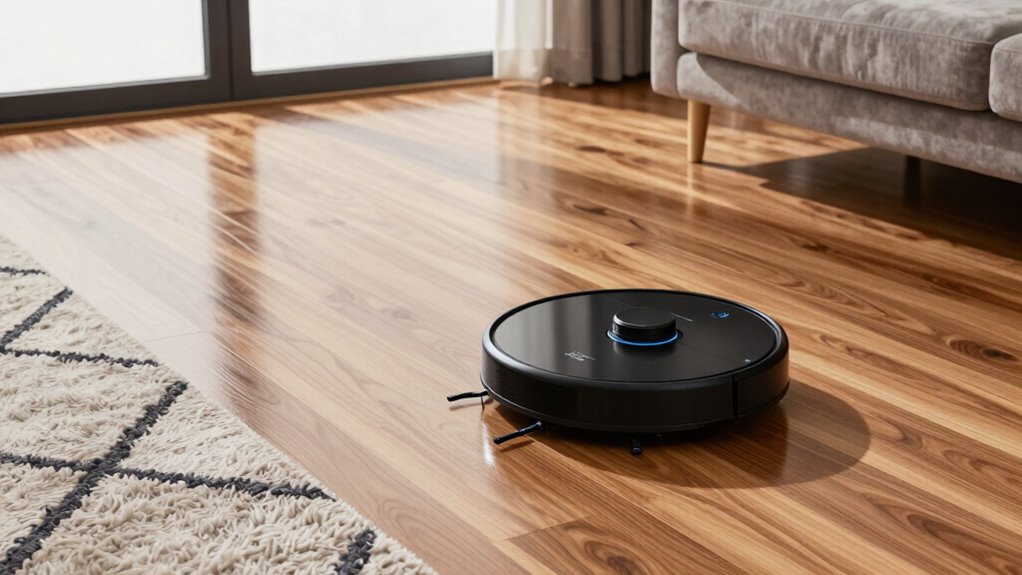

The key floor type question that impacts your robot vacuum’s performance is whether it can recognize and adapt to different surfaces like hardwood, tile, or carpets. Your vacuum needs smart navigation and surface-specific detection to clean effectively without scratching or missing spots. If you want your robot to handle various floors well, understanding how floor types influence its features is vital. Keep exploring how each type affects performance to get the most out of your device.

Prime made for students and young adults
- Fast, free delivery for dorm and study essentials
- Prime Video and Amazon Music included
- Member-only deals
Key Takeaways
- Identifying whether the floor is hard or carpeted determines the vacuum’s suction and cleaning mode adjustments.
- Floor surface recognition allows the robot to adapt navigation and avoid damaging delicate surfaces.
- The presence of thick carpets requires increased suction power and slower movement for effective cleaning.
- Hard floors benefit from precise navigation and surface-specific detection to prevent scratches and missed spots.
- Battery life considerations depend on the size of the area and the need for multi-room or multi-surface cleaning.
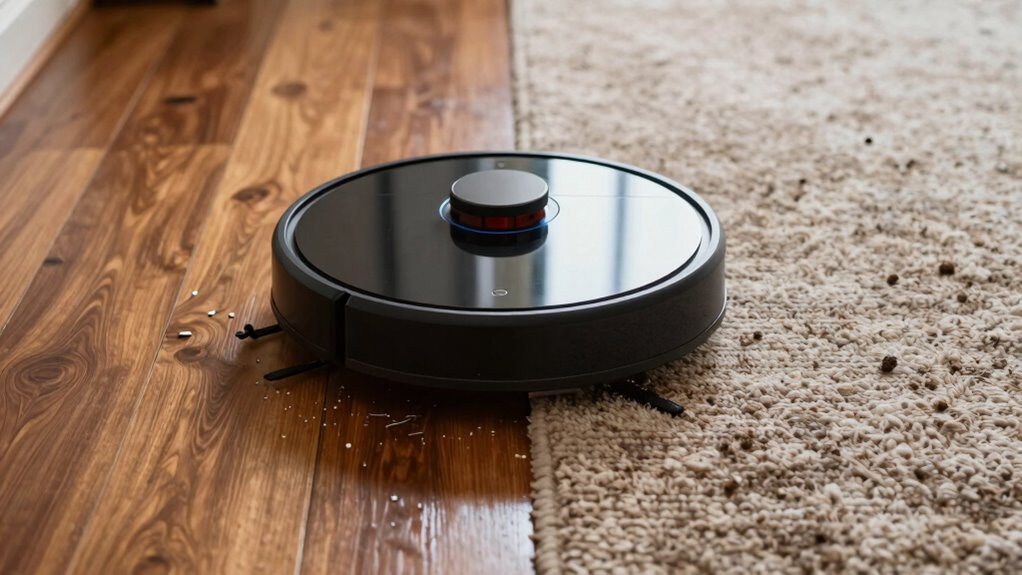
Choosing the right robot vacuum depends heavily on your floor type, as different surfaces can markedly impact cleaning performance. If you have hardwood floors, you’ll want a model that offers precise smart navigation to avoid scratching or missing spots. Smart navigation enables your robot to map out your space efficiently, ensuring it doesn’t waste time zigzagging or bumping into furniture. It also helps it adapt to changes in the environment, such as rearranged furniture or new obstacles, which is especially useful on smooth, open surfaces like hardwood or tile. When your vacuum can intelligently plan its route, it cleans more thoroughly, saving you time and effort.
Choose a robot vacuum with smart navigation for efficient, thorough cleaning on hardwood and tile floors.
Battery longevity plays a significant role in how well your robot performs, especially on larger or more complex floor layouts. A model with a long-lasting battery can cover more ground in a single run, reducing the need for frequent recharges or interruptions. If your home has multiple rooms or a sprawling floor plan, you’ll want a robot that can sustain a complete cleaning session without running out of juice halfway through. Longer battery life also means your vacuum can handle more challenging surfaces or multiple cleaning cycles before needing a recharge, which is invaluable if you’re aiming for a consistently clean home.
When it comes to different floor types, your choice of robot vacuum should balance smart navigation and battery longevity. For example, if your home has a combination of hardwood, tile, and rugs, a model with adaptive navigation can recognize different surfaces and adjust cleaning patterns accordingly. It might slow down on thick carpets or increase suction power when needed, ensuring optimal cleaning across all floor types. Meanwhile, a strong battery ensures the vacuum can tackle larger areas without frequent stops, especially in homes with multiple rooms or extensive floor space. Additionally, some models include sensors that detect floor type, allowing them to automatically optimize cleaning settings for each surface. Incorporating floor type detection technology can significantly enhance the efficiency and effectiveness of your cleaning routine. A well-designed system considers the importance of floor surface recognition to deliver tailored cleaning, making your entire process more efficient. In addition, advances in sensor technology enable these vacuums to better identify and respond to different cleaning challenges on various surfaces.
Keep in mind that some models may prioritize smart navigation features at the expense of battery life, or vice versa. The best choice depends on your specific needs—if you have a large house, prioritize battery longevity; if your floors are delicate or have lots of furniture, focus on smart navigation. A well-rounded robot vacuum balances both, providing efficient, thorough cleaning tailored to your floor type. Understanding these key features can help you select the ideal model for your home, ensuring your floors stay spotless with minimal effort.
robot vacuum with smart navigation for hardwood and tile floors
As an affiliate, we earn on qualifying purchases.
As an affiliate, we earn on qualifying purchases.
Frequently Asked Questions
How Does Rug Pile Height Affect Robot Vacuum Cleaning?
Higher rug pile heights can challenge your robot vacuum’s cleaning ability. Thick carpets require more effort for effective dirt removal, affecting carpet maintenance and floor durability. You might notice the vacuum struggles to reach deep into plush fibers, leaving debris behind. To keep your carpets in top shape, consider adjusting the vacuum’s settings or opting for a model designed for high-pile rugs, ensuring thorough cleaning without damaging your flooring.
Can Robot Vacuums Handle Uneven or Textured Floors?
Brave your broom’s boundaries! Yes, robot vacuums can handle uneven or textured floors, but their success depends on smart navigation and sensor calibration. You must verify sensors are properly calibrated to detect diverse surfaces, allowing the robot to adapt and avoid obstacles. When equipped with advanced navigation, your robot will smoothly maneuver textured terrains, making cleaning consistent and thorough, no matter how rugged or irregular your floors might be.
Do Different Floor Types Impact Battery Life?
Different floor types do impact your robot vacuum’s battery life. Heavier materials like thick carpets or textured floors increase battery consumption because the vacuum works harder during cleaning. Conversely, smooth surfaces like hardwood or tile generally conserve battery, extending its longevity. Your vacuum’s interaction with various floor materials influences how much energy it uses, so understanding these interactions helps you optimize cleaning cycles and maintain battery performance over time.
Are Some Robot Vacuums Better for Hardwood Than Tile?
Think of your floors as a dance floor—some materials groove better with specific moves. For hardwood, select a robot vacuum designed for delicate surfaces; it glides smoothly, maintaining cleaning efficiency without scratches. Tile floors, being more resilient, handle more robust cleaning modes. Some vacuums excel on hardwood with gentle brushes, while others might struggle. Choose a model that adapts to your floor material, ensuring ideal cleaning efficiency and preserving your home’s beauty.
How Does Floor Color Influence Sensor Accuracy?
Floor color substantially influences sensor accuracy because of color contrast and surface reflectivity. Lighter floors can cause sensors to misjudge obstacles, while darker floors may absorb signals, reducing detection. High contrast between floor and objects helps your robot vacuum navigate better, preventing missed spots or collisions. Surface reflectivity also impacts sensors; shiny or glossy floors can reflect signals unpredictably, so understanding your floor’s color and finish helps optimize your vacuum’s performance.
best robot vacuum for multi-surface cleaning
As an affiliate, we earn on qualifying purchases.
As an affiliate, we earn on qualifying purchases.
Conclusion
Remember, a clean home starts with understanding your floor type. Whether it’s hardwood, carpet, or tile, choosing the right robot vacuum makes all the difference. Don’t put all your eggs in one basket—select a model suited to your floors to maximize efficiency. As the saying goes, “A stitch in time saves nine.” By matching your vacuum to your floor, you’re saving time and effort in the long run.
robot vacuum with floor type detection technology
As an affiliate, we earn on qualifying purchases.
As an affiliate, we earn on qualifying purchases.
long battery life robot vacuum for large homes
As an affiliate, we earn on qualifying purchases.
As an affiliate, we earn on qualifying purchases.
Halloween Picks
halloween
As an affiliate, we earn on qualifying purchases.