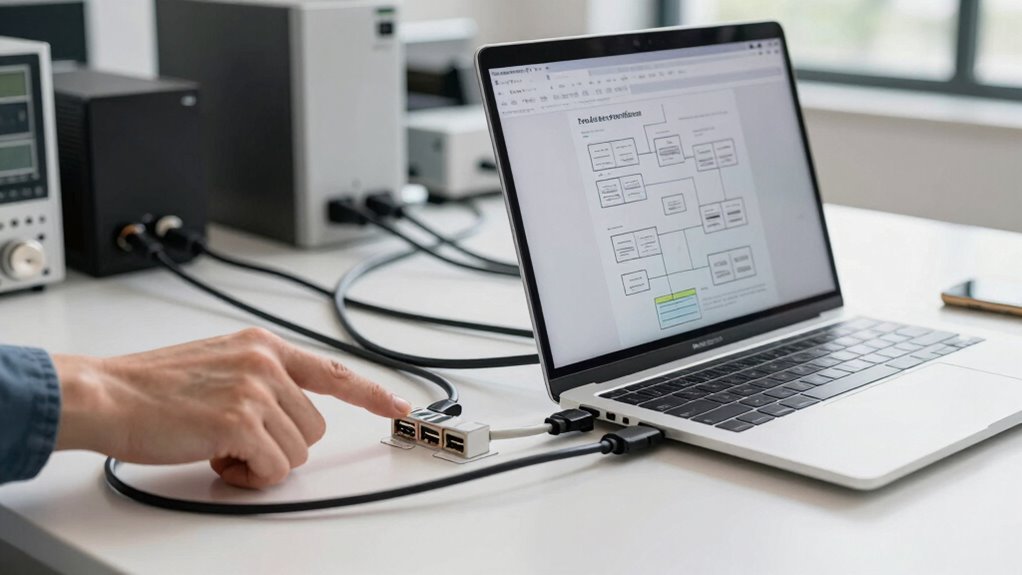

To choose ports based on your workflow, focus on what tasks demand most—fast data transfer for large files, or reliable connections for peripherals. Prioritize ports like Thunderbolt or USB-C for high-performance needs, and stick to USB-A for common accessories. Avoid trendy options that don’t serve your daily tasks. By aligning ports with your specific work habits, you’ll reduce clutter and improve efficiency. Continue exploring to discover how to optimize port selection even further.

Prime made for students and young adults
- Fast, free delivery for dorm and study essentials
- Prime Video and Amazon Music included
- Member-only deals
Key Takeaways
- Assess your specific hardware needs, such as external drives or high-resolution displays, to select suitable ports.
- Prioritize ports that match your primary tasks, like Thunderbolt for data-intensive work or USB-A for peripherals.
- Ensure port compatibility for future upgrades and hardware customization to maintain flexibility.
- Focus on practical features that improve workflow rather than trendy or marketing-driven port options.
- Choose ports that minimize bottlenecks and hardware conflicts, enhancing overall productivity.
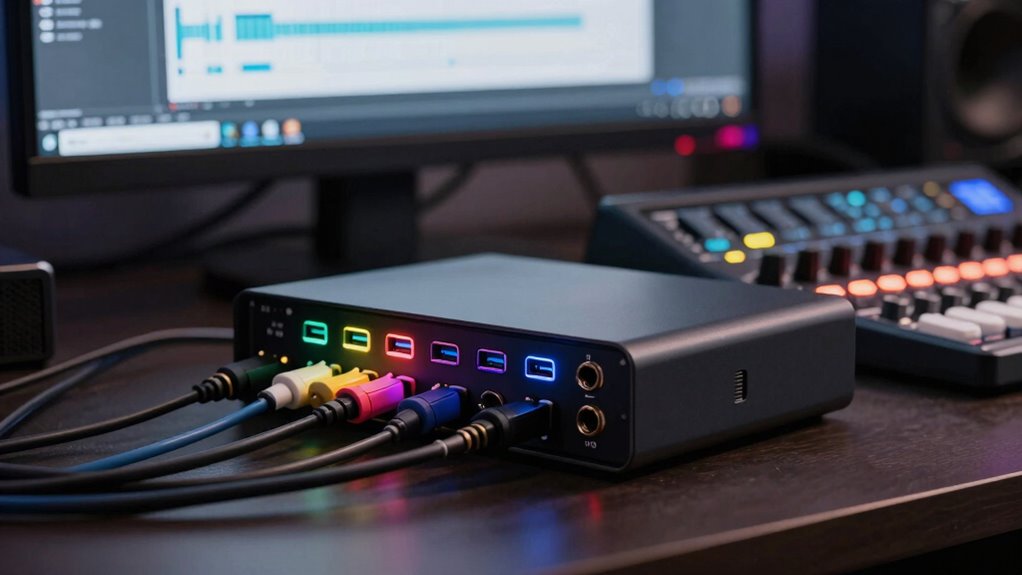
Have you ever wondered how choosing the right ports can streamline your workflow and prevent bottlenecks? It’s a crucial decision that often gets overshadowed by hype or marketing claims. Instead of falling for the latest trends, focus on what truly enhances your productivity. Hardware customization plays an essential role here; selecting the appropriate ports guarantees your setup aligns with your specific needs. Whether you’re transferring large files, connecting multiple peripherals, or working with high-resolution displays, your port choices should facilitate smooth, efficient operations.
Your workflow demands vary depending on your work style and equipment. For example, if you’re handling data-intensive tasks, prioritize ports that support fast data transfer rates, like Thunderbolt or USB-C. These ports not only speed up your work but also allow for hardware customization—connecting external drives, docks, or displays seamlessly. Conversely, if you mainly use standard peripherals such as keyboards, mice, or printers, traditional USB-A ports might suffice. Recognizing these priorities helps you avoid unnecessary complexity and focus on optimizing the ports that matter most to your workflow.
Prioritize fast ports like Thunderbolt or USB-C for data tasks; use USB-A for standard peripherals to optimize your workflow.
Thinking practically about your workflow means understanding the specific demands of your tasks. Avoid overloading your setup with unnecessary ports that add complexity without benefit. Instead, choose ports that not only match your current needs but also give room for hardware customization—like adding external storage or multiple displays—without sacrificing speed or reliability. Prioritizing ports that support future upgrades and compatibility ensures your setup remains flexible as your needs evolve. Additionally, considering the types of ports available can help identify which options will best support your hardware customization needs and long-term flexibility.
Ultimately, choosing ports based on your workflow rather than hype ensures a more efficient, tailored setup. It’s about making smart hardware choices that support your productivity, not just following trends. By understanding your unique needs and how different ports support hardware customization, you prevent bottlenecks and keep your workflow running smoothly. When your setup aligns with your work style, you’ll notice increased efficiency, fewer frustrations, and more time focused on what truly matters.
Thunderbolt 3 external hard drive
As an affiliate, we earn on qualifying purchases.
As an affiliate, we earn on qualifying purchases.
Frequently Asked Questions
How Do I Assess My Specific Workflow Needs Before Selecting Ports?
To assess your workflow needs, start by listing the devices you frequently use and check their compatibility with different ports. Consider the types of cables each device requires to guarantee device compatibility and cable compatibility. Think about data transfer speed, power needs, and future upgrades. This way, you choose ports that truly fit your workflow, avoiding unnecessary features or hype, and ensuring smooth, efficient operation.
Are Certain Ports More Future-Proof for Evolving Workflows?
Certain ports, like Thunderbolt and USB-C, are more future-proof because they support wireless alternatives and custom adapters, keeping up with evolving workflows. You should prioritize ports that adapt easily, allowing wireless connections or custom accessories, so you stay flexible as technology advances. This approach guarantees your setup remains relevant, letting you seamlessly integrate new devices and workflows without needing frequent hardware upgrades.
How Do I Balance Speed Versus Compatibility When Choosing Ports?
You should prioritize peripheral compatibility first, ensuring the port supports your existing devices and future upgrades. Then, consider data transfer speed, choosing ports that match your workflow needs—faster for large files or real-time tasks, slower for basic use. Balance these factors by evaluating your current setup and anticipated needs, avoiding hype-driven choices, and opting for versatile ports like USB-C that offer both high speed and broad compatibility.
What Are Common Pitfalls When Selecting Ports Based on Hype?
You might fall into the trap of choosing ports based solely on hype, ignoring market trends and brand reputation. This can lead to compatibility issues or stagnation if a port becomes outdated quickly. To avoid this, research current industry trends and prioritize reputable brands known for quality and support. Make decisions based on your workflow needs rather than fleeting trends, ensuring your setup remains reliable and future-proof.
How Can I Test Port Suitability Before Committing to a Setup?
You can test port suitability by setting up a pilot environment that mimics your workflow, considering your legacy systems and hardware limitations. Run your typical tasks through different ports to observe performance, latency, and compatibility. Use benchmarking tools to gather data, and confirm the setup aligns with your hardware restrictions. This hands-on testing helps you identify the best ports before fully committing, avoiding costly mistakes.
USB-C docking station for laptops
As an affiliate, we earn on qualifying purchases.
As an affiliate, we earn on qualifying purchases.
Conclusion
By choosing ports based on your workflow, you guarantee smoother operations and avoid falling for hype. For example, imagine a small e-commerce business that selected a port optimized for quick parcel handling, boosting delivery speed and customer satisfaction. Making decisions rooted in your unique needs, rather than popular trends, can transform your operations. So, take the time to evaluate what truly fits your workflow—you’ll see the difference in efficiency and growth.
As an affiliate, we earn on qualifying purchases.
As an affiliate, we earn on qualifying purchases.
Halloween Picks
halloween
As an affiliate, we earn on qualifying purchases.