

Pre-mortem thinking helps you identify potential project failures before they happen by imagining worst-case scenarios and analyzing their causes. This proactive approach boosts risk management, improves decision-making, and prevents costly mistakes early on. By fostering open communication and regular assessments, you create a culture that anticipates challenges rather than reacts to them. If you want to uncover hidden vulnerabilities and strengthen your planning for success, exploring this mindset can be a game-changer.
Key Takeaways
- Pre-mortem thinking involves imagining potential project failures to identify risks early.
- It promotes proactive risk management, reducing the likelihood of costly surprises later.
- Conducting structured sessions with diverse teams uncovers vulnerabilities before they materialize.
- Regular risk assessments and scenario analysis strengthen resilience and strategic decision-making.
- Building a culture of openness and learning encourages early detection and continuous improvement.

UNGLINGA 150 Experiments Science Kits for Kids, S.T.E.M Educational Project Toys for Boys Girls Birthday Gifts Ideas, Volcano, Chemistry Lab Tools Scientist Set
150 EXCITING EXPERIMENTS FOR KIDS: DIY projects to get kids' minds humming, try one of these science experiments,...
As an affiliate, we earn on qualifying purchases.
What Is a Pre-Mortem and Why It’s a Planning Game-Changer

A pre-mortem is a proactive planning technique that helps you identify potential failures before they happen. It’s a powerful tool for risk management because it encourages you to imagine your project has already failed and then analyze why. This process sharpens your decision-making, allowing you to spot weaknesses early and develop strategies to mitigate risks. You can leverage project planning tools to facilitate this process effectively. Instead of waiting for problems to arise, you get ahead of them by thinking critically about possible obstacles. A pre-mortem transforms your approach from reactive to proactive, providing a clearer view of vulnerabilities that might otherwise go unnoticed. By doing so, you enhance your ability to make informed decisions, reduce surprises, and increase the likelihood of project success. It’s a game-changing method for smarter planning, especially when creating calm, clutter-light homes through simple, effective strategies.
EUDAX School Physics Labs Basic Electricity Discovery Circuit and Magnetism Experiment Kits for High School Students Electromagnetism Elementary Electronics
Learn basic Electricity and Magnetism experiments through full-color manuals, understand the basic principles, and help Students learn, think...
As an affiliate, we earn on qualifying purchases.
How to Conduct a Pre-Mortem Session Step-by-Step

To effectively conduct a pre-mortem session, start by assembling a diverse team of stakeholders who can provide different perspectives on the project. This encourages thorough risk analysis and helps uncover hidden vulnerabilities. Begin by clearly defining the project’s goals and scope, then ask each team member to imagine the project has failed and identify possible reasons. Foster open team collaboration to generate honest, constructive insights. Document each identified risk or failure point, then discuss how to mitigate these issues proactively. Prioritize risks based on their potential impact and likelihood. Incorporating risk management strategies and prevention strategies from body piercing knowledge can also help highlight unforeseen vulnerabilities in project planning. Recognizing sustainable and secure solutions early in the process can further bolster resilience. Conducting a thorough failure analysis ensures that potential pitfalls are addressed before they manifest, saving time and resources. This step-by-step approach ensures everyone’s voice is heard, enhances risk analysis, and strengthens team collaboration—ultimately increasing your project’s resilience before execution.

National Geographic Earth Science Kit with 100+ Activities for Kids 8-12
MASSIVE SCIENCE KIT FOR CURIOUS KIDS - More than 15 experiment activities including dueling water tornadoes, building an...
As an affiliate, we earn on qualifying purchases.
Common Mistakes to Avoid When Using Pre-Mortem Thinking

One common mistake to avoid when using pre-mortem thinking is rushing through the process without thorough preparation. Skipping this step can lead to overlooking critical insights, especially related to team dynamics and decision biases. If you don’t set clear goals or involve diverse perspectives, you risk reinforcing groupthink or missing key failure points. Incorporating decision-making strategies can help ensure a comprehensive evaluation of potential risks. Ignoring emotional undercurrents or underlying assumptions can also cloud judgment. To prevent these pitfalls, be mindful of how team dynamics influence honesty and openness. Avoid rushing into conclusions; instead, take time to challenge assumptions and recognize inherent decision biases. This careful approach guarantees you identify potential failures effectively and foster a culture of critical thinking. Remember, thorough preparation makes all the difference. Understanding aviation regulations can help inform comprehensive risk assessments during the process. Additionally, applying risk assessment frameworks can structure your analysis for better accuracy and completeness. Moreover, utilizing support mechanisms such as checklists or expert consultations can further enhance the reliability of your pre-mortem evaluation.

NATIONAL GEOGRAPHIC Science Magic Kit – Science Kit for Kids with 100+ Unique Experiments and Magic Tricks, Chemistry Set and STEM Project, A Great Gift for Boys and Girls (Amazon Exclusive)
THE MAGIC IS IN THE SCIENCE - The 100+ science experiments in this kit combine the wonders of...
As an affiliate, we earn on qualifying purchases.
Real-Life Examples of Pre-Mortem Success in Business

Many successful businesses use pre-mortem thinking to prevent failures before they happen. For example, startups often identify launch risks early, avoiding costly mistakes. Strategic planning sessions then turn into powerful tools to anticipate challenges and secure wins. Implementing risk assessment strategies can further enhance a company’s ability to foresee potential issues and adapt proactively. Incorporating scenario analysis helps teams visualize potential failures and develop contingency plans well in advance. Additionally, staying informed about emerging cybersecurity threats can be crucial in safeguarding digital assets and maintaining trust. Regular project management reviews ensure ongoing alignment with strategic goals and help detect potential issues early, further strengthening the pre-mortem approach. As AI detection methods continue to evolve, being aware of content authenticity measures can help businesses stay ahead of misinformation risks.
Startup Launch Failures
Pre-mortem thinking has proven invaluable in preventing startup launch failures by allowing entrepreneurs to identify potential pitfalls before they occur. When you analyze your startup plan in advance, you can uncover issues like overlooked market validation or ignored customer feedback. This foresight helps you adapt early, avoiding costly mistakes. For instance, understanding the importance of market validation can prevent launching a product that doesn’t meet actual demand or fails to resonate with your target audience. Additionally, considering Free Floating landscape features during planning can help identify environmental challenges that might impact your startup’s success.
Product Rollout Challenges
Proactively identifying potential product rollout challenges can save your business from costly setbacks. Conduct thorough market analysis early to uncover possible obstacles, such as unmet customer needs or competitive gaps. Engage with customer feedback beforehand to understand their expectations and concerns, preventing surprises during launch. By simulating worst-case scenarios, you can pinpoint issues like supply chain delays or inadequate support systems. Addressing these risks in advance ensures smoother deployment and higher adoption rates. This pre-mortem approach allows you to adjust your strategy, refine messaging, and allocate resources efficiently. Ultimately, it helps you avoid last-minute crises, build customer trust, and secure your product’s success from the outset. Anticipating challenges transforms potential pitfalls into opportunities for improvement.
Strategic Planning Wins
Implementing pre-mortem thinking in strategic planning has led to notable business successes. By conducting scenario analysis, you identify potential failures early, allowing for effective risk mitigation. This proactive approach helps avoid costly surprises and positions your business for growth. Companies that embrace pre-mortem strategies often spot blind spots before they become crises. For example, during a product launch, teams used scenario analysis to anticipate market rejection, adjusting plans accordingly. This foresight saved resources and boosted confidence. Pre-mortem thinking also facilitates better resource allocation, clearer communication, and more resilient strategies. When you routinely ask, “What could go wrong?” you build a culture of preparedness that enhances decision-making and drives long-term success.
- Identifying risks before they materialize
- Adjusting strategies based on scenario analysis
- Preventing costly failures through early detection
- Strengthening overall risk mitigation efforts
How to Make Pre-Mortem Thinking Part of Your Project Routine

Integrating pre-mortem thinking into your project routine requires deliberate effort and consistency. Begin by scheduling regular risk assessments where your team collaborates to identify potential failure points. Encourage open dialogue, making it a habit to analyze what could go wrong before starting each phase. Use structured exercises or checklists to guide these discussions, ensuring everyone’s input is valued. Embedding this practice into your meetings helps normalize proactive failure prevention. Over time, your team will develop a mindset that anticipates challenges early, saving time and resources down the line. Consistent risk assessment and team collaboration are key to making pre-mortem thinking a natural part of your project workflow, ultimately increasing your chances of success.
Tips for Building a Culture That Embraces Proactive Failure Prevention
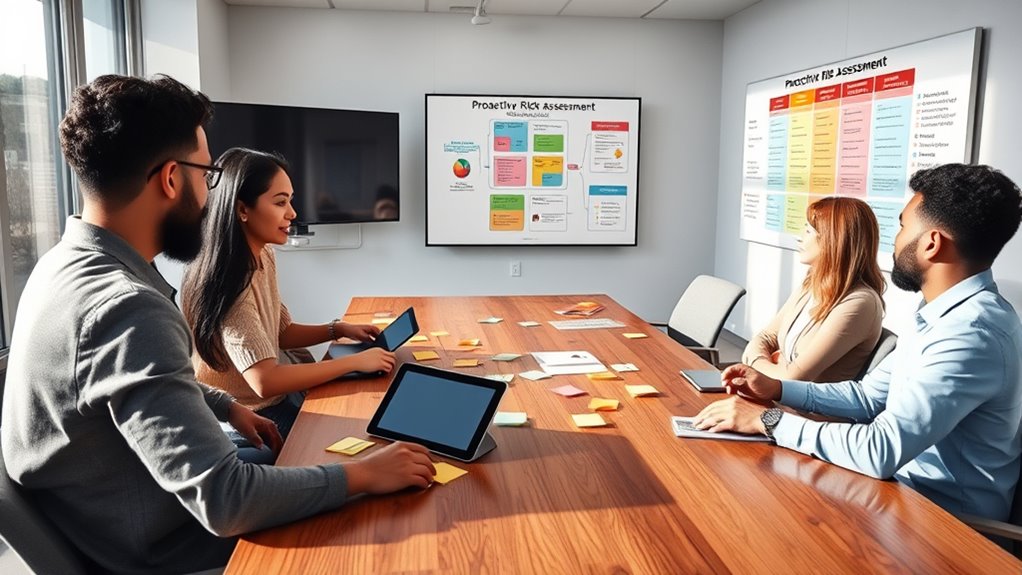
You can foster a culture that proactively prevents failure by promoting open communication where team members feel safe sharing concerns. Encourage risk-taking and learning from mistakes to build resilience and innovation. Regularly conducting risk assessments keeps everyone aware of potential issues and ready to address them early. Incorporating quality control measures from top gelato spots can help identify issues before they affect the final product.
Promote Open Communication Culture
Fostering an open communication culture requires creating an environment where team members feel safe sharing concerns and admitting mistakes without fear of judgment. This encourages team transparency and open feedback, which are essential for proactive failure prevention. When people trust that their honesty won’t be penalized, they’re more likely to voice potential issues early. To promote this, consider the following:
- Lead by example, openly discussing mistakes and lessons learned
- Encourage regular check-ins to facilitate open feedback
- Recognize transparency and constructive input publicly
- Create clear channels for raising concerns without repercussions
Encourage Risk-Taking and Learning
Encouraging risk-taking and learning is essential for creating a culture that actively prevents failures before they occur. When you foster an environment that values creative collaboration, team members feel safe exploring new ideas without fear of blame. This openness promotes an innovative mindset, where experimentation is seen as a path to improvement rather than failure. By rewarding efforts to take calculated risks and learn from mistakes, you build resilience and adaptability within your team. Encouraging this proactive approach shifts focus from avoiding failure to embracing it as a learning opportunity. Additionally, incorporating proactive failure prevention strategies can help identify potential issues early, allowing your team to address them before they become costly problems. For instance, regular maintenance and checks, such as ensuring air purifier filters are replaced on schedule, exemplify preventative measures that can avert larger failures later. Ultimately, a culture that supports risk-taking helps identify potential issues early, allowing your team to address them before they become costly problems.
Implement Continuous Risk Assessments
Implementing continuous risk assessments is essential for maintaining a proactive failure prevention culture. By regularly evaluating potential threats, you stay ahead of issues and reinforce resilience. Use scenario planning to visualize possible failures and adapt your strategies accordingly. Develop contingency strategies to prepare for unexpected events, ensuring swift responses. Incorporate these practices into your routine to foster ongoing vigilance and improvement:
- Schedule routine risk reviews to spot emerging threats
- Incorporate scenario planning into project milestones
- Update contingency strategies based on new insights
- Encourage team input to identify blind spots and enhance assessments
This approach helps you detect vulnerabilities early, empowering your team to act proactively and prevent failures before they occur. Continuous risk assessments become a cornerstone of a resilient, failure-ready culture.
Frequently Asked Questions
How Often Should I Conduct Pre-Mortem Sessions?
You should conduct pre-mortem sessions regularly, ideally at key project milestones or before major decisions, to improve risk assessment and team collaboration. Doing them consistently helps identify potential failures early, allowing your team to address issues proactively. Scheduling these sessions periodically keeps everyone aligned and aware of risks, fostering a culture of continuous improvement and resilience. Regular pre-mortems guarantee you stay ahead of possible failures, minimizing surprises down the line.
Can Pre-Mortem Thinking Be Applied to Personal Goals?
Imagine standing at the edge of a trail, peering ahead to spot potential pitfalls. You can absolutely apply pre-mortem thinking to personal goals, shifting your mindset to assess risks before they trip you up. This proactive approach helps you identify weaknesses or obstacles early, allowing you to adjust your plans. By doing so, you turn risk assessment into a powerful tool for success, making your journey smoother and more intentional.
What Tools Are Best for Facilitating Pre-Mortem Exercises?
You can use tools like risk assessment matrices and brainstorming techniques to facilitate pre-mortem exercises. Risk assessment helps you identify potential failures early, while brainstorming encourages creative thinking about possible pitfalls. Combining these methods allows you to systematically evaluate risks and generate solutions, making it easier to anticipate and prevent issues before they happen. These tools streamline your pre-mortem process, boosting your chances of success.
How Do You Handle Resistance to Admitting Potential Failures?
You can tame the fear of failure and emotional resistance by creating a safe space where honesty blooms. When you acknowledge that vulnerability isn’t a weakness, resistance begins to loosen like a knot. Encourage open dialogue, emphasize learning from potential failures, and remind yourself that facing fears head-on is the compass guiding you away from hidden pitfalls. Embrace failure as a stepping stone, not a stumbling block.
What Are the Limitations of Pre-Mortem Analysis?
Pre-mortem analysis has limitations due to bias limitations and cognitive biases, which can skew your predictions. You might overestimate risks or overlook subtle issues because of optimism bias or confirmation bias. These biases can cause you to miss critical failure points. Additionally, pre-mortems rely on imagination and assumptions, which may not account for unpredictable factors. Recognizing these limitations helps you stay cautious and supplement with other risk assessment methods.
Conclusion
Embracing pre-mortem thinking can truly transform your planning process. By proactively identifying potential failures, you’re actually increasing your chances of success. Some skeptics argue it’s just anxiety in disguise, but evidence shows it helps teams spot risks early and adapt faster. When you make it a regular habit, you build a culture that values foresight over regret. So, give it a try—pre-mortem thinking isn’t just theory, it’s a proven way to stay ahead.