
The Tiny Framework helps you break down complicated choices into small, manageable steps, reducing overwhelm and mental strain. By creating a simple map with decision points that lead to clear next actions, you focus on one step at a time, which boosts confidence and decreases decision fatigue. This approach keeps you motivated and makes even the biggest tasks feel achievable. Keep exploring, and you’ll discover how small, focused actions can transform how you handle complex projects.

Prime made for students and young adults
- Fast, free delivery for dorm and study essentials
- Prime Video and Amazon Music included
- Member-only deals
Key Takeaways
- Break complex decisions into small, manageable steps to reduce overwhelm and decision fatigue.
- Create a clear decision map linking each small step to the next, simplifying navigation through choices.
- Focus on one tiny action at a time to prevent cognitive overload and maintain clarity.
- Emphasize incremental progress to build confidence and momentum, making big tasks feel less daunting.
- Use the Tiny Framework to reframe complex projects as series of simple, solvable actions for sustainable progress.
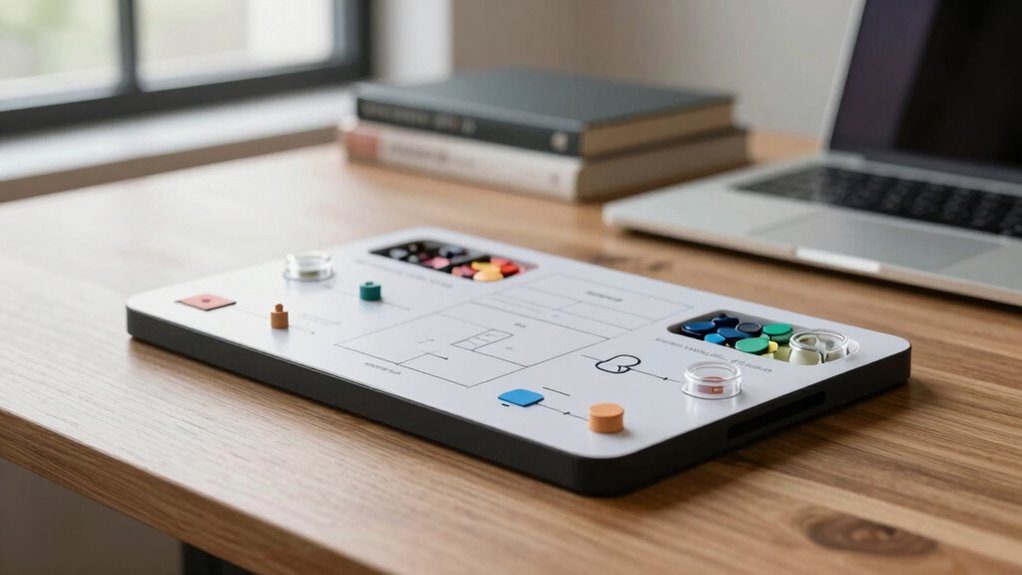
Have you ever felt overwhelmed by the multitude of options when tackling a complex project? It’s a common experience, and it often leads to decision fatigue and cognitive overload. When your mind is flooded with choices, it becomes harder to think clearly and make effective decisions. That’s where the Tiny Framework comes in—designed to break down the chaos and make complicated choices feel smaller and more manageable.
A key element of this approach is recognizing the importance of biodiversity, which highlights how diverse, interconnected systems can thrive when each part is managed carefully and incrementally. Instead of viewing a project as one overwhelming mountain to climb, the Tiny Framework encourages you to divide it into tiny, bite-sized steps. Think of it as creating a clear map where each small decision points to the next, rather than trying to navigate the entire landscape at once. This approach helps you conserve mental energy and reduces the mental strain that comes with trying to juggle too many options simultaneously. You begin to see that each decision isn’t a huge, insurmountable problem but a small, solvable task. This shift in perspective can considerably lower decision fatigue, leaving your mind fresh and focused for the work that truly matters.
The key to this framework is its simplicity. Rather than overcomplicating the process with elaborate planning or endless options, it emphasizes focusing on one small step at a time. By doing so, you prevent cognitive overload, which occurs when your brain is overwhelmed with information, options, and possible outcomes. Developing a structured approach to decision-making further enhances your ability to manage complexity. When your mind isn’t bogged down by trying to process everything at once, you can think more creatively and make better choices. This clarity boosts your confidence, making it easier to move forward without feeling paralyzed by the enormity of the task. Incorporating incremental progress into your workflow reinforces this idea, demonstrating that small, consistent actions lead to significant results over time.
Another advantage of the Tiny Framework is that it fosters momentum. Small wins build confidence and motivation, encouraging you to keep progressing. When each step feels manageable, you’re less likely to procrastinate or give up. Instead, you develop a habit of tackling projects incrementally, which leads to consistent progress over time. This method doesn’t eliminate difficult decisions but makes them seem less intimidating. By focusing on tiny, actionable steps, you create a sustainable way to handle even the most complex projects without draining your mental resources.
Ultimately, the Tiny Framework isn’t about avoiding tough choices; it’s about reframing them. It shows you that, with small, deliberate steps, you can conquer even the most intimidating tasks. You reduce decision fatigue and cognitive overload, empowering yourself to work smarter, not harder. The result is a clearer mind, increased productivity, and a smoother path through the chaos of complex choices.
As an affiliate, we earn on qualifying purchases.
Frequently Asked Questions
How Does the Tiny Framework Differ From Other Decision-Making Tools?
The tiny framework differs from other decision-making tools by emphasizing heuristic simplification, making complex choices feel more manageable. It focuses on increasing cognitive ease, helping you break down decisions into smaller, more intuitive steps. Unlike traditional methods that can be overwhelming, this framework streamlines your thinking process, reducing mental clutter. As a result, you can make confident decisions faster, with less stress and more clarity.
Can the Tiny Framework Be Customized for Personal or Professional Use?
Yes, you can customize the tiny framework for personal and professional use. For example, in a personal setting, you might adapt it to decide on a career change by breaking down factors like passion, skills, and stability. Professionally, you could tailor it to project planning, focusing on resources, deadlines, and team input. This flexibility allows you to make clearer, more manageable decisions in any area of your life.
Is the Tiny Framework Suitable for Large-Scale or Complex Projects?
Yes, the tiny framework can handle large-scale or complex projects, but you should consider scalability concerns and complexity management. While it simplifies decision-making, managing extensive features or intricate workflows might require additional tools or customizations. You’ll want to assess if its lightweight design aligns with your project’s growth, or if you need more robust solutions. Proper planning ensures the framework supports your project’s complexity without sacrificing performance or clarity.
What Are the Limitations of Using the Tiny Framework?
Like a fragile glass slipper, the tiny framework suits small projects but struggles with scalability concerns as your needs grow. You might face adaptability challenges, finding it hard to customize or expand without breaking its delicate balance. Its minimal design limits advanced features and integrations, making it less ideal for complex, large-scale projects. You’ll need to weigh its simplicity against potential limitations as your project evolves.
How Quickly Can Someone Learn to Apply the Tiny Framework Effectively?
You can learn to apply the tiny framework quickly, often within a few days, thanks to its simple principles. The learning curve is gentle, making it easy to grasp the core ideas. Once you understand the basics, practicing practical application becomes straightforward. With consistent use, you’ll start making clearer, more confident decisions, and the framework will feel like a natural part of your process in no time.
As an affiliate, we earn on qualifying purchases.
Conclusion
So, you see, this tiny framework proves that even the most complicated choices can feel smaller. It’s ironic how something so small can make decision-making seem effortless, isn’t it? You might think complexity needs a big solution, but sometimes, less really is more. Next time you’re overwhelmed, remember that tiny tools often pack the biggest punch. Who knew that simplicity could be the secret to making even your toughest choices feel just a little lighter?
As an affiliate, we earn on qualifying purchases.
As an affiliate, we earn on qualifying purchases.
Halloween Picks
halloween
As an affiliate, we earn on qualifying purchases.