
Public charging stations may seem convenient, but they come with hidden risks. Many stations aren’t well-maintained, leading to faulty chargers, damaged cables, and unstable power that can harm your vehicle’s battery or cause safety hazards like overheating and fires. Plus, cyber threats can compromise your personal data, and poor security can make your charging session vulnerable to hacking. Staying aware of these dangers helps protect your car and safety—there’s more to take into account if you keep looking.
Open a free Amazon Business account
Business pricing, bulk buying and tax-exempt orders.
As an affiliate, we earn on qualifying purchases.
Key Takeaways
- Many public chargers have inconsistent maintenance, increasing the risk of electrical faults and damage to vehicles.
- Faulty chargers can cause electrical surges, overheating, and thermal runaway, risking fires or explosions.
- Poorly secured stations are vulnerable to cyberattacks, threatening vehicle data and user safety.
- Inadequate infrastructure can accelerate battery degradation, reducing vehicle lifespan and performance.
- Safety hazards from substandard equipment and connections can lead to physical damage and compromised vehicle safety.
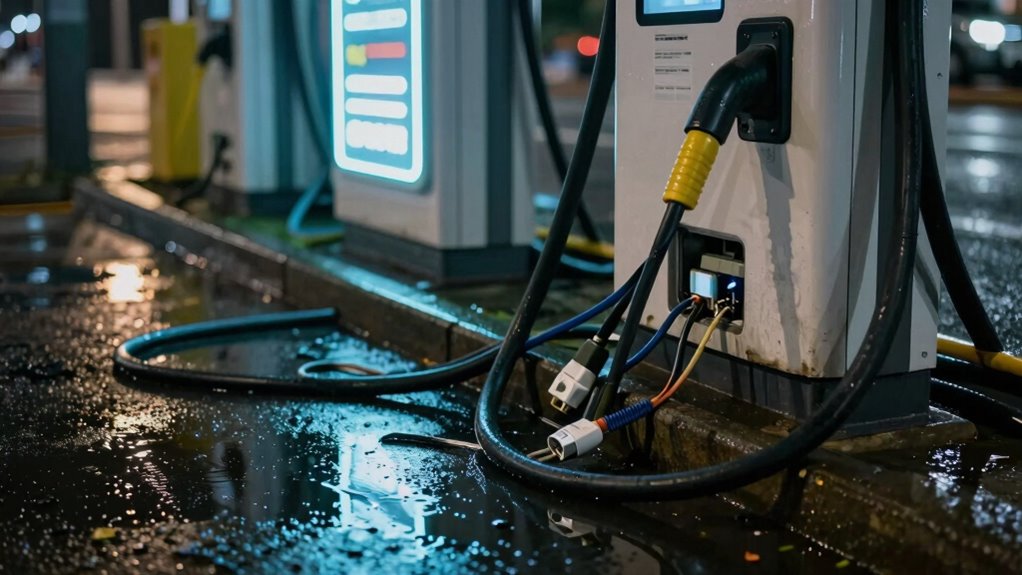
Have you ever considered the risks involved in using public charging stations for your electric vehicle? While it might seem straightforward, there’s more to it than just plugging in and waiting. The reliability of the charging infrastructure is a vital factor. Not all stations are built or maintained with the same standards, which means you could encounter faulty chargers, poor connections, or even damaged cables. These issues might cause your vehicle to charge improperly or, worse, damage your battery. Relying on public charging stations requires trusting that the infrastructure is safe and well-maintained, but that’s not always the case. A compromised charging station can lead to inconsistent power delivery, which impacts your vehicle’s overall performance and longevity.
Battery safety is another significant concern. When you use a public charger, you’re exposing your battery to potential hazards, especially if the charging equipment isn’t up to standard. Faulty or poorly maintained chargers can cause electrical surges or short circuits that threaten your battery’s integrity. Over time, repeated exposure to subpar charging conditions may degrade the battery’s health faster than normal. In some cases, improper charging can even cause overheating or thermal runaway, which could lead to fires or explosions—serious safety risks that you definitely want to avoid. Since your battery is a critical component of your vehicle, protecting it from damage is essential for both safety and performance. Additionally, the quality of charging stations directly impacts the safety and effectiveness of the charging process. It’s also important to understand that charging station security varies widely, which can further complicate safety considerations. Being aware of potential cybersecurity threats can help you take steps to protect your vehicle and personal data when using these stations.
electric vehicle portable charger safety
As an affiliate, we earn on qualifying purchases.
As an affiliate, we earn on qualifying purchases.
Frequently Asked Questions
How Common Are Public Charging-Related Electrical Fires?
Public charging-related electrical fires are relatively rare but still pose significant risks. Charging infrastructure can sometimes have electrical hazards like faulty wiring or poor maintenance, increasing fire chances. You should always inspect charging stations for damage or irregularities before use. While most public chargers are safe, being cautious helps prevent potential electrical hazards, especially since fires can escalate quickly and cause serious damage or injury.
Can Public Chargers Cause Long-Term Vehicle Damage?
Public chargers can cause long-term vehicle damage like a slow leak that worsens over time. If you’re not careful, improper charging compatibility or frequent use of incompatible stations may accelerate battery degradation. Over time, this can reduce your battery’s lifespan and performance. To avoid this, always verify charger compatibility and limit public charging sessions, ensuring your vehicle’s health stays intact, like a well-maintained garden thriving for years.
Are There Safe Public Charging Practices for EV Owners?
Yes, there are safe public charging practices you can follow. Always practice good charging etiquette by not overstaying your welcome once charging is complete and sharing stations courteously. Choose well-maintained charging stations, checking for visible signs of damage or issues before plugging in. Avoid using damaged connectors and make certain your vehicle’s charging port is clean. These habits help prevent damage and keep the charging environment safe for everyone.
What Are the Signs of a Compromised Public Charging Station?
You should watch for signs like unusual cables, tampered ports, or strange device attachments, which indicate charging station vulnerabilities. Over 40% of public charging scams involve fake or compromised stations, putting your data and vehicle at risk. If a station looks suspicious or doesn’t match the usual setup, avoid using it. Always inspect for visible damage and report any inconsistencies to prevent falling victim to public charging scams.
Do Public Chargers Have Better Security Against Theft?
Public chargers generally don’t have better security against theft, leaving you vulnerable to cybersecurity vulnerabilities and user privacy concerns. Thieves can exploit these stations to access your vehicle’s data or install malicious software. Always be cautious when connecting to public chargers, and avoid sharing sensitive information. Using trusted stations and monitoring your vehicle’s activity helps protect your data and reduces the risk of theft or cyberattacks.
EV charging station cyber security device
As an affiliate, we earn on qualifying purchases.
As an affiliate, we earn on qualifying purchases.
Conclusion
So, next time you pull into a public charger, remember that what seems like a quick, convenient stop might hide unseen risks. Just as a chance encounter with a stranger can unexpectedly change your day, a seemingly harmless charge could expose your device—or your data—to danger. Sometimes, the smallest moment of coincidence reveals the biggest threat. Stay alert, stay safe, and don’t let convenience blind you to the hidden risks lurking in plain sight.
As an affiliate, we earn on qualifying purchases.
public charging station surge protector
As an affiliate, we earn on qualifying purchases.
As an affiliate, we earn on qualifying purchases.
Flea & tick season Picks
flea and tick prevention
As an affiliate, we earn on qualifying purchases.