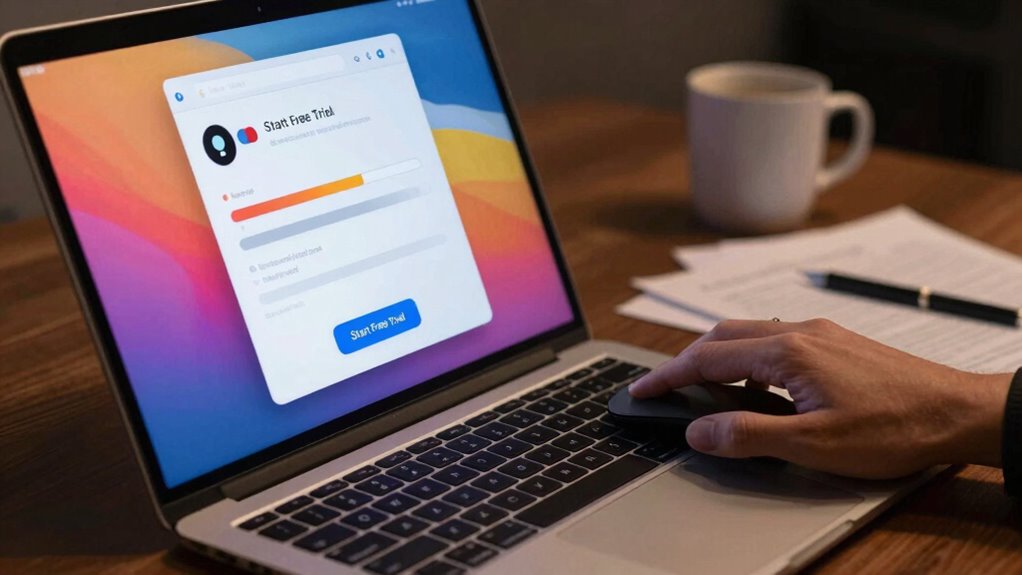
When you sign up for a free trial, you need to track its start and end date closely, because many services automatically renew and charge you without clear notifications. Companies often hide renewal policies or make cancellation confusing, so it’s easy to forget or miss the deadline. Staying proactive with reminders and reviewing terms helps you avoid unexpected charges. Keep an eye on your bank statements—you’ll discover valuable tips on managing free trials effectively as you explore further.
Open a free Amazon Business account
Business pricing, bulk buying and tax-exempt orders.
As an affiliate, we earn on qualifying purchases.
Key Takeaways
- Free trials often have auto-renewal policies that can lead to unexpected charges if not canceled in time.
- Hidden renewal clauses and fine print can cause confusion about trial expiration and billing terms.
- Forgetting or missing trial end dates can result in automatic subscription renewals and charges.
- Managing multiple subscriptions requires careful tracking to avoid overlapping or unintended billing.
- Transparent communication and reminders are essential to prevent surprises from trial expirations and renewals.
Have you ever signed up for a free trial only to find yourself overwhelmed by unexpected charges or tricky cancellation policies? That experience is more common than you might think, and it highlights why “free trial” usually means “track this carefully.” Companies often use free trials as a way to hook you early, but they rely heavily on your ability to manage your subscription effectively. Without proper subscription management, it’s easy to forget when the trial ends or to overlook the fine print about automatic billing. That’s why staying on top of your trial period is so important; it helps you avoid unintended charges and keeps your financial records clear.
Understanding the importance of billing transparency can help you make more informed decisions when signing up for free trials. When you sign up for a free trial, the first thing to contemplate is billing transparency. Some companies are upfront about their policies, clearly stating when the trial ends and how billing will proceed afterward. Others are less transparent, hiding details in the fine print or making it difficult to find cancellation options. This lack of clarity can lead to surprise bills once the trial period is over. To prevent that, you need to pay close attention to the terms and conditions, noting the exact date your trial expires and any automatic renewal clauses. Setting reminders a day or two before the trial ends can help you decide whether to continue or cancel without feeling rushed. Additionally, understanding subscription renewal practices can help you recognize potential pitfalls before they occur.
Being aware of renewal policies can further protect you from unexpected charges, especially when companies make automatic renewals difficult to identify. Many companies now employ auto-renewal features that can be hard to notice, making vigilance essential. Being proactive in managing your subscriptions and understanding the fine print ensures you won’t be caught off guard by charges you didn’t anticipate. Keep track of your trial start and end dates in a calendar or a dedicated app. If the service offers account alerts or notifications, turn them on to receive reminders. Making a habit of reviewing your subscriptions regularly ensures you’re aware of upcoming charges and can cancel any service you no longer need. It’s also smart to check your bank statements frequently for any unexpected transactions. Many people overlook small charges that sneak in after the trial ends, only realizing too late that they’ve been billed.
As an affiliate, we earn on qualifying purchases.
Frequently Asked Questions
How Do Companies Typically Monitor Free Trial Usage?
You typically monitor free trial usage by analyzing customer engagement through data analytics tools. These tools track how often users log in, which features they use, and how long they stay engaged. By closely monitoring this data, you can identify signs of interest or potential conversion, allowing you to tailor follow-up strategies. This careful tracking helps maximize conversions and guarantees your marketing efforts are targeted effectively.
What Are Common Signs of Trial Abuse?
You’ll notice trial abuse through signs like multiple accounts from the same IP, rapid, repeated sign-ups, or inconsistent payment details. Ironically, what seems like genuine interest often masks trial fraud or subscription scams, making it clear you must vigilantly monitor usage. These red flags help you catch users trying to game the system, ensuring your free trial isn’t exploited for illegitimate gains.
How Can Users Avoid Unintended Charges After a Free Trial?
To avoid unintended charges after a free trial, you should carefully read the promotional offers and understand the subscription models involved. Set a reminder to cancel before the trial ends if you’re not interested in continuing. Use calendar alerts or app notifications. Also, double-check billing details and keep track of trial expiration dates. This proactive approach helps you enjoy the benefits of free trials without worrying about unexpected charges.
What Legal Protections Exist During Free Trials?
You’re protected by laws against contract violations and privacy concerns during free trials. Regulations often require clear terms, including cancellation policies and data handling practices, so providers must be transparent. If a company breaches these rules, you can report violations to consumer protection agencies. Always review terms carefully, watch for misleading claims, and keep records of your communications to guarantee your rights are protected during the free trial period.
How Long Should a Free Trial Ideally Last?
A free trial should ideally last between 7 to 14 days, as this balances giving users enough time to explore your service and encouraging conversions. Remarkably, 65% of users decide within the first week. Your pricing strategies and user experience heavily influence this decision. A shorter trial might create urgency, while a longer one can boost engagement. Tailor the duration to optimize sign-ups and guarantee users fully experience your offering.
As an affiliate, we earn on qualifying purchases.
Conclusion
So, as you step into that free trial, remember it’s more than just a risk-free peek—it’s a silent dance of tracking and data. Like footprints in fresh snow, every click leaves a mark. Stay aware, stay cautious. When the trial ends, those footprints reveal what you’ve shared and seen. Protect your privacy like a treasured secret, because behind the inviting glow, careful tracking quietly watches every move you make.
subscription cancellation reminder
As an affiliate, we earn on qualifying purchases.
As an affiliate, we earn on qualifying purchases.
As an affiliate, we earn on qualifying purchases.
Flea & tick season Picks
flea and tick prevention
As an affiliate, we earn on qualifying purchases.