
Blue light from screens doesn’t cause eye damage, but poor habits can lead to eye strain and discomfort. Taking regular breaks using the 20-20-20 rule, adjusting your screen position, and managing lighting conditions are more effective than relying solely on blue light filters or glasses. While filters help reduce blue light exposure, they don’t prevent eye strain or improve sleep. Keep exploring to discover proven ways to protect your eyes and boost comfort during screen time.
Key Takeaways
- Blue light exposure from screens does not cause permanent eye damage; eye strain is mainly due to prolonged focus and poor habits.
- Taking regular breaks with the 20-20-20 rule effectively reduces eye strain more than blue light filters alone.
- Blue light filters and glasses may reduce exposure but do not significantly prevent eye discomfort or improve sleep.
- Adjusting screen distance, lighting, and minimizing glare are crucial strategies to alleviate eye strain.
- Routine eye exams and maintaining good visual habits are essential for long-term eye health, beyond relying on blue light reduction tools.
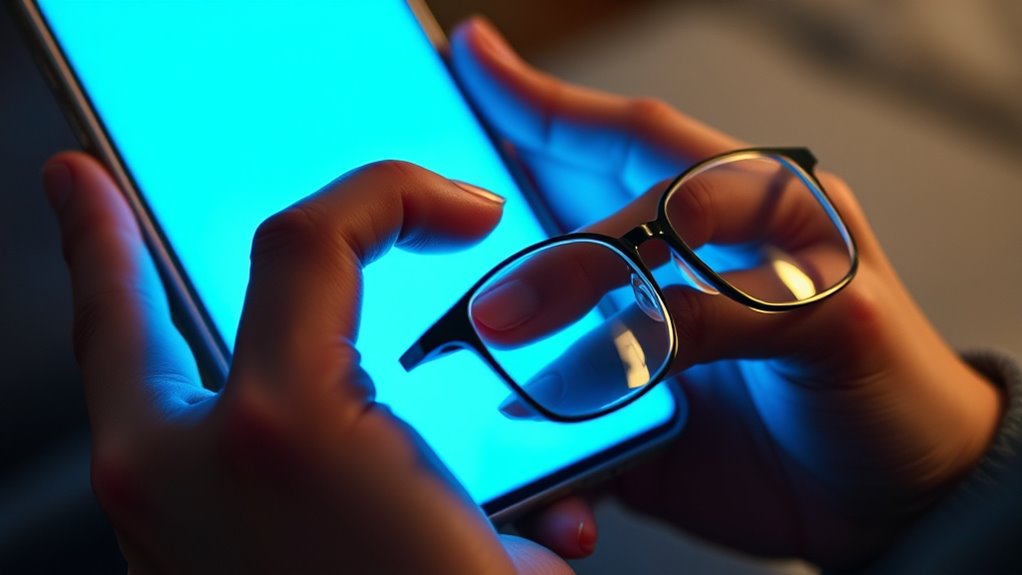
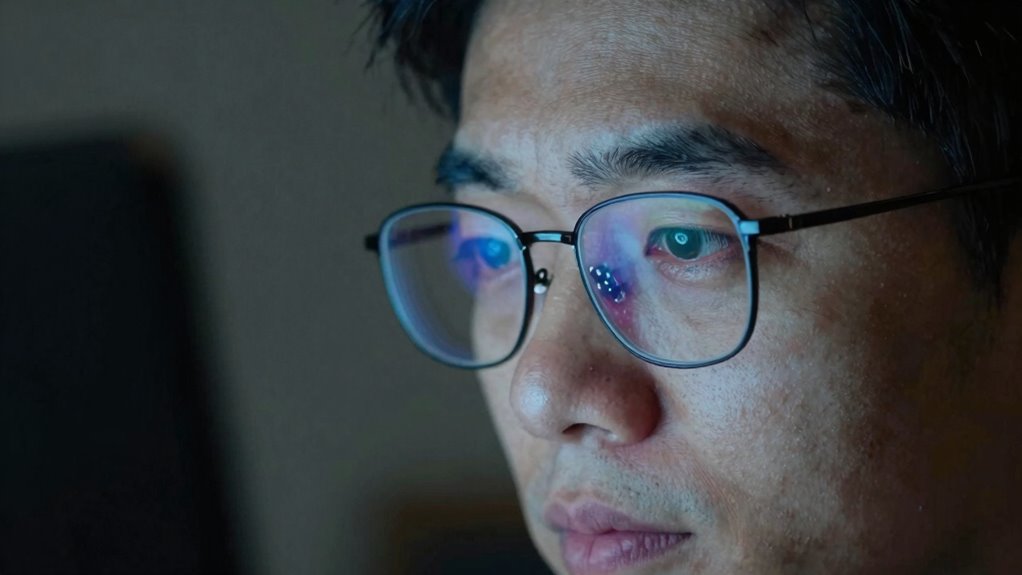
Many people believe that exposure to blue light from screens inevitably causes serious eye damage or disrupts sleep, but these claims are often exaggerated or based on misunderstandings. While blue light does reach your eyes when you spend time on digital devices, the idea that it directly harms your eyesight or causes permanent damage is largely a myth. Instead, the real issue often comes down to your screen time habits and how you manage your device use. For example, staring at screens for hours on end without breaks can lead to eye strain, dryness, or discomfort, but this isn’t solely due to blue light. It’s also about how you use your devices—your screen distance, lighting environment, and blink rate all play roles.
Many people turn to blue light filters or glasses marketed to block blue light, hoping to protect their eyes or improve sleep. However, the effectiveness of these solutions varies. Blue light filter effectiveness is often overstated; research shows that while these filters can reduce blue light exposure, they don’t necessarily prevent eye strain or substantially improve sleep quality. In fact, some studies suggest that eye strain is more related to prolonged focus on screens and poor visual habits than blue light itself. Using a filter might make you feel better temporarily, but it isn’t a magic fix. Instead, implementing good screen time habits—like following the 20-20-20 rule (every 20 minutes, look at something 20 feet away for at least 20 seconds)—can be more beneficial. Additionally, eye health experts recommend regular eye check-ups to ensure your visual system remains healthy, especially if you spend many hours on screens.
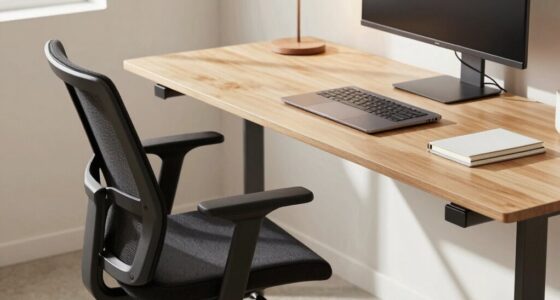
You should also consider adjusting your environment. Proper lighting, reducing glare, and maintaining an appropriate screen distance can considerably reduce eye discomfort. If you’re concerned about sleep disruption, limiting screen use before bedtime and enabling “night mode” or blue light reduction features on your devices can help, but they’re just part of a broader approach. The key is moderation and mindful usage rather than relying solely on filters or gadgets to shield you from blue light.
Frequently Asked Questions
Can Blue Light Exposure Cause Long-Term Eye Damage?
Blue light exposure isn’t proven to cause long-term retinal damage, but it can contribute to eye fatigue if you stare at screens too long. You might notice discomfort or blurry vision, but these symptoms usually go away with proper breaks. To protect your eyes, follow the 20-20-20 rule and reduce screen time when possible. While blue light isn’t a major threat, staying mindful helps prevent unnecessary eye strain.
Do Blue Light Glasses Improve Sleep Quality Significantly?
Did you know that 75% of people report better sleep when using blue light glasses? They can improve sleep quality by blocking blue light emitted from screens, reducing melatonin suppression. While they aren’t a magic fix, many find that wearing blue light glasses in the evening helps them fall asleep faster and feel more rested. So, if you’re struggling with sleep, giving these glasses a try might be worth it.
Are There Any Proven Benefits to Reducing Blue Light Exposure?
Reducing blue light exposure doesn’t have proven benefits for eye health or lowering blue light risks. While it might help with eye strain and sleep for some, scientific evidence remains limited. You can protect your eyes by taking regular breaks and adjusting screen brightness, but cutting blue light isn’t a proven solution. Focus on overall eye care, and stay informed about new research on blue light risks and eye health.
How Much Blue Light Do Screens Emit Compared to Sunlight?
Think of your screens as tiny suns; they emit far less blue light than natural sunlight. Compared to the vast brightness of the outdoors, your screen’s blue light is like a flickering candle against daylight. Adjusting screen brightness and limiting screen time helps, but the blue light from devices isn’t nearly as intense as sunlight. So, while it’s wise to be mindful, don’t worry—your screens aren’t overshadowing the sun.
Is Blue Light Harmful to Children’s Developing Eyes?
Blue light isn’t demonstrated to harm children’s developing eyes directly. However, excessive screen time can lead to eye strain, dryness, and discomfort, which may affect their eye development over time. To protect your child’s eyes, limit screen time, encourage regular breaks, and ensure proper lighting. These precautions help reduce eye strain and promote healthy eye development, supporting their overall visual well-being.
Conclusion
So, next time you scroll through your screen, remember: not all blue light is the villain. Imagine your eyes as gentle lakes, resting peacefully without unnecessary worries about blue light lurking around. Instead of chasing every myth, give your eyes a break, blink often, and enjoy the glow of your screen without fear. By understanding what truly helps, you can keep your vision clear, bright, and calm—like a peaceful sunset after a busy day.