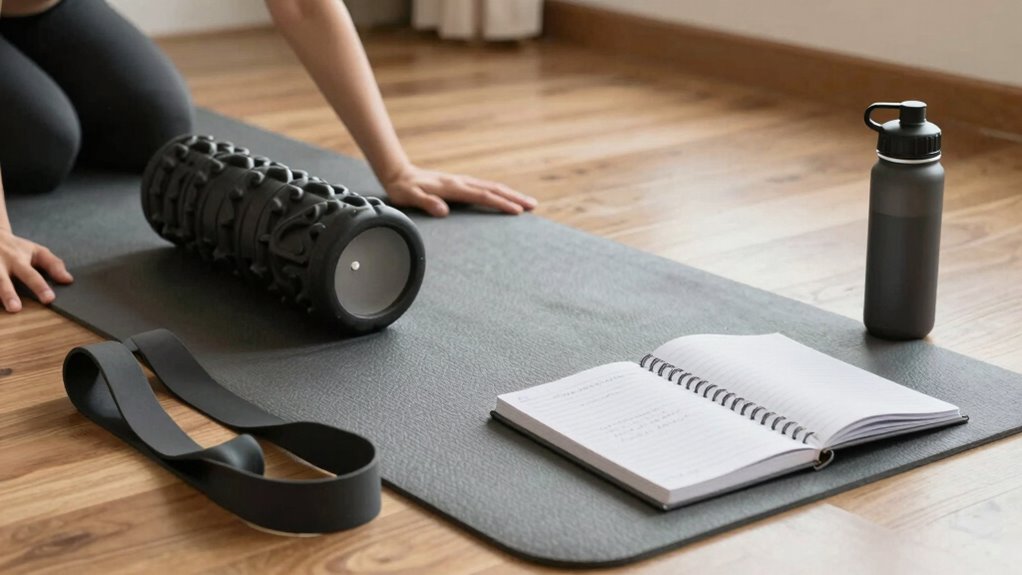

Start by understanding your current habits and set clear, achievable goals focused on foundational elements like sleep, hydration, and gentle movement. Track your progress using simple tools to see what helps and what needs adjustment. Prioritize sleep quality through consistent routines and creating a calming environment. Once you’ve optimized these areas, evaluate if additional support is needed, and consider how recovery hardware can complement your ongoing efforts. Keep exploring to discover how to build a resilient, effective recovery routine.

Prime made for students and young adults
- Fast, free delivery for dorm and study essentials
- Prime Video and Amazon Music included
- Member-only deals
Key Takeaways
- Assess existing habits and set clear, achievable goals to tailor your recovery routine effectively.
- Prioritize improving sleep quality through consistent sleep hygiene practices before adding hardware.
- Track progress regularly using journals or apps to identify what recovery strategies work best.
- Focus on foundational recovery methods like gentle movement, stretching, and hydration before hardware use.
- Develop patience and mindfulness to ensure sustainable, evidence-based recovery practices.

Ever wondered how to bounce back stronger after a setback? Building a recovery routine starts with understanding your current habits and setting clear, achievable goals. Before investing in recovery hardware, it’s essential to focus on foundational elements like progress tracking and sleep quality. Tracking your progress helps you understand what’s working and where adjustments are needed. It’s not about obsessing over every detail but about gaining insight into your body’s responses. Use simple tools like a journal or smartphone app to note daily activities, soreness levels, and energy fluctuations. This information guides your decisions, ensuring your recovery routine is tailored to your specific needs. Building awareness of your body’s signals can also enhance your overall recovery experience. Sleep quality plays a pivotal role in recovery. When you sleep well, your body repairs tissues, reduces inflammation, and restores energy more efficiently. Prioritize good sleep hygiene: establish a consistent bedtime, limit screen time before bed, and create a calm, dark environment. Recognize patterns in your sleep and identify factors that disrupt it. If you notice persistent issues, address them before adding recovery devices. Quality sleep amplifies the benefits of any recovery routine, making your efforts more effective and sustainable. Once you’re tracking progress and optimizing sleep, you’ll want to incorporate active recovery strategies. Gentle movement, stretching, and hydration support your body’s natural healing processes. Instead of rushing into hardware purchases, evaluate whether your routine needs simple adjustments or additional support. Sometimes, improving sleep routines and monitoring your progress can deliver significant benefits without extra equipment. When you do decide to add recovery hardware, it should complement your existing habits and address specific needs identified through your tracking. Incorporating psychological awareness can also help you stay motivated and mindful during your recovery journey. Developing a mindful recovery mindset can foster patience and resilience as you progress. Recognizing the importance of progress tracking and sleep quality ensures your recovery efforts are grounded in evidence and tailored to your body’s needs. Remember, mindful awareness and patience are key. As you develop this routine, you’ll find yourself bouncing back quicker from setbacks, feeling stronger, and better prepared to handle life’s physical demands. Your recovery journey begins with small, intentional steps—laying the groundwork for long-term resilience.
As an affiliate, we earn on qualifying purchases.
Frequently Asked Questions
How Long Should My Recovery Routine Last Each Day?
Your recovery routine should last around 20 to 30 minutes daily. Focus on stretching techniques to improve flexibility and prevent injury, spending at least 10 minutes on targeted stretches. Incorporate hydration strategies, drinking water throughout to aid recovery. Don’t rush—listening to your body is key. Consistency matters more than duration, so keep a regular routine that balances stretching and hydration, ensuring your muscles recover effectively and stay healthy.
Can Recovery Routines Replace Proper Rest Days?
Think of recovery routines as your secret weapon, but they can’t fully replace proper rest days. While activities like nutrition planning and mental relaxation help speed up recovery, they aren’t substitutes for complete rest. Rest days allow your body to repair and rebuild, preventing injury. Incorporate recovery routines on rest days, but prioritize true rest when your body signals it needs it; balance is key to peak performance.
What Signs Indicate My Recovery Routine Is Effective?
You’ll know your recovery routine is effective when your energy levels stay steady, and you bounce back quickly from workouts. Pay attention to recovery nutrition—if you feel less sore and more energized, it’s working. Additionally, notice improvements in mental resilience, like reduced fatigue and better focus. These signs indicate your routine supports proper rest, fueling your body and mind for peak performance and long-term progress.
How Do I Tailor My Routine for Different Injury Types?
To tailor your routine for different injury types, you focus on injury prevention and flexibility enhancement. For muscle strains, incorporate gentle stretching and targeted strengthening; for joint issues, prioritize mobility exercises and stability work; for overuse injuries, emphasize rest, gentle movement, and gradual load increase. Adapt your routine by listening to your body, adjusting intensity, and including specific exercises that address each injury’s unique needs, ensuring effective recovery and prevention.
Should Recovery Routines Vary Based on Training Intensity?
Yes, your recovery routines should vary based on training intensity. After intense workouts, prioritize nutrition planning to replenish glycogen stores and repair muscles, and include mental relaxation techniques to reduce stress. Lighter sessions require less recovery focus, but still benefit from proper nutrition and mental relaxation. Adjusting your routine guarantees maximum recovery, prevents injury, and maintains progress, no matter the training intensity. Listening to your body helps tailor effective recovery strategies.
As an affiliate, we earn on qualifying purchases.
Conclusion
Building a recovery routine means preparing your mind, fueling your body, and nurturing your spirit. It’s about setting boundaries, staying consistent, and listening to your needs. It’s about prioritizing rest, embracing patience, and celebrating progress. When you focus on these elements, you create a foundation of resilience, a pathway to strength, and a mindset of growth. Remember, recovery isn’t just about hardware; it’s about nurturing your whole self, every step of the way.
As an affiliate, we earn on qualifying purchases.
As an affiliate, we earn on qualifying purchases.
Halloween Picks
halloween
As an affiliate, we earn on qualifying purchases.