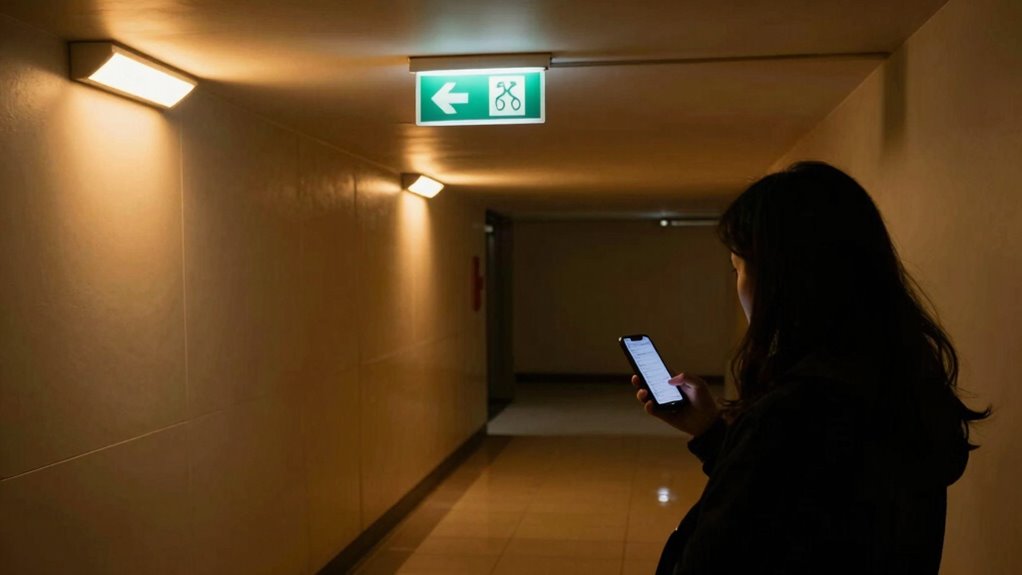
Using your phone as a flashlight during an emergency can be risky and may violate safety regulations. Dedicated emergency lighting systems, including battery-backed exit signs and fixtures, are designed to provide reliable illumination when power fails. These systems are tested regularly to guarantee they work when needed. Relying on your phone can lead to poor visibility and confusion during evacuations. Keep your safety plan complete—you’ll discover more ways to improve your emergency preparedness ahead.
Key Takeaways
- Rely on dedicated emergency lighting systems with battery backups instead of smartphones for reliable illumination during outages.
- Regularly test and maintain emergency lights and signage to ensure they function properly when needed.
- Properly plan and install emergency lighting fixtures and exit signs at strategic building points for maximum visibility.
- Use purpose-built emergency lighting fixtures designed for safety compliance, not general phone flashlights.
- Incorporate comprehensive safety protocols that include emergency lighting and signage to improve evacuation efficiency.
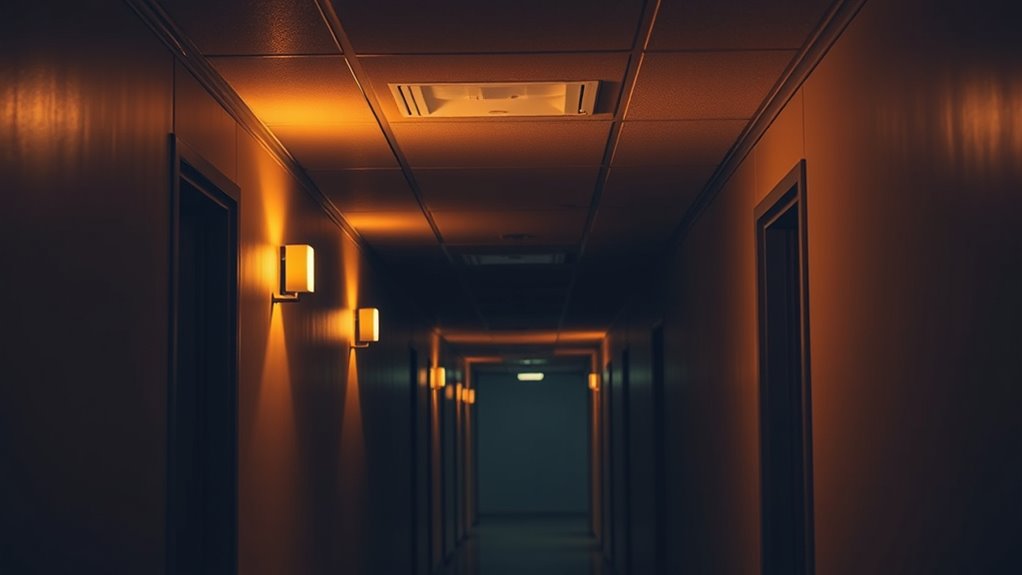
Emergency lighting is a crucial safety feature that guarantees people can find their way to safety during power outages or emergencies. When the main power supply fails, reliable lighting ensures that exits remain visible and accessible, preventing chaos and potential injuries. To achieve this, proper planning involves more than just installing lights; it requires integrating battery backups and clear exit signage to maintain visibility at all times. Battery backups are vital because they provide power to emergency lighting systems when the main electricity goes out. Without these backups, your emergency lighting could fail exactly when it’s needed most, leaving occupants in the dark and increasing the risk of accidents. Make sure that your battery backup systems are regularly tested and maintained, so they perform flawlessly during an emergency. Choosing the right type of batteries and installing them properly ensures continuous operation, giving occupants enough time to evacuate safely. Additionally, selecting appropriate lighting fixtures designed specifically for emergency use can improve reliability and visibility during an outage. Exit signage is another critical component of effective emergency lighting. Clear, illuminated exit signs guide people toward escape routes, especially in unfamiliar or panic-stricken situations. When the main lights fail, these signs should remain visible and legible, ideally with photoluminescent or LED lighting that doesn’t rely solely on the main power supply. Proper placement of exit signage is equally important; signs should be installed at all key points, including corridors, stairwells, and near doors, to lead occupants efficiently to safety. During planning, you should evaluate your building’s layout and determine the best locations for these signs to ensure they are visible from any point within the space. It’s also wise to incorporate directional signage that can guide people around obstacles or in complex layouts.
Focusing on these elements during your emergency lighting planning can make a significant difference in evacuation success. Relying on your phone as a flashlight isn’t enough—smartphones can run out of battery, get damaged, or become a distraction during critical moments. Instead, invest in a dedicated emergency lighting system with reliable battery backups and well-placed exit signage. This proactive approach guarantees that, even in the darkest moments, your building remains a safe environment. Proper planning and maintenance of these systems not only comply with safety regulations but also provide peace of mind knowing that you’ve done everything possible to protect everyone in your space. Remember, effective emergency lighting isn’t just about installing fixtures; it’s about creating a comprehensive safety plan that keeps people safe when they need it most.
Frequently Asked Questions
How Long Should Emergency Lighting Last During a Power Outage?
During a power outage, emergency lighting should last at least 90 minutes, ensuring safety until power is restored or evacuation is complete. You need to check that your emergency lighting meets lighting standards, which specify minimum battery duration to provide sufficient illumination. This duration helps prevent accidents and allows everyone to exit safely. Always verify that your emergency lighting system’s battery duration aligns with local regulations and industry standards.
What Types of Emergency Lighting Are Most Reliable?
You should choose emergency lighting with battery backup systems that are highly reliable, such as LED exit signs and emergency fixtures. These types maintain consistent illumination levels during power outages, ensuring safety. Look for lights with long-lasting batteries and automatic activation features. Avoid relying on less dependable options like flashlights or phones. Prioritizing reliable emergency lighting helps you stay safe and prepared when the power goes out unexpectedly.
How Often Should Emergency Lighting Systems Be Tested?
You should test your emergency lighting systems monthly to guarantee battery maintenance is effective and lighting duration is reliable. Regular testing helps identify issues before an emergency occurs, allowing you to replace batteries when needed and verify that lights turn on promptly. Keep detailed records of these tests, and schedule professional inspections annually for thorough checks. Proper maintenance guarantees your emergency lighting will perform when you need it most.
Can Emergency Lighting Be Integrated With Building Automation Systems?
Sure, emergency lighting can be integrated with your building automation system—if you’re into smart integration and automation control. You just need the right equipment and a savvy system integrator who loves a challenge. This setup ensures your emergency lights respond automatically during power outages, improving safety and reliability. Forget about manual switches; embrace tech-savvy solutions that keep your building smarter, safer, and more efficient in emergencies.
What Are the Legal Requirements for Emergency Lighting in Commercial Buildings?
You must comply with legal requirements that prioritize occupant safety, such as installing emergency lighting that meets local codes and standards. Regular maintenance procedures are essential to make certain these lights function properly during power outages. You’re responsible for conducting routine checks, testing emergency systems, and documenting maintenance to keep occupants safe. Failure to follow these requirements can lead to penalties and increased risk during emergencies.
Conclusion
So next time the lights go out, don’t rely on your phone’s feeble glow. Instead, imagine fumbling in the dark, desperately trying to find your way with a dying screen. Proper emergency lighting isn’t just a fancy upgrade; it’s your beacon of sanity when chaos strikes. Skip the awkward glow and plan ahead. Because nothing says “prepared” quite like having reliable lights — not your unreliable, battery-draining phone. Stay safe, stay illuminated.