

Environmental changes make better choices easier by subtly shaping your surroundings to favor healthier and greener options. Simple tweaks, like placing nourishing snacks at eye level or using smaller plates, tap into your natural tendencies without restricting your freedom. Social influences and clear cues, such as recycling bins or default plant-based meals, guide your decisions effortlessly. By understanding how your environment influences you, you’ll discover easy ways to adopt lasting, positive habits—if you continue exploring, you’ll gain even more insights.

Prime made for students and young adults
- Fast, free delivery for dorm and study essentials
- Prime Video and Amazon Music included
- Member-only deals
Key Takeaways
- Subtle environmental adjustments, like placing healthier options at eye level, influence choices without limiting freedom.
- Default options, such as well-marked recycling bins, guide individuals toward sustainable behaviors effortlessly.
- Social norms and visible peer actions reinforce positive behaviors, encouraging others to follow suit.
- Environmental cues and presentation significantly impact decision-making, making beneficial choices more accessible.
- Designing spaces that support goals reduces reliance on willpower, fostering lasting behavioral change.
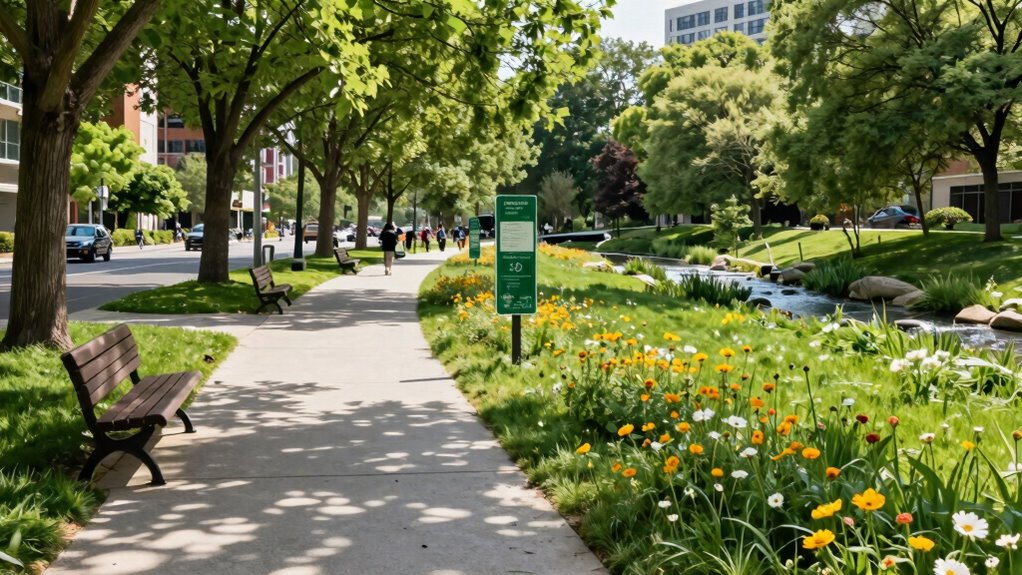
Have you ever wondered why making healthier or more sustainable choices can feel so challenging? It’s not just about willpower or knowledge; often, it’s about how your environment subtly guides your decisions. Behavioral nudges, small changes in your surroundings designed to influence behavior without restricting options, play a critical role here. For example, placing healthier snacks at eye level or using smaller plates can nudge you toward better eating habits. These minimal adjustments leverage your natural tendencies, making the desired choice the easiest or most appealing option without forcing you.
Social influences also wield considerable power over your choices. You’re likely to follow the behavior of those around you, especially when social norms are clear and consistent. If your friends or colleagues prioritize recycling or use reusable bags, you’re more inclined to adopt those habits. In this way, the environment acts as a social cue, reinforcing positive behaviors through shared values and collective action. In fact, social norms can significantly accelerate the adoption of sustainable behaviors when they are visibly supported within a community. When sustainable practices become visible and accepted within your community, they become normalized, reducing the mental effort needed to make environmentally friendly decisions.
Imagine entering a cafeteria where the default option is a plant-based meal, or a workplace where recycling bins are prominently placed and well-marked. These environmental cues work as behavioral nudges, subtly steering you toward choices that benefit the environment without requiring extensive deliberation. When social influences support these nudges—say, seeing others participate or hearing about the collective impact—you’re more motivated to follow suit. The combination of well-designed environments and social reinforcement creates a feedback loop that makes sustainable choices feel natural and effortless. Incorporating behavioral science principles into the design of these spaces can further enhance their effectiveness.
You might not realize it, but your decisions are constantly influenced by the environment surrounding you. Small adjustments in how options are presented or made visible can greatly increase the likelihood of choosing options that are better for your health and the planet. When these changes align with social influences—like community norms, peer behavior, or public commitments—they become even more effective. Over time, these environmental shifts can reshape your habits, making sustainable and healthier choices the default rather than the exception.
Ultimately, by understanding the power of behavioral nudges and social influences, you can actively seek environments that support your goals. Whether it’s choosing to walk more, eat less meat, or recycle diligently, the environment you’re in has a profound impact. When designed thoughtfully, it makes the path to better choices not just easier but automatic, fostering lasting change without relying solely on sheer willpower. Recognizing the influence of environmental cues can help you create spaces that naturally promote sustainable behaviors.
As an affiliate, we earn on qualifying purchases.
Frequently Asked Questions
How Quickly Can Environmental Changes Influence Individual Decision-Making Habits?
Environmental changes can influence your decision-making habits surprisingly fast, often within days or weeks. When your surroundings modify behavior modification and decision triggers, you start noticing shifts in choices without much effort. For example, placing healthy snacks at eye level prompts healthier eating habits quickly. Your environment acts as a cue, making better choices more automatic. With consistent exposure, these influences become ingrained, leading to lasting changes in your habits over time.
Are There Specific Environments That Promote Healthier Choices More Effectively?
You’ll find that urban design and retail layouts play vital roles in promoting healthier choices. Studies show that access to walkable neighborhoods increases physical activity by 20%, making healthier habits more natural. In well-designed environments, grocery stores with prominent healthy food displays and pedestrian-friendly streets encourage better eating and activity habits. When your surroundings support these choices, making healthier decisions becomes easier and more instinctive.
What Role Does Community Support Play in Reinforcing Better Decisions?
Community support plays a vital role in reinforcing better decisions by providing peer encouragement and shaping positive social norms. When you surround yourself with people who promote healthy habits, you’re more likely to stay motivated and committed. Social norms influence your behavior subtly, making healthier choices feel natural and accepted. This supportive environment boosts your confidence, helps you overcome obstacles, and sustains long-term positive changes.
Can Technology Further Enhance the Effects of Environmental Changes?
Technology can greatly boost environmental changes’ impact by integrating smart infrastructure and digital nudges. Smart infrastructure optimizes resource use and encourages sustainable behaviors seamlessly. Digital nudges, like reminders or incentives, gently guide you toward better choices without force. Together, these tools make it easier for you to adopt healthier habits, reinforcing positive environmental shifts. By leveraging technology, you’re more likely to stay motivated and consistent in making eco-friendly decisions.
How Do Cultural Differences Impact the Effectiveness of Environmental Cues?
Cultural differences are like unique maps guiding behavior, so they markedly influence how effective environmental cues are. Cultural norms shape what triggers behaviors and how people interpret cues, making some cues more powerful in one culture than another. You’ll find that behavioral triggers resonate differently across societies, affecting your ability to make better choices. To succeed, tailor cues to fit cultural contexts, ensuring they align with local norms and values.
As an affiliate, we earn on qualifying purchases.
Conclusion
As you navigate this world, think of your environment as a garden. When you plant thoughtful seeds—like healthier options and supportive cues—you’re more likely to see positive growth. Changing your surroundings isn’t just about avoiding weeds; it’s about cultivating a space where good choices bloom effortlessly. With each intentional shift, you’re watering the roots of better habits, making it easier for your life to flourish naturally. Remember, a well-tended garden yields the clearest path forward.
As an affiliate, we earn on qualifying purchases.
As an affiliate, we earn on qualifying purchases.
Fall Picks
fall essentials
As an affiliate, we earn on qualifying purchases.