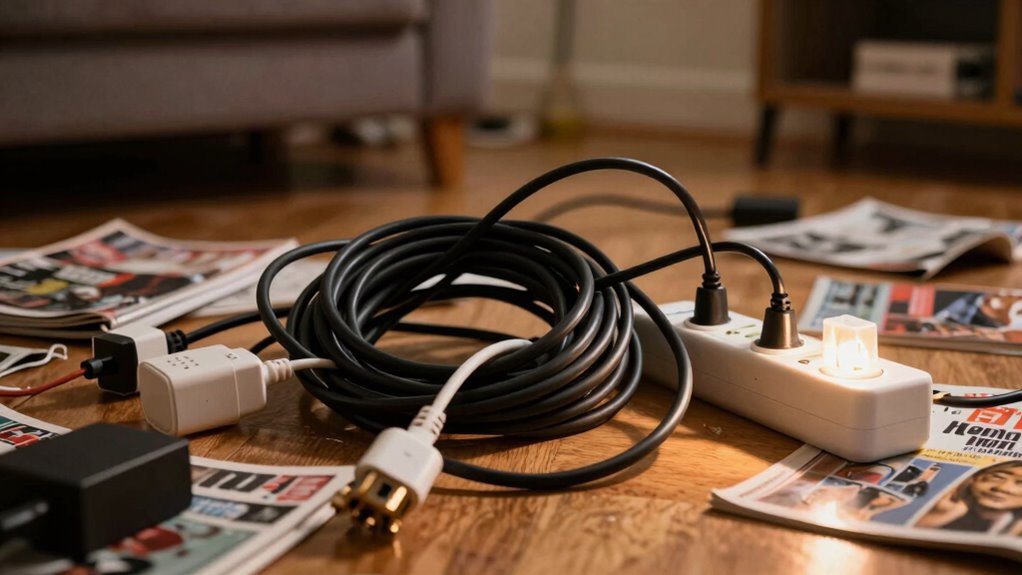

Ignoring extension cord load limits puts you at risk of overheating, fires, and damaging your devices. Many people overlook the cord’s maximum wattage or amperage ratings, which can lead to overloading the cord and causing electrical failures. To stay safe, always check the specifications before plugging in multiple or high-wattage items. Keep these safety tips in mind to protect your home and devices—there’s more to learn that can help you avoid hazards.
Key Takeaways
- Overloading extension cords beyond their rated wattage or amperage can cause overheating and fire hazards.
- Always check the manufacturer’s specifications to ensure devices do not exceed the cord’s load capacity.
- Using multiple high-wattage devices on one extension cord increases risk of overload.
- Ignoring load limits can lead to electrical failures and damage connected electronics.
- Regularly inspect cords for signs of stress or damage, especially if regularly overloaded.
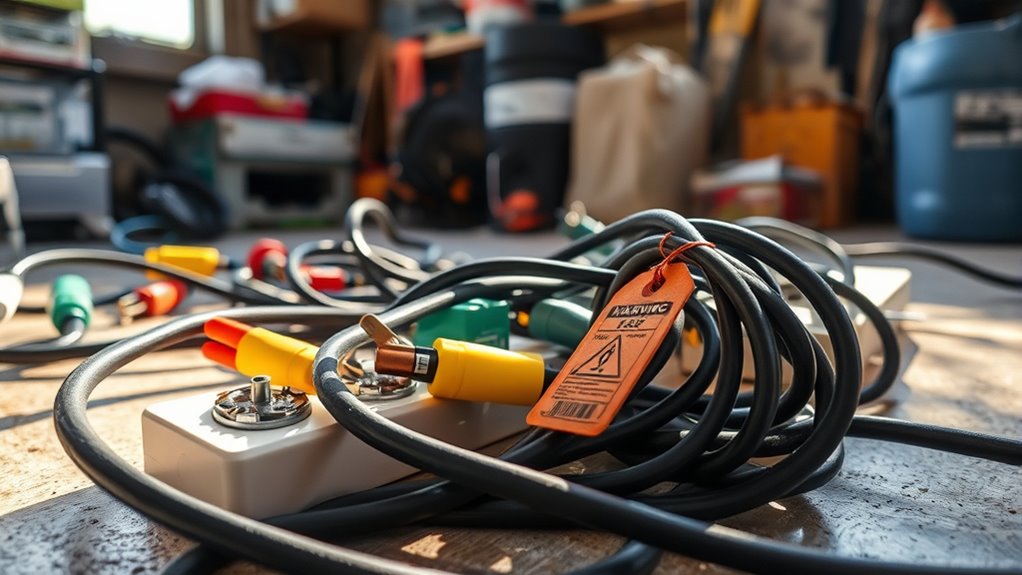
Extension cords are convenient tools for providing extra reach, but if not used properly, they can pose serious safety risks. One of the most overlooked issues is exceeding the cord’s load limit, which can cause overheating, fires, or electrical failures. To prevent these hazards, it’s essential to pay attention to the cord’s rated capacity and avoid overloading it with high-power devices. Most extension cords have a specified maximum wattage or amperage, and surpassing this limit forces the cord to carry more current than it was designed for, increasing the risk of damage or failure. Always check the label or manufacturer’s specifications before plugging in multiple devices or high-wattage appliances.
Another critical aspect of safe extension cord use is incorporating surge protection. While many use extension cords for temporary power needs, they often neglect to add surge protectors, leaving connected devices vulnerable to power surges. A surge protector absorbs sudden voltage spikes, preventing damage to sensitive electronics like computers, televisions, or chargers. Using surge protection in conjunction with your extension cord enhances safety and prolongs the lifespan of your devices. Remember, not all extension cords are rated for surge protection, so look for cords that specifically mention this feature or use a separate surge protector at the outlet.
Cord management plays a essential role in preventing accidents and electrical hazards. Tangled or loosely laid extension cords can cause tripping hazards, damage to the cord, or accidental disconnection. You should always route cords along walls or baseboards, avoiding high-traffic areas, and use cord clips or covers to keep them securely in place. Proper cord management not only reduces trip risks but also prevents stress on the cord’s insulation and connections, which can lead to fraying or exposed wires. Keep cords away from water, heat sources, or sharp objects that could compromise their integrity. When possible, use cords with built-in features like strain relief or reinforced insulation, which add an extra layer of safety. Additionally, awareness of electrical safety guidelines can help you recognize potential hazards and ensure proper usage.
Frequently Asked Questions
Can Extension Cords Be Used Outdoors Safely?
Yes, you can use extension cords outdoors safely if they’re designed for outdoor use. Make sure they’re rated for outdoor conditions to avoid indoor hazards like moisture and temperature extremes. Always uncoil the cord fully to prevent overheating, store cords properly when not in use, and keep them away from water. Proper cord storage and choosing the right cord help prevent accidents and ensure safe outdoor use.
How Do I Identify the Right Extension Cord for My Needs?
To identify the right extension cord, consider your power needs first. Check the cord gauge—lower numbers like 14 or 12 gauge handle heavier loads, ideal for outdoor use or power tools. Also, select a cord length that reaches comfortably without excess slack, reducing trip hazards and voltage drop. Always match the cord’s specifications to your device’s power requirements and intended environment to make certain of safe, reliable use.
What Are Signs of an Overloaded Extension Cord?
Imagine the cord’s plastic shell feeling hot to touch or flickering lights signaling trouble. Overload symptoms include the cord feeling unusually warm, buzzing sounds, or frequent circuit trips. If you notice these signs, your extension cord’s capacity is exceeded, risking fire or damage. Always check the load limits and avoid overloading to keep your space safe. When overloaded, your extension cord warns you to unplug and reduce the load immediately.
Are Extension Cords Safe for Use With Power Tools?
Yes, extension cords can be safe for power tools if you choose the right one. Make sure the cord length suits your workspace needs, and check its electrical capacity to handle your tools’ power draw. Avoid using cords with low capacity for high-power tools, as this can cause overheating or damage. Always follow manufacturer guidelines and never overload the cord, ensuring safe operation and preventing potential hazards.
How Often Should I Inspect My Extension Cords for Damage?
You should inspect your extension cords before each use to guarantee safety. Regular cord maintenance helps you spot damage like cuts, frays, or exposed wires early. Performing these inspections regularly prevents damage, reduces the risk of electrical hazards, and keeps your tools working efficiently. Always replace or repair damaged cords immediately to prevent accidents. Staying vigilant with cord maintenance is key to damage prevention and safe operation.
Conclusion
Remember, ignoring load limits on extension cords can come back to bite you. Always check the cord’s maximum capacity and avoid overloading it, no matter how tempting. Playing it safe isn’t just a good idea—it’s the smart move to keep your home and loved ones protected. Don’t put all your eggs in one basket; spread out the power demands and respect the limits. Stay vigilant and use extension cords wisely—you’ll thank yourself later!