
TL;DR

Prime made for students and young adults
- Fast, free delivery for dorm and study essentials
- Prime Video and Amazon Music included
- Member-only deals
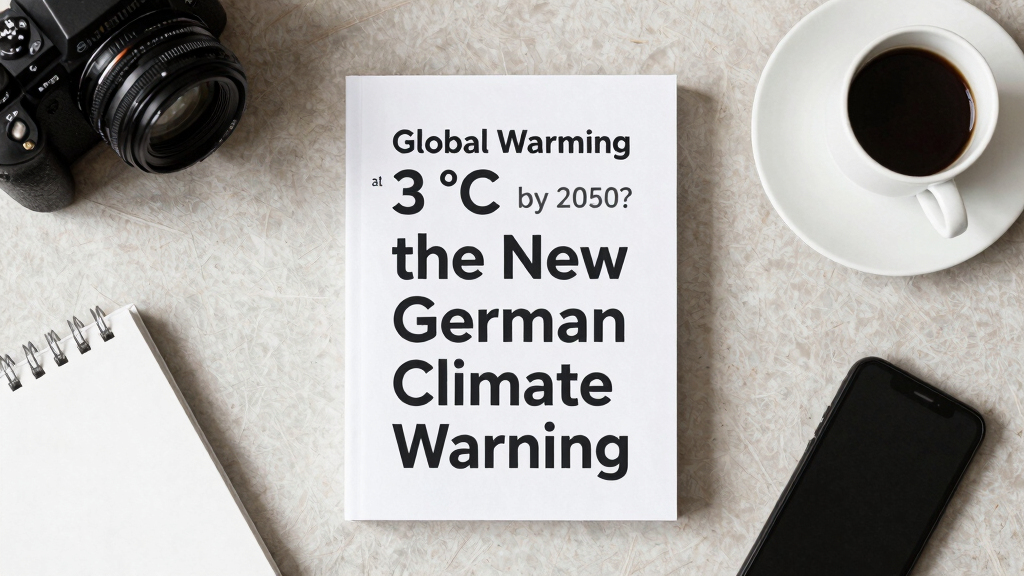
Germany’s latest climate report warns that global temperatures could rise by 3°C by 2050 if current trends continue. The warning highlights insufficient policy action and rising emissions. The development underscores urgent global climate challenges.
Germany’s Federal Environment Agency has issued a stark warning that global warming could reach **3°C by 2050** if current emission trends persist. The report emphasizes that insufficient policy measures and rising greenhouse gas emissions are driving this potential trajectory, raising concerns about severe climate impacts worldwide.
The German agency’s latest climate assessment indicates that unless significant policy changes are implemented, global temperatures could approach a **3°C increase** by the middle of the century. This projection is based on current emission levels, which continue to rise despite international climate commitments.
The report highlights that global emissions increased by approximately 1.2% in 2023, driven mainly by fossil fuel consumption, deforestation, and industrial activity. It warns that without substantial mitigation efforts, the world risks crossing critical climate thresholds, leading to more frequent and severe weather events, rising sea levels, and ecological disruptions.
Germany’s climate minister, Steffi Lemke, stated that “urgent and ambitious action is needed worldwide to curb emissions and limit temperature rise.” The report calls for accelerated adoption of renewable energy, stricter emission regulations, and increased investment in climate resilience measures.
Implications of a 3°C Global Warming Scenario
This warning underscores the urgent need for global policy action to prevent catastrophic climate impacts. A **3°C rise** would significantly exacerbate extreme weather events, threaten food and water security, and cause widespread ecological damage. It highlights the gap between current commitments and the actions required to meet climate targets such as the Paris Agreement.
For readers, this development emphasizes that climate change is approaching a critical point, with tangible risks if immediate measures are not taken. It also reflects the importance of national and international cooperation in reducing emissions and investing in sustainable solutions.
renewable energy home solar panel kit
As an affiliate, we earn on qualifying purchases.
As an affiliate, we earn on qualifying purchases.
Recent Trends and Policy Gaps Fueling the Warning
The report builds on recent data showing that global emissions have not declined as needed to meet the 1.5°C or 2°C targets set in international agreements. Despite commitments made at COP26 and COP27, many countries, including Germany, have yet to implement sufficiently aggressive policies.
Historically, global temperatures have already increased by approximately 1.2°C since pre-industrial times. The current trajectory, if unaltered, suggests that the world is on course for 2.5°C to 3°C warming by 2050, according to climate models used by the German agency.
Previous assessments, such as from the IPCC, have warned about crossing dangerous thresholds, but the new German warning emphasizes that the situation is becoming more urgent as emissions continue to rise.
“Urgent and ambitious action is needed worldwide to curb emissions and limit temperature rise.”
— Steffi Lemke, German Climate Minister
As an affiliate, we earn on qualifying purchases.
Uncertainties in Emission Trajectories and Policy Effectiveness
While the report projects a potential 3°C increase based on current trends, uncertainties remain regarding future policy implementation, technological advancements, and global cooperation. The actual temperature rise could be lower or higher depending on these factors.
Additionally, the pace of global emission reductions and the effectiveness of new climate policies are still evolving, making precise predictions challenging.
As an affiliate, we earn on qualifying purchases.
Next Steps for Climate Policy and Global Action
International negotiations are expected to intensify ahead of upcoming climate summits, with calls for more aggressive emission reduction commitments. Countries may need to update their Nationally Determined Contributions (NDCs) to align with the 1.5°C or 2°C targets.
On a national level, Germany and other nations are expected to accelerate investments in renewable energy, climate adaptation, and mitigation strategies. Monitoring of global emissions will continue to inform updates to climate models and projections.
eco-friendly reusable water bottles
As an affiliate, we earn on qualifying purchases.
As an affiliate, we earn on qualifying purchases.
Key Questions
What does a 3°C increase mean for the planet?
A 3°C rise could lead to more frequent and severe heatwaves, flooding, droughts, loss of biodiversity, and rising sea levels, threatening ecosystems and human societies worldwide.
How realistic is the 3°C scenario?
It is a projection based on current emission trends and policies. Without significant changes, models suggest this could happen by 2050, but policy actions could alter this trajectory.
What can governments do to prevent this?
Implement more aggressive emission reduction targets, invest in renewable energy, enforce stricter environmental regulations, and promote sustainable development practices globally.
Are there any positive signs that the situation can improve?
Yes, some countries are increasing commitments to climate action, and technological advancements are making renewable energy more affordable. However, these efforts need to be scaled up significantly.
Source: hn
Fall Picks
fall essentials
As an affiliate, we earn on qualifying purchases.