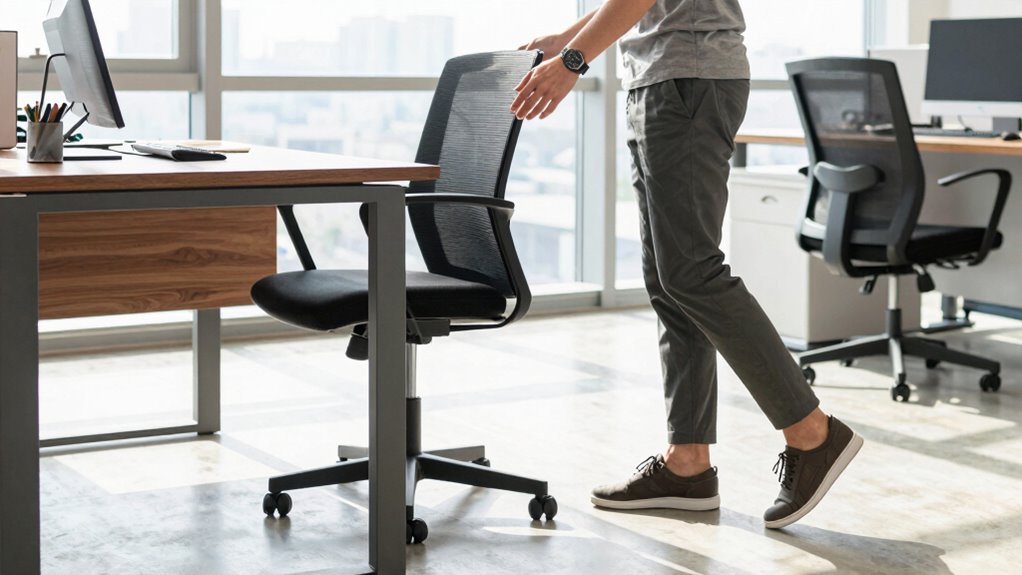

You should alternate between sitting and standing every 30 to 60 minutes to stay comfortable and avoid strain. When standing, aim for intervals of about 15 to 20 minutes, and be sure to listen to your body for signs of fatigue or discomfort. Ergonomic adjustments, movement during breaks, and using supportive accessories can help. If you’re interested in creating a sustainable routine that balances standing and sitting, there’s more to learn below.
Key Takeaways
- Alternate between sitting and standing every 30 to 60 minutes for optimal health.
- Stand for about 15 to 20 minutes during each break to prevent discomfort.
- Use ergonomic accessories and adjustable desks to support proper posture during standing.
- Incorporate movement and light stretching during breaks to improve circulation and reduce stiffness.
- Listen to your body; adjust standing duration if you experience pain, numbness, or fatigue.
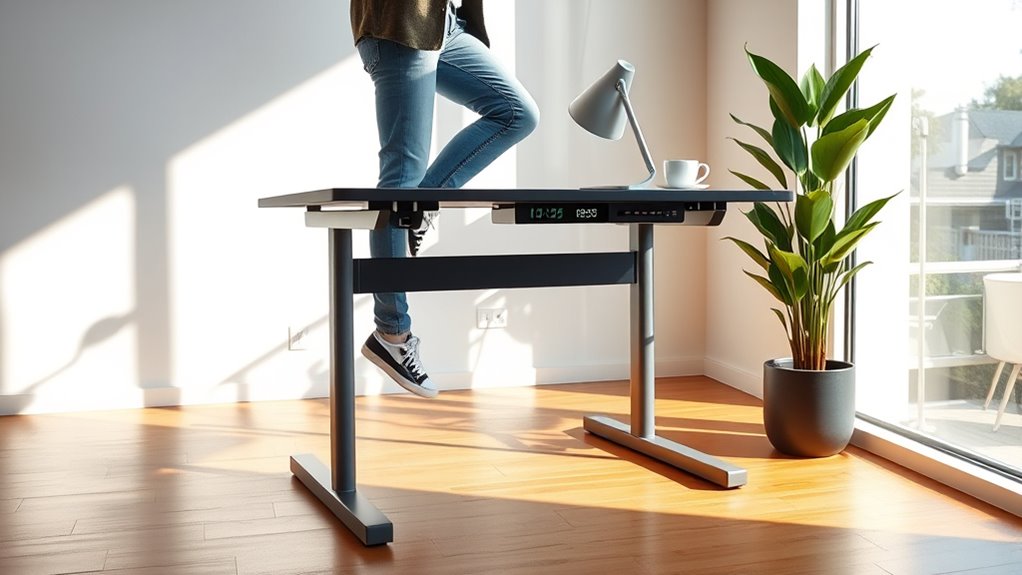
Have you ever wondered how long you should stand during your workday or daily activities? It’s a common question, especially with the rise of sit-stand desks and the push to reduce prolonged sitting. The key isn’t just about standing longer but about finding a healthy balance. Experts suggest that standing for too long without breaks can lead to discomfort and strain, so understanding the ideal break duration and implementing ergonomic tips is essential. Incorporating modern kitchen technology such as ergonomic accessories can further improve your workspace comfort. Typically, experts recommend alternating between sitting and standing every 30 to 60 minutes. During this time, aim to stand for about 15 to 20 minutes before sitting back down. This break duration allows your muscles to relax and prevents stiffness. Remember, standing isn’t a free pass to remain in one position for hours; it’s about movement and variation. When standing, keep your feet shoulder-width apart, distribute your weight evenly, and avoid locking your knees. These ergonomic tips help reduce pressure on your lower back and legs, preventing fatigue and discomfort.
To make your changeover between sitting and standing more effective, invest in an adjustable desk that lets you smoothly switch positions. Use a footrest or anti-fatigue mat if you notice your feet or legs getting tired. Keep your monitor at eye level to avoid leaning forward or craning your neck, which can cause strain. Your keyboard and mouse should be positioned so your elbows are close to your sides, and your wrists are in a neutral position. These ergonomic tips help create a workspace that supports your body’s natural posture, making standing less tiring and more sustainable.
Don’t forget that movement is just as important as standing itself. Incorporate short stretches or light walks during your break duration to boost circulation and reduce muscle stiffness. Even a few minutes of gentle stretching can make a significant difference in how you feel throughout the day. The goal isn’t to stand rigidly for hours but to find a rhythm that keeps you comfortable and energized.
Ultimately, listening to your body is essential. If you start feeling pain, numbness, or excessive fatigue, it’s time to change your position or take a longer break. Establish a routine that emphasizes ergonomic tips, break duration, and movement to maintain your health and productivity. Remember, balance is the key — standing should complement your activity, not replace sitting entirely. By following these guidelines, you’ll be able to stand smarter, feel better, and stay more comfortable during your busy day.
Frequently Asked Questions
Can Standing Too Long Be Harmful?
Yes, standing too long can be harmful. It can cause foot, leg, and back pain, and increase fatigue. To avoid this, use ergonomic accessories like anti-fatigue mats and choose versatile standing desk options that allow you to switch between sitting and standing. Remember, moderation is key. Taking regular breaks and alternating positions helps prevent strain and keeps you comfortable and healthy during your workday.
How Do I Know When to Sit or Stand?
You’ll notice subtle cues like fatigue or discomfort that tell you it’s time to sit or stand. Keep posture awareness sharp and use ergonomic accessories to support your movements. If your back aches or your legs feel heavy, switch positions. Coincidentally, these signs often appear just when your body needs a change. Regularly listening to your body helps maintain comfort and prevents strain, making it easier to decide when to sit or stand.
Does Standing Improve Posture Significantly?
Standing can improve your posture substantially, especially when you use an ergonomic chair and foot support. By standing, you engage core muscles and reduce the strain on your back and neck. Make sure to keep your feet supported and aligned to avoid discomfort. Alternating between sitting and standing helps maintain good posture over long periods, preventing stiffness and promoting overall spinal health.
Are There Specific Exercises for Standing Breaks?
You can incorporate exercises for standing breaks by doing simple stretching routines like neck rolls, shoulder shrugs, and hamstring stretches to ease tension. Using ergonomic accessories such as footrests or anti-fatigue mats can enhance comfort. These routines help improve circulation and reduce fatigue, making your standing breaks more effective. Incorporate these exercises regularly to support better posture and prevent discomfort during long periods of standing.
How Does Standing Affect Back Pain?
Standing acts like a sturdy bridge, easing pressure on your back, but only if you use ergonomic accessories and don’t ignore muscle fatigue. When you stand properly, you can reduce back pain by aligning your spine and engaging core muscles. However, standing too long without breaks may cause strain. Balance standing and sitting, and incorporate ergonomic tools to keep your back healthy and pain-free.
Conclusion
Ultimately, listening to your body is key. For example, imagine Sarah, who switches between sitting and standing every 30 minutes during her workday. This simple change keeps her energized and reduces discomfort. If you find yourself feeling restless or strained, it’s a sign to adjust your standing intervals. Remember, there’s no one-size-fits-all—find your rhythm, stay mindful, and make standing work for you, not against you.