
To extend your NAS’s lifespan, focus on managing power efficiently and improving cooling. Use energy-efficient power supplies, turn off unused drives, and upgrade to low-power components when possible. Guarantee proper ventilation, keep vents clean, and use quality fans to prevent overheating. Regularly monitor temperature and power usage to catch issues early. Mastering these factors helps your NAS run smoothly longer—stick with us to discover more ways to maximize your device’s durability.
Key Takeaways
- Proper power management reduces heat output, preventing hardware degradation and extending lifespan.
- Effective cooling through ventilation and dust control maintains optimal operating temperatures.
- Upgrading to energy-efficient components lowers power consumption and heat generation.
- Monitoring system temperatures and power usage allows proactive adjustments to prevent thermal stress.
- Regular maintenance like cleaning vents and ensuring airflow optimizes cooling efficiency and prolongs device life.

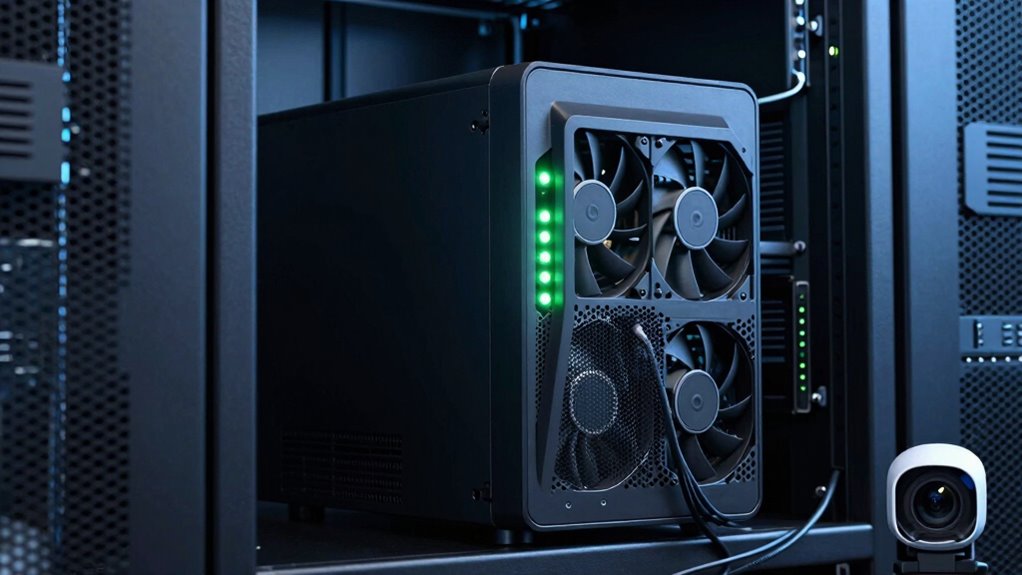
Effective power and cooling are indispensable for maintaining the performance and reliability of your NAS system. When your device runs efficiently, you not only guarantee smooth operation but also extend its lifespan. One key aspect to consider is energy efficiency. By optimizing your NAS’s power consumption, you reduce heat output, which is essential for preventing overheating and hardware degradation. Implementing energy-efficient power supplies and configuring your system to power down unused drives can considerably lower energy use and heat generation. These steps make your NAS more sustainable and cost-effective in the long run. Additionally, energy efficiency measures can significantly reduce your operational costs over time. Hardware upgrades play a critical role in maintaining ideal power and cooling. Upgrading to newer, more energy-efficient components like low-power processors, SSDs instead of traditional hard drives, or high-efficiency power supplies improves overall system performance while reducing heat output. Modern hardware often comes with better thermal management features, helping your NAS stay cooler under load. These upgrades can be a smart investment because they not only boost speed and capacity but also decrease the strain on your cooling system, leading to less noise, lower energy costs, and fewer hardware failures over time. To maximize efficiency, you should also focus on proper ventilation and cooling solutions. Ensure your NAS is placed in a well-ventilated area, away from direct sunlight or heat sources. Use high-quality fans and consider adding external cooling solutions if necessary. Keeping airflow unobstructed prevents heat buildup inside the enclosure. Regularly cleaning dust from vents and filters is essential because dust accumulation hampers airflow and causes components to overheat. When your hardware runs cooler, it’s less likely to suffer thermal stress, which in turn prolongs its operational life. Monitoring your system’s temperature and power consumption is another proactive step. Many NAS models have built-in tools that allow you to track these metrics. Use this data to adjust settings, such as fan speeds or power management options, ensuring your system stays within safe operating ranges. Implementing automatic shutdowns or alerts when temperatures spike can prevent damage before it happens. These measures help you stay ahead of potential issues, avoiding costly repairs and unplanned downtime.
Frequently Asked Questions
How Often Should I Replace NAS Cooling Components?
You should replace NAS cooling components during regular cooling maintenance, typically every 2 to 3 years, or sooner if you notice increased noise, dust buildup, or temperature spikes. Regular component upgrades help guarantee peak cooling efficiency and prevent overheating. Keep an eye on your system’s temperature logs and perform routine inspections; timely replacements extend your NAS’s lifespan and maintain reliable performance.
What Are Signs of Insufficient Power Supply in NAS Devices?
Power problems produce perplexing problems, so pay attention to signs of insufficient power supply in your NAS. You might notice frequent shutdowns, unexpected reboots, or reduced performance, indicating potential power supply issues. Overheating or cooling failure can compound these concerns, risking hardware damage. Stay vigilant for unusual noises or blinking LEDs, and make certain your power supply is robust enough to prevent these problems, prolonging your NAS’s life and performance.
Can Improper Cooling Cause Data Loss?
Yes, improper cooling can cause data loss. When cooling efficiency drops, your NAS overheats, risking hardware failures. Overheating can damage disks and other components, leading to potential data corruption or loss. To prevent this, prioritize regular hardware maintenance and guarantee your cooling system functions effectively. Keeping temperatures within recommended ranges helps extend your device’s lifespan and protects your valuable data.
How Do Power Fluctuations Affect NAS Lifespan?
Power fluctuations can markedly shorten your NAS lifespan if you neglect power stability and voltage regulation. Sudden surges or dips can damage internal components, leading to hardware failures and data loss. To protect your device, use surge protectors and uninterruptible power supplies (UPS). These tools help maintain consistent power, ensuring your NAS runs smoothly and lasts longer by preventing damage caused by unpredictable power changes.
Are There Energy-Efficient Cooling Solutions for NAS?
Yes, there are energy-efficient cooling solutions for your NAS. Eco-friendly cooling options like passive cooling or liquid cooling reduce energy consumption and lower your carbon footprint. Additionally, noise reduction features help keep your setup quiet and comfortable. These solutions not only save power but also extend your NAS’s lifespan by maintaining ideal operating temperatures, ensuring reliable performance while being environmentally conscious.
Conclusion
To maximize your NAS device’s lifespan, prioritize power management and cooling solutions. Keeping your system well-ventilated and energy-efficient can reduce hardware failure rates markedly. Did you know that overheating can cut a NAS’s lifespan by up to 50%? By investing in proper cooling and power strategies, you’re not just protecting your data but also extending your device’s longevity, saving you money and hassle in the long run.