
TL;DR

Get school and study supplies delivered free — and shop member deals
- Fast, free delivery on millions of items
- Access to Prime Big Deal Days deals on October 6–7
- Prime Video, Amazon Music and more included
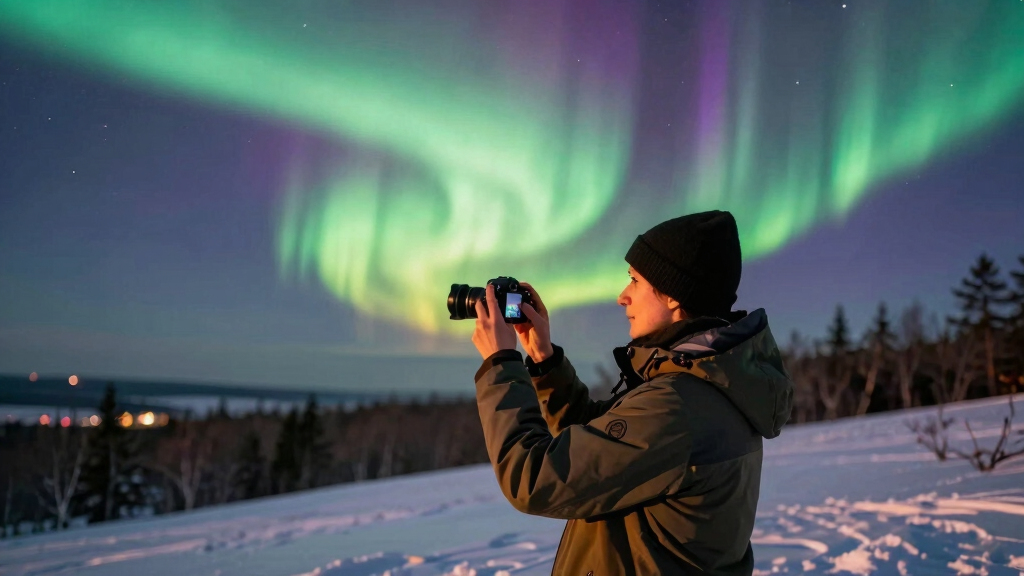
A recent surge in solar activity has caused widespread aurora borealis displays across northern Europe. Experts confirm increased geomagnetic disturbances, making it a notable event for skywatchers and scientists alike.
Widespread sightings of the aurora borealis have been reported across northern Europe following recent solar eruptions, according to space weather agencies. The phenomenon, caused by increased solar activity, has drawn attention from skywatchers and scientists, as it signals heightened geomagnetic disturbances.
Multiple reports from countries including Norway, Sweden, Finland, and parts of the UK indicate vibrant aurora displays during the night of October 22, 2023. The National Oceanic and Atmospheric Administration (NOAA) and the European Space Agency (ESA) have confirmed that recent solar eruptions, specifically solar flares and coronal mass ejections, have intensified Earth’s geomagnetic activity.
Space weather models show a significant increase in geomagnetic storm levels, with the K-index reaching levels that typically produce visible auroras at lower latitudes than usual. Experts emphasize that this is a direct consequence of the recent solar activity, which was classified as a G3-class geomagnetic storm by NOAA.
Impacts of the Aurora Borealis Event on Society and Science
This event is significant because it demonstrates the direct impact of solar activity on Earth’s space environment. Increased geomagnetic disturbances can affect satellite operations, radio communications, and power grids. For skywatchers, it offers a rare opportunity to observe the aurora borealis at unusually southern locations.
Scientists are also monitoring these events to better understand space weather patterns and improve forecasting models, which are critical for protecting technological infrastructure.
Aurora Borealis viewing binoculars
As an affiliate, we earn on qualifying purchases.
As an affiliate, we earn on qualifying purchases.
Recent Solar Activity and Its Effect on Earth’s Magnetosphere
Solar eruptions, including solar flares and coronal mass ejections, have been increasing over the past week, driven by heightened solar activity during the current solar cycle. The latest eruptions, observed by solar observatories such as the Solar Dynamics Observatory (SDO), have directed charged particles toward Earth, causing geomagnetic storms.
Historically, such events have led to spectacular aurora displays, but also pose risks to satellites, navigation systems, and power grids. This specific event follows a series of moderate solar eruptions that culminated in the recent geomagnetic storm.
“The recent solar eruptions have significantly increased Earth’s geomagnetic activity, making this a notable aurora event that can be seen at lower latitudes than usual.”
— Dr. Lisa Nguyen, Space Weather Scientist
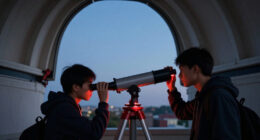
portable night sky telescope for aurora
As an affiliate, we earn on qualifying purchases.
As an affiliate, we earn on qualifying purchases.
Uncertainties About Future Space Weather Developments
While current geomagnetic activity levels are confirmed and linked to recent solar eruptions, it remains unclear how long the heightened aurora visibility will last. Space weather forecasts suggest the storm may weaken over the next 24 to 48 hours, but unpredictable solar activity could prolong or intensify the event.
Scientists are still analyzing the full extent of the solar eruptions’ impact and whether additional eruptions are imminent, which could further influence Earth’s magnetosphere.
As an affiliate, we earn on qualifying purchases.
Monitoring and Forecasting of Ongoing Geomagnetic Activity
Space weather agencies will continue to monitor geomagnetic activity closely over the coming days. Forecasts indicate a gradual decline in storm intensity, but the potential for additional solar eruptions remains. Researchers aim to improve predictive models to better anticipate such events in the future.
Skywatchers are advised to stay informed through official space weather alerts, and power grid operators and satellite companies are monitoring the situation to mitigate potential disruptions.
As an affiliate, we earn on qualifying purchases.
Key Questions
What causes the aurora borealis?
The aurora borealis is caused by charged particles from the sun interacting with Earth’s magnetic field and atmosphere, producing colorful light displays in the polar regions.
Why are auroras visible at lower latitudes now?
Intensified geomagnetic storms, driven by recent solar eruptions, have expanded the aurora visibility zone further south than usual, making it possible to see the northern lights in parts of northern Europe at lower latitudes.
Are there risks associated with increased solar activity?
Yes, heightened solar activity can disrupt satellite communications, navigation systems, and power grids. It can also pose risks to astronauts and airline passengers on polar routes.
When will the aurora displays end?
Current forecasts suggest the geomagnetic storm will weaken over the next 24 to 48 hours, but ongoing solar activity could extend or intensify the aurora visibility period.
Source: google-trends
Fall Picks
fall essentials
As an affiliate, we earn on qualifying purchases.