
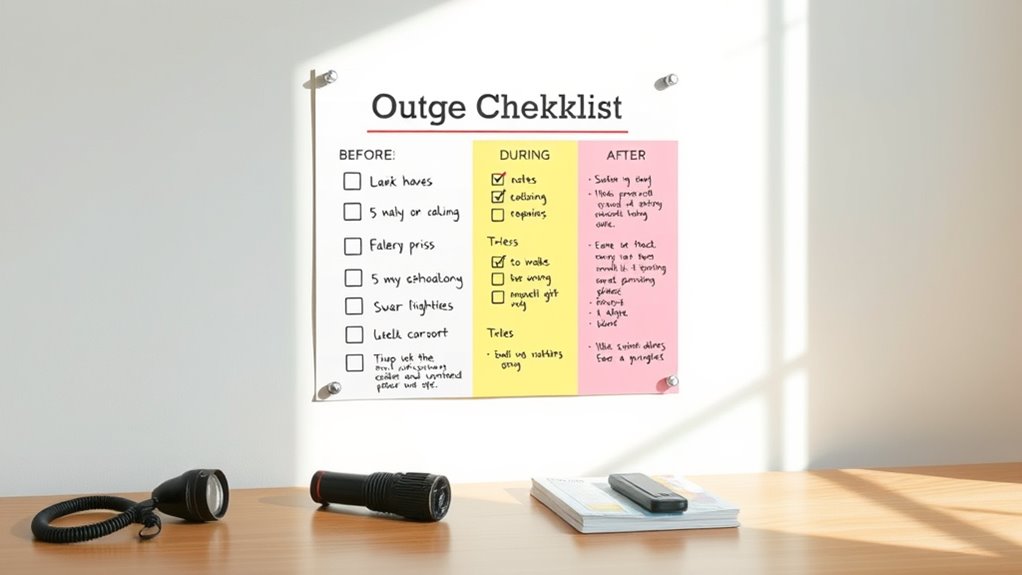
Before an outage, you should review your safety and communication plans, stock up on essential supplies, and secure outdoor furniture or hazards. During the outage, stay calm, use backup power and communication methods, and avoid downed wires. Afterward, check safety, restock supplies, and update your plan based on the experience. Taking these steps helps protect your household. Keep going to discover detailed actions for each stage to stay prepared and safe.
Key Takeaways
- Prepare emergency supplies, including non-perishable food, bottled water, batteries, and charged devices, before an outage occurs.
- Establish and practice a communication plan with multiple contact methods and designated points of contact.
- Safeguard critical devices, unplug electronics, and consider installing a home generator during pre-outage preparations.
- Follow safety protocols during the outage, such as avoiding downed lines and conserving power by limiting device use.
- After the outage, inspect for damages, restock supplies, verify safety measures, and review plans to improve future response.
Outage Checklist
When a power outage strikes, having an organized checklist can make all the difference. It helps you respond quickly and efficiently, reducing potential risks and guaranteeing your safety. A key part of this preparation is establishing a solid risk mitigation strategy. This involves identifying what hazards a blackout might pose—such as spoiled food, spoiled medications, or safety hazards like downed power lines—and planning how to address each. For example, you might stock up on non-perishable food and bottled water, or ensure you have a fully charged portable charger for your phone. Risk mitigation also includes safeguarding critical devices, like medical equipment, and knowing how to handle them safely during an outage. Practicing your emergency plan regularly can help ensure everyone in your household feels confident when an outage occurs.
Alongside risk mitigation, creating a communication plan is essential. When the power goes out, communication becomes crucial—not only for keeping your household informed but also for coordinating with emergency services if needed. Your plan should include a list of emergency contacts, such as local utility companies, neighbors, and family members. It’s wise to have multiple ways to communicate—cell phones, walkie-talkies, or battery-powered radios—so you’re never left in the dark if one method fails. Make sure everyone in your household knows the plan and understands how to reach out for help or updates. Having a designated point person to relay information keeps everyone on the same page and minimizes confusion during stressful moments.
Create a communication plan with emergency contacts and backup methods to stay informed during outages.
Before the outage, double-check your emergency supplies, confirming flashlights, batteries, and other essentials are readily accessible. Test your communication devices to verify they work properly and keep spare batteries handy. Review your risk mitigation measures, like securing outdoor furniture or trimming tree branches that could fall and cause additional hazards. Prepare your home by unplugging sensitive electronics to prevent power surges when electricity is restored, and consider installing surge protectors for important devices. Additionally, consider home generator options if outages are frequent in your area to maintain essential power.
During the outage, stay calm and stick to your plan. Use your communication channels to stay informed about the situation through local updates or utility alerts. Keep your devices charged as much as possible, and rely on your backup power sources if available. Avoid opening refrigerators or freezers unnecessarily to preserve cold air and keep food safe longer. Always stay away from downed power lines and report hazards immediately to authorities.
After the power is restored, review your response. Check your supplies and restock anything used. Confirm that all devices are functioning correctly and that safety measures, like inspecting for damages, are completed. Use this time to update your risk mitigation and communication plans based on what you learned. This proactive approach ensures you’re better prepared for future outages, minimizing risks and maintaining safety at all times.
Frequently Asked Questions
How Often Should I Review My Outage Preparedness Plan?
You should review your outage preparedness plan at least annually to make certain it’s current. Regular reviews help you identify gaps in your disaster recovery strategies and update procedures as needed. Incorporate employee training into your review process to keep everyone prepared and aware of their roles. Consistent updates ensure your team can respond swiftly during an outage, minimizing downtime and damage, and maintaining business continuity effectively.
What Are Common Signs of an Impending Outage?
You should watch for signs like frequent equipment failure, unusual surges, or flickering lights, which often indicate issues in the power grid. If your system experiences consistent outages or voltage fluctuations, it could signal an impending power outage. Staying alert to these signs helps you prepare early, ensuring your equipment remains protected and you’re ready to act quickly to minimize disruptions.
How Can I Minimize Outage Impact on Customer Service?
You can minimize outage impacts on customer service by actively collecting customer feedback to identify pain points and address them promptly. Make sure your staff receives regular training so they’re prepared to handle outages effectively, communicate transparently, and reassure customers. By combining feedback insights and well-trained staff, you create a more resilient service experience, reducing frustration and maintaining trust even during outages.
Are There Legal Requirements for Outage Communication?
You need to comply with regulatory requirements that often mandate timely outage communication. This means providing clear, accurate legal disclosures to affected customers and authorities. Failing to meet these legal obligations can lead to penalties or legal action. Make sure your communication plan aligns with industry regulations, and document all notices sent, so you demonstrate regulatory adherence. Staying proactive ensures transparency and helps protect your organization from legal repercussions during outages.
What Technology Tools Assist With Outage Management?
Imagine your outage management as a well-orchestrated symphony—you need the right tools to stay in sync. Cloud monitoring helps you detect issues early, while incident tracking keeps you organized through each stage. These tech tools enable quick response and precise communication, minimizing downtime. With real-time data and streamlined workflows, you can restore service faster and keep stakeholders informed, much like a conductor guiding an orchestra to harmony.
Conclusion
So, next time the lights go out, remember your trusty outage checklist. Because nothing screams “prepared” quite like fumbling in the dark, panic-shopping for candles, and pretending you’ve got this all under control. Stay calm, follow the steps, and maybe—just maybe—you’ll survive the blackout with your dignity intact. Or at least, you’ll have a good story for the neighbors about how you “totally knew” what you were doing. Good luck out there!