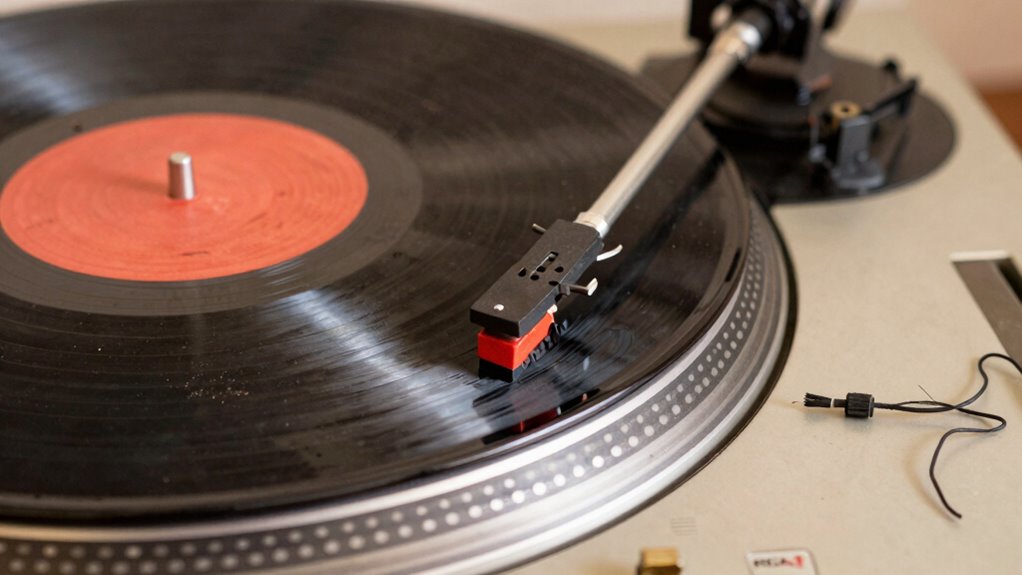

One common vinyl setup mistake is neglecting proper needle alignment, which can cause hidden record and stylus wear over time. Oversetting or uneven tracking force from an unbalanced tonearm can also silently damage grooves, leading to long-term deterioration. If you don’t regularly check and adjust your cartridge or stylus, you might unknowingly harm your records. Keep listening closely—there’s more about how to protect your collection coming up.

Prime made for students and young adults
- Fast, free delivery for dorm and study essentials
- Prime Video and Amazon Music included
- Member-only deals
Key Takeaways
- Misaligning the stylus causes uneven wear and groove damage over time.
- Improper tracking force stresses records, leading to premature record and stylus deterioration.
- Failing to balance the tonearm results in uneven stylus pressure, harming both records and playback quality.
- Neglecting regular calibration allows components to shift, increasing the risk of silent damage.
- Using incorrect or worn alignment tools can cause subtle misalignment, quietly damaging records during playback.
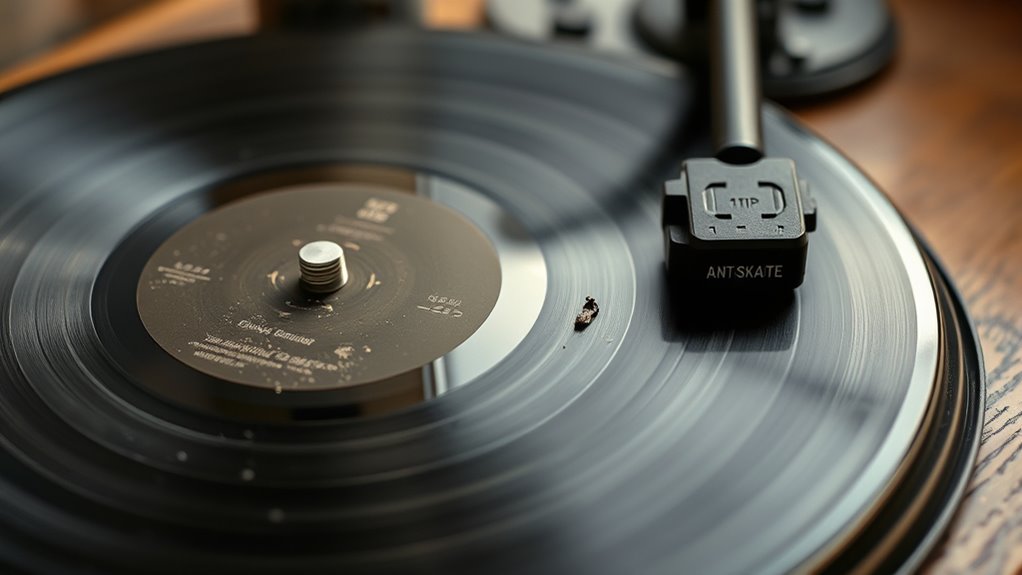
Setting up your vinyl record player might seem straightforward, but many beginners make common mistakes that can affect sound quality and equipment longevity. One of the most critical aspects is needle alignment. If your stylus isn’t properly aligned, you risk uneven wear on your records and the needle itself. Misaligned needles can cause distortion, skipping, and even permanent damage to delicate grooves. To avoid this, you should use a protractor tool to ensure the stylus is perfectly aligned with the record’s groove at both the null points. Proper alignment ensures the stylus tracks the record accurately, preserving the sound quality and extending the lifespan of your records. Regularly calibrating your setup helps maintain optimal performance and prevents unnoticed issues from causing damage over time.
Proper needle alignment is essential for sound quality and record longevity.
Another essential factor is cartridge weight, which refers to how much pressure the stylus exerts on the record surface. Too much weight can cause excessive wear on both the stylus and your records, leading to premature damage. Conversely, too little weight might result in skipping or poor tracking, which also damages your records over time. To get this right, you need to consult your cartridge’s specifications and use a precise tracking force gauge to set the correct weight. Adjusting the counterweight at the back of your tonearm allows you to fine-tune the cartridge weight, ensuring ideal contact with the record without applying undue pressure.
Many beginners overlook the importance of balancing the tonearm before setting the tracking force. An unbalanced tonearm can lead to uneven stylus pressure, which impacts sound quality and record integrity. After ensuring the tonearm is balanced, you should carefully set the tracking force according to your cartridge’s recommended specifications. This step is essential because it directly influences how the stylus interacts with the record grooves. Neglecting this can cause the stylus to dig too deep or stay too shallow, both of which damage your records and degrade sound quality.
Beyond these technical settings, it’s important to regularly check and calibrate your setup. Over time, components like the tonearm counterweight or alignment tools can shift, leading to subpar performance. Always handle your equipment gently and follow manufacturer instructions precisely. By paying close attention to needle alignment and cartridge weight, you prevent unnecessary wear and tear, ensuring your records stay in pristine condition and your listening experience remains clear and enjoyable. Proper setup might seem tedious at first, but it’s the foundation of good vinyl playback and long-term record preservation.
Frequently Asked Questions
How Often Should I Replace My Turntable’s Stylus?
You should replace your turntable’s stylus roughly every 500 to 1,000 hours of listening, depending on usage and stylus quality. Regularly check stylus longevity by inspecting for wear or using a stylus gauge. Don’t wait until you hear skipping or distortion—prompt replacements guarantee your records stay in top condition. For superior sound quality, plan on replacing your stylus every year if you listen frequently, or sooner if you notice any issues.
What Is the Ideal Tracking Force for Different Record Types?
You should set your stylus pressure, or tracking weight, according to your record type. For standard vinyl, aim for about 2 grams, but for delicate or vintage records, reduce it to 1.5 grams to prevent damage. Always use a tracking force gauge to guarantee accurate stylus pressure, as improper tracking weight can cause record wear or distortion. Adjust carefully to match your record’s specific needs for ideal sound and preservation.
Can Improper Grounding Cause Record Damage?
Improper grounding is like leaving a door open in a storm—static buildup can sneak in and damage your records. Grounding issues cause electrical fluctuations that may create unwanted static, leading to surface noise or even warping. By ensuring your turntable is properly grounded, you reduce static, protect your vinyl, and enjoy clearer sound. Don’t let loose connections turn your listening experience into a static-filled storm.
How Does Temperature Affect Vinyl Record Longevity?
Temperature fluctuations considerably impact your vinyl records’ longevity. When exposed to inconsistent temperatures, records can warp or crack over time. Keep your records in a stable, cool environment, ideally between 65-70°F, to prevent record warping. Avoid areas with direct sunlight or near heat sources. Proper storage helps maintain sound quality and preserves your collection, ensuring your records stay in excellent condition for years to come.
Should I Use Cleaning Products on My Records or Turntable?
Think of your records and turntable as delicate gardens. You shouldn’t use harsh chemicals for record cleaning or turntable maintenance, as they can harm your precious blooms. Instead, opt for gentle, specialized cleaners designed for vinyl. Regularly cleaning your records and maintaining your turntable with soft brushes and lint-free cloths keeps your setup healthy, ensuring your music remains crisp and vibrant without risking damage from improper products.
Conclusion
By avoiding these common vinyl setup mistakes, you’re steering your records clear of silent damage that can quietly erode their quality over time. Think of your turntable as a delicate garden—you need to tend to it carefully, or weeds of damage will take root. Pay attention to your setup, and your records will stay vibrant and beautiful, playing their melodies for years to come. Keep your setup tight, and your music will never miss a beat.
Halloween Picks
halloween
As an affiliate, we earn on qualifying purchases.