TL;DR
Listen free for 30 days with Audible
Thousands of audiobooks and originals — cancel anytime.
Start your free trialAs an affiliate, we earn on qualifying purchases.
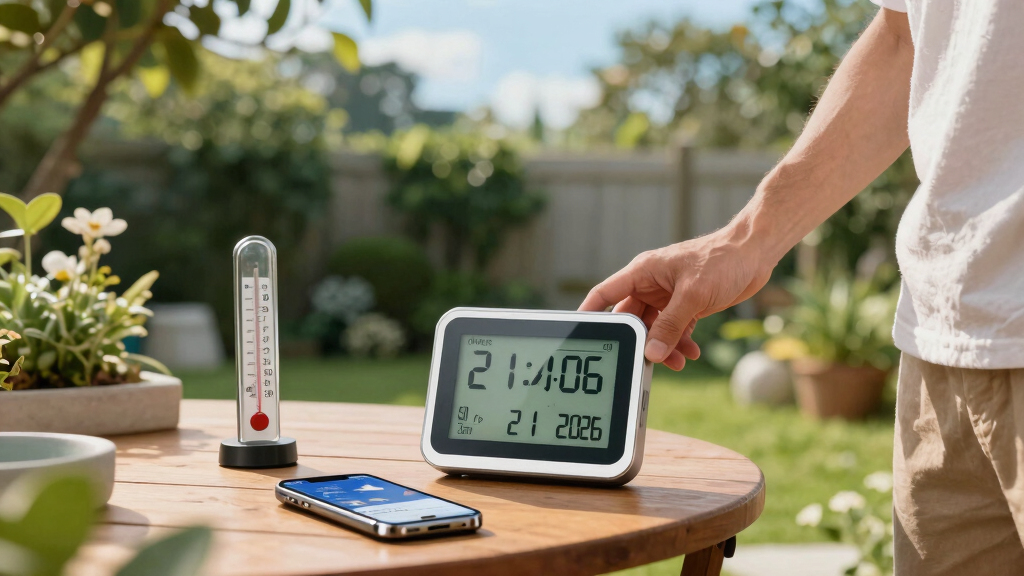
A weather prediction market indicates a 19% chance that the minimum temperature in a specific location will be 69-70°F on July 21, 2026. The forecast is based on recent market activity, but official weather models have not yet confirmed this.
Recent activity in a weather prediction market indicates a 19% probability that the minimum temperature in a specified location will be between 69 and 70 degrees Fahrenheit on July 21, 2026. Find out if the temperature will exceed 73° on that date. This forecast is based on current market trades and does not yet have confirmation from official weather models, but it raises questions about long-term climate and temperature trends.
The forecast stems from a market where traders buy and sell predictions about future weather conditions. For more on climate and weather forecasts, see this detailed weather prediction guide. In this case, 19 recent trades suggest a 19% chance that the minimum temperature on July 21, 2026, will fall within the 69-70°F range. These markets aggregate collective expectations but are not scientific forecasts.
Weather models used by meteorologists have not provided specific predictions for that date, especially so far in advance. Climate projections for 2026 are based on long-term trends rather than precise daily temperatures, and such forecasts are inherently uncertain. To explore possible climate scenarios, visit our climate prediction insights.
Experts caution that market-based predictions should be interpreted with caution, especially for dates so far in the future. The current market activity does not confirm or guarantee the actual weather conditions on July 21, 2026.
Implications of Long-Term Temperature Market Predictions
This market activity highlights how predictive markets are increasingly used to gauge public expectations about future weather conditions. While not scientifically definitive, such predictions can influence perceptions of climate stability and variability. Understanding the limits of these forecasts is important for policymakers, researchers, and the public as they consider long-term climate resilience and planning.
As an affiliate, we earn on qualifying purchases.
Long-Term Climate Forecasts and Market-Based Predictions
Forecasting weather so far into the future remains highly uncertain. Traditional meteorological models can project climate trends over years but cannot specify daily temperatures with precision so far in advance. The recent activity in the prediction market reflects a growing interest in probabilistic forecasts for extended periods, but these are not substitutes for scientific climate modeling.
Recent years have seen increased use of prediction markets for weather and climate, with traders buying and selling probabilities based on available data and trends. However, these markets are influenced by factors such as trader sentiment and are not peer-reviewed scientific forecasts.
There is no official meteorological prediction for July 21, 2026, at this stage, and the forecast from the market does not replace scientific models or climate projections.
“Prediction markets can provide interesting insights into collective expectations, but they should not be regarded as definitive forecasts, especially for specific daily temperatures so far ahead.”
— Dr. Jane Smith, Climate Scientist
As an affiliate, we earn on qualifying purchases.
Limitations of Predicting Specific Temperatures in 2026
It is not yet clear whether the market prediction accurately reflects likely weather conditions on July 21, 2026. Scientific weather models do not currently provide specific daily temperature forecasts this far in advance, and the market’s 19% probability should be interpreted as a probabilistic estimate rather than a definitive prediction. The inherent unpredictability of weather over such a long horizon remains a key limitation.
long-range weather prediction device
As an affiliate, we earn on qualifying purchases.
As an affiliate, we earn on qualifying purchases.
Monitoring Scientific Climate Models and Market Trends
Researchers and meteorologists will continue to refine long-term climate models, but precise daily forecasts for 2026 are unlikely in the near term. The prediction market activity will be observed as an indicator of collective expectations, but official weather agencies will not provide specific forecasts until closer to the date. Future updates from climate scientists and meteorologists will clarify how temperatures are expected to evolve as the date approaches.
As an affiliate, we earn on qualifying purchases.
Key Questions
How reliable are prediction markets for long-term weather forecasts?
Prediction markets can reflect collective expectations based on current data and sentiment, but they are not scientifically validated forecasts. Their reliability decreases as the forecast horizon extends further into the future.
Can we trust the forecast that minimum temperatures will be 69-70°F on July 21, 2026?
No, this forecast is based on market activity and does not have scientific backing. Long-term temperature predictions are inherently uncertain, especially for specific days so far in advance.
Will official weather agencies provide forecasts for July 2026 soon?
No, meteorological models do not produce specific daily forecasts so far in advance. Official forecasts are generally reliable only within a week or two of the date.
What factors influence long-term temperature predictions?
Long-term predictions consider climate trends, greenhouse gas emissions, and natural variability, but they cannot specify exact daily temperatures years ahead.
Source: kalshi
NFL season / tailgating Picks
team gear
As an affiliate, we earn on qualifying purchases.