
TL;DR

Prime made for students and young adults
- Fast, free delivery for dorm and study essentials
- Prime Video and Amazon Music included
- Member-only deals
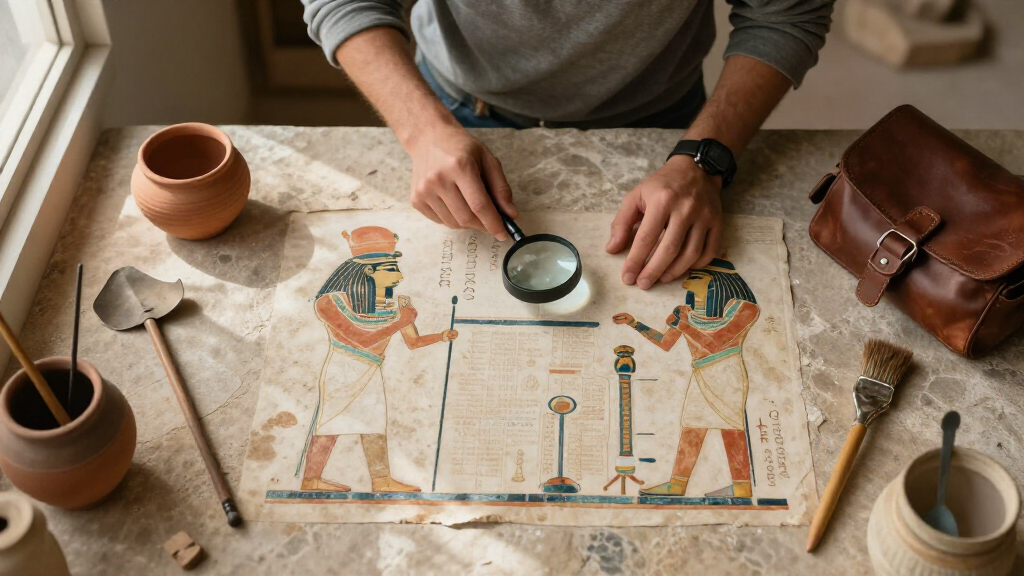
Archaeologists have discovered a 4,400-year-old tomb belonging to an Egyptian judge at Saqqara, notable for its preserved wall paintings. This find offers new insights into ancient Egyptian burial customs and judicial history.
Archaeologists have announced the discovery of a 4,400-year-old tomb of an Egyptian judge at Saqqara, featuring well-preserved wall paintings with vibrant colors. The find offers rare insights into the funerary practices and judicial roles during Egypt’s early dynastic period. The discovery was made during ongoing excavations at the Saqqara necropolis, a site renowned for its ancient tombs and pyramids, and it is considered one of the most significant finds in recent years.
The tomb, dating back to approximately 2200 BCE, was uncovered by an international team of archaeologists working at Saqqara, a vast burial ground near Cairo. It is believed to belong to an Egyptian judge named Nebamun, based on inscriptions found within the tomb. The structure is notable for its intact wall paintings, which depict scenes of daily life, religious rituals, and judicial proceedings, all adorned with vibrant pigments that have remarkably survived thousands of years.
Preliminary analysis indicates that the tomb was constructed with mudbrick and limestone, typical of the period, and measures approximately 4 meters in height and 3 meters in width. The wall paintings showcase detailed depictions of offerings, divine figures, and court scenes, providing rare visual evidence of early legal processes. Experts suggest that the preservation of the colors is due to the tomb’s sealed environment, which protected the artwork from erosion over millennia.
Officials involved in the excavation have stated that the tomb’s inscriptions confirm the identity of Nebamun as a judge, a role that was crucial in the early Egyptian judicial system. The discovery also includes pottery, amulets, and wooden artifacts, which are currently being studied to better understand the burial customs and social hierarchy of the time. The site has been carefully excavated to preserve the integrity of the paintings and artifacts for further research.
Implications for Understanding Early Egyptian Society
This discovery is significant because it provides direct visual and textual evidence of the judicial system and social structure during Egypt’s early dynastic period. The well-preserved wall paintings offer insights into religious beliefs, court proceedings, and funerary customs, which are otherwise known mainly through fragmented texts and artifacts. The find enriches understanding of how legal authority was represented and honored in burial practices, shedding light on the role of judges in ancient Egyptian society.
Moreover, the preservation of vibrant colors on the walls suggests that similar tombs could contain further undiscovered artwork, potentially revolutionizing knowledge of ancient Egyptian art and culture. The site’s proximity to other major tombs underscores Saqqara’s importance as a center of political and religious activity during this era, and the discovery could prompt reevaluation of existing historical timelines and social hierarchies.
Popular right now

Hisense 85 U7 Mini-LED ULED 4K UHD Smart Google TV (85U7SG, 2026)

Samsung 75-Inch M80H Series Mini LED 4K Smart TV (2026)

Ninja Luxe Café Mini Plus Espresso and Drip Coffee Machine with AutoFroth, Stainless Steel (ES351)
As an affiliate, we earn on qualifying purchases.
Saqqara’s Rich Archaeological Record and Recent Discoveries
Saqqara has long been recognized as one of Egypt’s most important archaeological sites, with a history spanning over 4,000 years. It is the location of the Step Pyramid of Djoser, considered Egypt’s earliest large stone monument, and has yielded numerous tombs and artifacts from various periods of Egyptian history. Recent excavations have uncovered several significant tombs, revealing details about royal and noble life, burial customs, and religious practices.
The site has seen increased archaeological activity in recent years, driven by Egypt’s efforts to boost tourism and scholarly interest. While previous discoveries include royal tombs and funerary temples, the recent find of Nebamun’s tomb stands out because of its exceptional state of preservation and the vividness of its wall paintings. The ongoing excavations are part of a broader initiative to explore and document Saqqara’s extensive necropolis, which continues to yield new insights into Egypt’s ancient civilization.
Unconfirmed Aspects and Ongoing Analysis
While the initial findings are promising, detailed analysis of the inscriptions, artifacts, and wall paintings is still underway. Experts have not yet confirmed the full identity of Nebamun or the precise functions of the depicted scenes. The exact date of the tomb’s construction and its relation to other nearby structures remain under investigation.
Additionally, the extent of the tomb’s original decoration, possible hidden chambers, and the full significance of the iconography are still being explored. Researchers caution that further discoveries could alter current interpretations, and some details about the tomb’s context are still uncertain.
Next Steps in Excavation and Study
Researchers plan to continue detailed analysis of the wall paintings, inscriptions, and artifacts recovered from the tomb. Conservation efforts are underway to preserve the wall colors and prevent deterioration. Further excavations are also scheduled to explore adjacent areas of the site, which may contain additional burial chambers or related structures.
Scholars aim to publish comprehensive reports on the tomb’s contents and significance within the next year. The findings are expected to contribute substantially to Egyptology, especially regarding early legal and religious practices, and may attract further archaeological interest and funding.
Key Questions
How old is the tomb of the Egyptian judge?
The tomb dates back approximately 4,400 years, to around 2200 BCE, during Egypt’s early dynastic period.
What makes this tomb so significant?
The tomb’s remarkable preservation, especially its vibrant wall paintings, provides rare visual insights into early Egyptian judicial and religious life.
Who was Nebamun?
Based on inscriptions, Nebamun was believed to be an Egyptian judge, a role that was important in the legal system of the period.
What artifacts were found with the tomb?
Artifacts include pottery, amulets, and wooden objects, which are now being studied to better understand burial customs and social hierarchy.
When will more details about the tomb be available?
Further analysis and publication of findings are expected within the next year, as conservation and research continue.
Source: hn