

Better air quality starts with room size math because it helps you accurately determine the space’s dimensions, which is vital for choosing the right air filtration and ventilation solutions. When you know the size, you can prevent issues like stale air, odors, and pollutants. Proper measurements ensure your system works efficiently, keeping the air clean and fresh. If you want to discover how precise room calculations can make a real difference, there’s more to uncover.

Prime made for students and young adults
- Fast, free delivery for dorm and study essentials
- Prime Video and Amazon Music included
- Member-only deals
Key Takeaways
- Accurate room size calculations ensure proper ventilation and air filtration tailored to the space.
- Knowing room volume helps select the right air purifiers with appropriate CADR ratings.
- Proper measurements prevent issues like stale air, odors, and pollutant buildup.
- Precise dimensions enable effective ventilation strategies, improving indoor air quality.
- Math-driven approaches optimize system efficiency, enhancing overall environmental health.
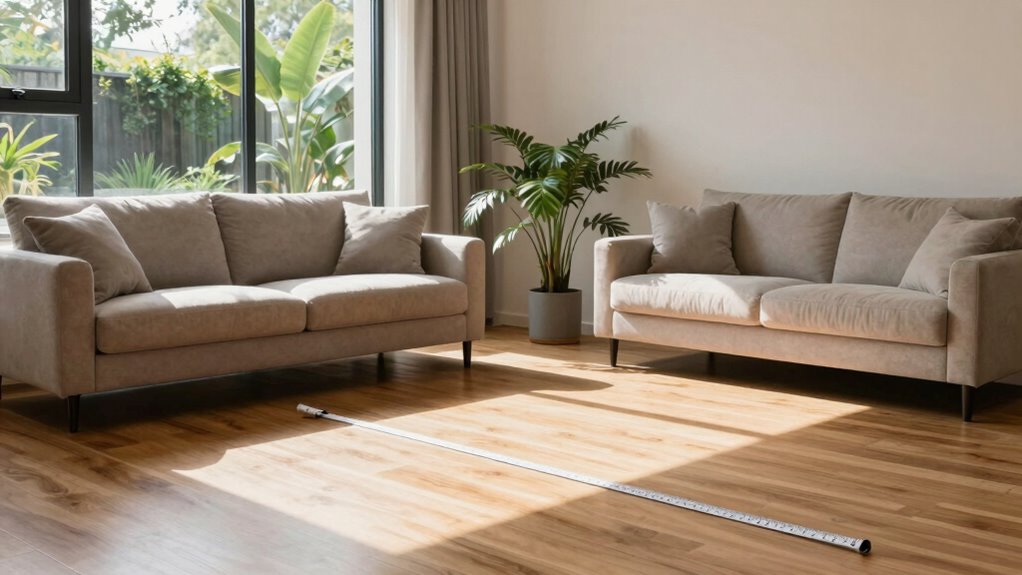
Have you ever wondered how the size of a room impacts the air you breathe? It’s a crucial question because room size directly influences the effectiveness of your air filtration and ventilation strategies. When a room is larger, it requires more careful planning to guarantee fresh, clean air circulates properly. Without understanding these dimensions and adjusting your approach, you might find yourself battling stale air, odors, or pollutants that linger longer than they should. That’s why doing the math on room size isn’t just about measurements — it’s about creating a healthier environment. Knowing your space dimensions helps you plan more accurately and ensures your air quality solutions are effective. Properly accounting for room size also helps prevent air stagnation, which can compromise indoor air quality and lead to health issues. Additionally, recognizing the impact of indoor air quality on overall health underscores the importance of these calculations. Air filtration systems work best when they’re tailored to the space they serve. If you install a filter that’s too small or underpowered for your room, it won’t effectively remove airborne contaminants like dust, allergens, or pet dander. Conversely, an oversized or overpowered filter can be unnecessary and wasteful. By calculating your room’s volume — multiplying its length, width, and height — you get the total cubic footage. This number guides you in selecting the right air filtration units with the appropriate Clean Air Delivery Rate (CADR). Proper sizing guarantees ideal air cleaning without overburdening your system or wasting energy. Ventilation strategies also hinge on understanding your room’s dimensions. Adequate ventilation isn’t just about opening windows; it’s about maintaining a balanced air exchange rate that suits your space. For smaller rooms, a simple exhaust fan or a small air exchange system might suffice. Larger rooms, however, demand more robust solutions like whole-house ventilation or multiple intake and exhaust points to promote fresh airflow. When you know the exact size of your room, you can determine how much outside air needs to be brought in and how quickly stale air should be expelled. This math helps you avoid under-ventilation, which leads to poor air quality, and over-ventilation, which wastes energy and can make the space uncomfortable. In essence, understanding your room’s size is fundamental to making smart decisions about air filtration and ventilation. It also highlights the importance of accurate measurements for effective system performance. It allows you to customize solutions that effectively remove pollutants and supply fresh air, creating a healthier, more comfortable environment. When you do the math, you’re not just measuring space — you’re taking control of your indoor air quality, ensuring every breath you take is cleaner and fresher. This simple step empowers you to maximize your air systems and enjoy a space that truly supports your well-being.
air purifier with appropriate CADR for room size
As an affiliate, we earn on qualifying purchases.
As an affiliate, we earn on qualifying purchases.
Frequently Asked Questions
How Does Room Shape Affect Air Quality Calculations?
You’ll find that room shape considerably impacts air quality calculations by influencing ventilation efficiency and air circulation. Irregular or elongated rooms may hinder proper airflow, making it harder to maintain good air quality. By understanding how the shape affects these factors, you can better optimize your ventilation system. This guarantees fresh air circulates effectively, reducing pollutants and improving overall air quality in your space.
Can Multiple Rooms’ Air Quality Be Accurately Measured Together?
Sure, measuring multiple rooms’ air quality together seems easy—just like trusting indoor plants and air purifiers to do all the work. In reality, it’s tricky because each room has different sizes, airflow, and contaminants. For accurate results, you need to assess each room individually, then combine the data. Relying solely on combined measurements can lead you astray, just like thinking one air purifier solves all.
Does Furniture Placement Influence Room Size Calculations?
Yes, furniture placement influences room size calculations because it affects spatial optimization. When you arrange furniture, you change the available airflow and usable space, which can alter your perception of the room’s size. Accurate measurements should include clear pathways and consider furniture’s impact on open space. Properly optimized furniture arrangement guarantees precise room size calculations, ultimately improving air quality by facilitating better airflow and ventilation throughout the space.
How Often Should Room Size Be Remeasured for Air Quality Purposes?
You should remeasure your room size whenever you make significant changes, like rearranging furniture or adding new fixtures, to guarantee your air quality sensors and ventilation systems work effectively. Regularly checking your room size helps maintain ideal airflow and air quality. Additionally, remeasure if you notice inconsistent sensor readings or changes in air quality, so your ventilation system can be properly adjusted for the best results.
Are There Tools to Simplify Room Size Math for Homeowners?
Ever wonder if there are tools to simplify room size math? Yes, you can use smart sensors and airflow modeling software to make calculations easier. These tools automatically measure room dimensions and analyze airflow patterns, providing precise data for your air quality needs. Wouldn’t it be great to optimize your space effortlessly? With these tech solutions, homeowners can confidently determine room sizes and improve air quality without manual math.
room size measurement laser distance meter
As an affiliate, we earn on qualifying purchases.
As an affiliate, we earn on qualifying purchases.
Conclusion
By understanding the math behind room size, you can breathe easier—literally. Think of your space as a clear lake or a crowded pond; the larger the room, the more your air can circulate and refresh. Ignoring this simple calculation is like trying to fill a tiny cup with a firehose. When you get the math right, your air quality transforms from a clogged drain to a flowing stream—free, fresh, and inviting.
As an affiliate, we earn on qualifying purchases.
As an affiliate, we earn on qualifying purchases.
Fall Picks
fall essentials
As an affiliate, we earn on qualifying purchases.