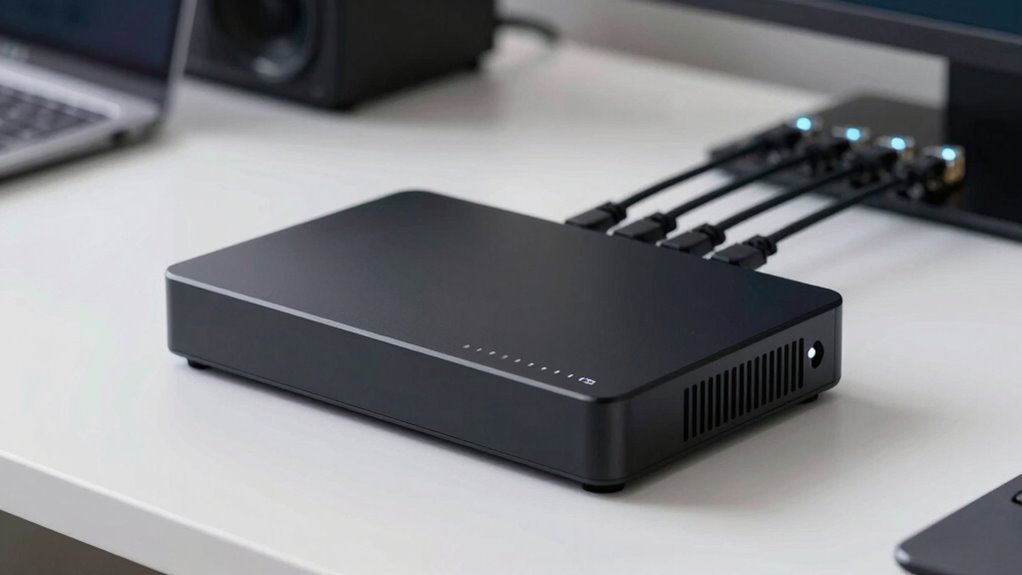

Fanless switches are silent because they lack moving parts like fans that typically cool network gear. Instead, they rely on passive cooling methods such as heat sinks and ventilation to prevent overheating. This design not only reduces noise but also lowers energy consumption and extends the device’s lifespan. If you want to discover how these features work together to create quieter, more efficient network equipment, keep exploring to learn more.
Open a free Amazon Business account
Business pricing, bulk buying and tax-exempt orders.
As an affiliate, we earn on qualifying purchases.
Key Takeaways
- Fanless switches operate without moving parts, eliminating noise from cooling fans.
- They rely on passive thermal management, such as heat sinks and ventilation, to dissipate heat silently.
- Their energy-efficient design reduces heat generation and the need for active cooling.
- Proper thermal design enhances device longevity and prevents overheating without noise.
- These switches are ideal for noise-sensitive environments like offices and healthcare settings.

Fanless switches are an increasingly popular choice for network environments where silent operation and energy efficiency matter. Unlike traditional switches that rely on fans to dissipate heat, fanless models operate without moving parts, making them virtually silent. This feature is especially valuable in settings like offices, healthcare facilities, or home labs, where noise can be distracting or disruptive. Furthermore, their silent operation contributes to a more comfortable work environment, free from the hum of noisy cooling fans.
One of the key benefits of fanless switches is their superior energy efficiency. Without fans consuming power, these switches use less electricity, which can lead to significant cost savings over time. They are designed to maximize power consumption by employing energy-efficient components and intelligent power management techniques. This means they generate less heat and require less cooling, further reducing their overall energy footprint. The reduced power draw not only benefits your utility bills but also aligns with environmentally conscious practices, making fanless switches a greener choice for your network.
Thermal management is a critical factor in the design of fanless switches. Since they lack active cooling components like fans, they rely on passive cooling methods such as heat sinks, ventilation, and robust chassis design. Proper thermal management ensures that the switch maintains ideal operating temperatures, preventing overheating and prolonging its lifespan. Good thermal design also minimizes the need for additional cooling equipment, which can be noisy and consume extra energy. When choosing a fanless switch, look for models with well-designed heat dissipation features, such as large surface area heat sinks and strategic ventilation ports that facilitate natural airflow. Additionally, selecting models with passive cooling features can further improve reliability and longevity.
As an affiliate, we earn on qualifying purchases.
Frequently Asked Questions
Do Fanless Switches Support Poe Functionality?
Yes, fanless switches can support PoE functionality. They are designed for energy efficiency, which helps reduce power consumption while delivering Power over Ethernet. These switches are ideal for quiet environments since their fanless design minimizes noise. When choosing a fanless PoE switch, make certain it meets your power requirements and supports the necessary PoE standards to effectively power your devices without sacrificing performance or energy efficiency.
How Do Fanless Switches Handle Overheating?
Unlike noisy fans, fanless switches rely on effective thermal management and heat dissipation to prevent overheating. You might think silence compromises cooling, but these switches use solid-state components and optimized designs to disperse heat passively. By efficiently managing thermal loads, they stay cool under normal operation, ensuring reliability without moving parts. This smart heat dissipation allows the switch to function quietly while maintaining safe temperatures.
Are Fanless Switches More Durable Than Fan-Cooled Ones?
Yes, fanless switches are generally more durable than fan-cooled ones because they rely on passive thermal management, reducing moving parts that can break down. Their silent operation also minimizes wear and tear caused by noise and vibration. Without fans, they’re less prone to dust buildup and mechanical failure, making them ideal for long-term use. You’ll appreciate their durability and noise reduction, especially in quiet or sensitive environments.
Can Fanless Switches Be Used in Outdoor Environments?
While fanless switches excel indoors, their suitability for outdoor use depends on their design. You can consider them if they feature advanced thermal management and environmental resilience, protecting against moisture, dust, and temperature fluctuations. However, most standard fanless switches aren’t built for harsh outdoor conditions. Opt for models explicitly rated for outdoor environments to make certain of reliable performance, safeguarding your network’s stability regardless of external challenges.
What Are the Main Limitations of Fanless Switches?
You should know that fanless switches have limitations mainly in thermal management, as they rely solely on passive cooling, which can lead to overheating under heavy loads. This can reduce performance or cause hardware failure. While they excel at noise reduction, you need to guarantee proper ventilation and ambient temperature control to prevent thermal issues. If your environment demands high airflow or intense usage, a fan-based switch might be more suitable.
As an affiliate, we earn on qualifying purchases.
Conclusion
Fanless switches operate quietly, making them ideal for noise-sensitive environments. Did you know that over 60% of data centers are now adopting fanless technology to improve working conditions? By choosing a fanless switch, you not only reduce noise but also lower energy consumption and maintenance costs. If you value a peaceful workspace without sacrificing performance, considering a fanless switch could be a smart move for your network setup.
As an affiliate, we earn on qualifying purchases.
As an affiliate, we earn on qualifying purchases.
Labor Day sales Picks
labor day deals
As an affiliate, we earn on qualifying purchases.