When choosing a generator, you’ll find inverter models run quieter, more fuel-efficiently, and produce cleaner power than conventional ones. Inverter generators adjust engine speed based on your load, reducing noise and saving fuel, making them ideal for residential use and outdoor activities. Conventional generators run at a constant speed, which is noisier and less efficient but often more affordable. Understanding these differences helps you pick the right generator for your needs, and there’s more to discover about how noise impacts your choice.
Key Takeaways
- Inverter generators adjust engine speed based on load, improving fuel efficiency and reducing noise compared to conventional models.
- Conventional generators run at a constant speed, often consuming more fuel and producing louder operation.
- Noise levels impact user comfort, safety, and suitability for residential or outdoor environments.
- Inverter generators tend to be quieter, making them ideal for quiet settings or prolonged use.
- Choosing between inverter and conventional depends on efficiency, noise preferences, and specific power needs.
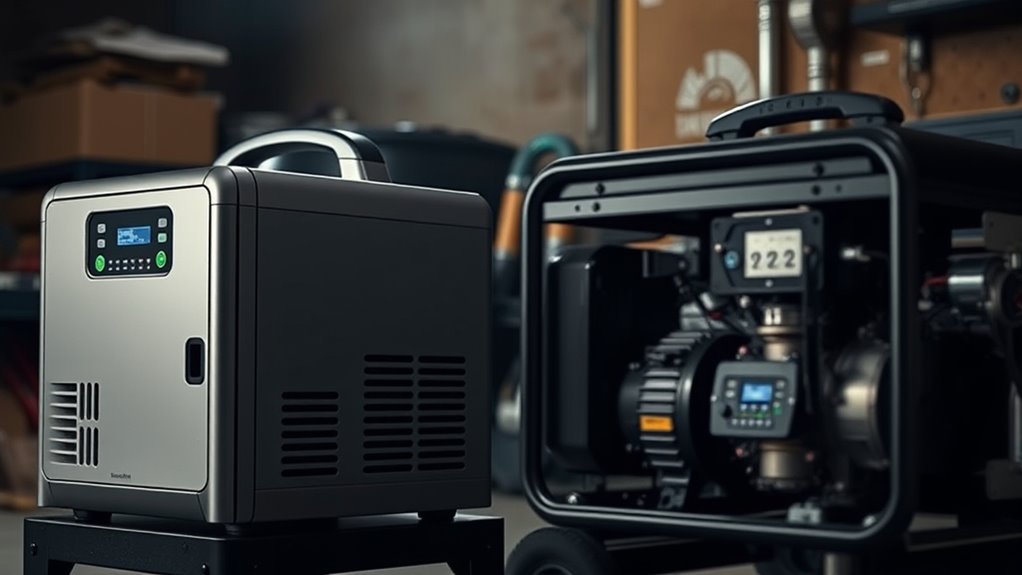
Have you ever wondered how a generator produces electricity? It’s a fascinating process that involves converting mechanical energy into electrical power. When you turn on a generator, it begins to work by activating its internal components, but understanding how it starts and runs efficiently can make a big difference in your experience. Fuel efficiency plays a vital role here because it determines how long your generator can operate on a given amount of fuel. The more fuel-efficient it is, the less often you’ll need to refuel, saving you money and reducing the hassle. Good fuel efficiency also means less emissions, which is better for the environment.
Getting your generator up and running smoothly involves following proper startup procedures. These procedures typically include checking the fuel level, ensuring the oil is at the correct level, and inspecting for any leaks or damage. For portable generators, you usually need to turn the fuel valve on, set the choke if the engine is cold, and then start the engine using the pull cord or electric start button. Once it’s running, you should allow the engine to warm up before connecting your appliances or tools. Proper startup procedures not only help you get the generator running quickly but also extend its lifespan by preventing unnecessary wear and tear. Additionally, understanding the field‑of‑view and imaging‑scale of different generator types can help you select the most suitable model for your specific needs.
When it comes to fuel efficiency, inverter generators tend to perform better than conventional models. They adapt their engine speed to match the power demand, which conserves fuel and reduces noise. This means you spend less on fuel and enjoy quieter operation, making inverter generators ideal for camping, RV trips, or backup power at home. Conventional generators, on the other hand, run at a constant speed regardless of load, often wasting fuel and producing more noise.
Noise matters because it affects your comfort and safety. If your generator is loud, it can disturb neighbors or cause discomfort during prolonged use. Inverter generators are known for their quiet operation, partly due to their advanced design and variable speed engine. Conventional models tend to be noisier, which can be a significant drawback if you’re in a residential area or need to run the generator for long periods.
Understanding these basics—fuel efficiency, startup procedures, and noise levels—helps you choose the right generator for your needs. Whether you prioritize quiet operation, fuel savings, or ease of startup, knowing how these factors interact ensures you make an informed decision. Properly maintaining your generator and following recommended startup steps will give you reliable power whenever you need it, with less hassle and greater efficiency.
Frequently Asked Questions
How Long Can Each Type of Generator Run Continuously?
You can run conventional generators for about 8 to 12 hours continuously, depending on fuel capacity and load. Inverter generators typically last 6 to 10 hours, but they’re more fuel-efficient at lower loads. Your run time depends on fuel consumption and tank size, so choosing a generator with a larger fuel tank or higher efficiency helps extend operation. Always monitor fuel levels to avoid unexpected shutdowns during extended use.
Are Inverter Generators More Fuel-Efficient Than Conventional Models?
Think of inverter generators as a sleek, fuel-efficient car zipping through the road, while conventional models are like trucks chugging along. Inverter generators typically use less fuel, making them more efficient than conventional models. Their efficiency comparison shows they adjust power output based on demand, saving fuel and reducing waste. So, if you want to stretch your fuel consumption further, inverter generators are the smarter, more economical choice.
What Maintenance Differences Exist Between Inverter and Conventional Generators?
You’ll find that inverter generators generally require less maintenance than conventional ones, thanks to their simpler, modern design. The cost comparison shows inverter models often cost more upfront but save you money over time. Their startup procedures are easier, typically needing just a few quick steps, whereas conventional generators may need more routine checks. Overall, inverter generators tend to be more user-friendly and efficient to maintain.
Do Noise Levels Affect Generator Lifespan?
Think of your generator as a symphony; excessive noise impact can wear down parts faster, shortening its lifespan. Loud operation causes vibrations and stress, which can lead to early failure. Noise levels directly influence lifespan factors by increasing wear and tear. To guarantee longevity, keep noise at manageable levels, perform regular maintenance, and choose quieter models—these steps help your generator run smoothly and last longer.
Can Inverter Generators Power Sensitive Electronics Safely?
Yes, inverter generators can power sensitive electronics safely because they produce a stable, clean power output that minimizes power surges and electromagnetic interference. This consistent power prevents damage to delicate devices like laptops or smartphones. Unlike conventional generators, inverter models automatically adjust their engine speed, reducing fluctuations and providing smoother electricity, ensuring your electronics stay protected and function properly during use.
Conclusion
Understanding the difference between inverter and conventional generators helps you make smarter choices, especially since noise levels impact your comfort and safety. Did you know inverter generators are up to 50% quieter than traditional models? This means less disturbance and better peace of mind during power outages or outdoor activities. So, next time you’re selecting a generator, remember that quieter options not only keep the noise down but also improve your overall experience. Choose wisely for a smoother, quieter power solution.