
TL;DR

Prime made for students and young adults
- Fast, free delivery for dorm and study essentials
- Prime Video and Amazon Music included
- Member-only deals
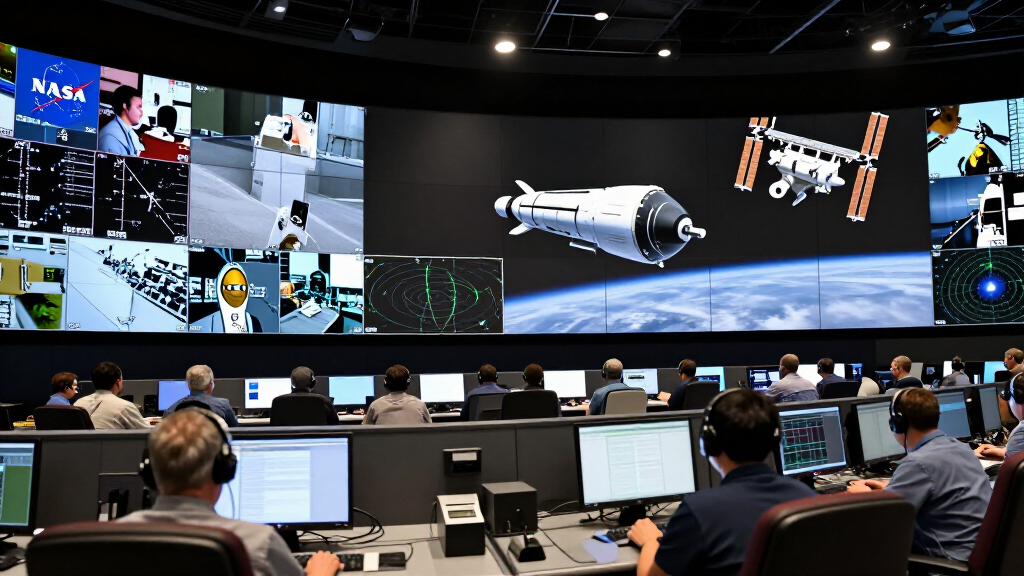
NASA and SpaceX are targeting Oct. 13 for the launch of the 35th SpaceX commercial resupply mission to the International Space Station. The Dragon spacecraft is scheduled to dock Oct. 15 carrying more than 6,300 pounds of supplies, research materials and the final set of station Roll-Out Solar Arrays.
NASA and SpaceX are targeting 6:33 a.m. EDT on Tuesday, Oct. 13, for the launch of a Dragon cargo spacecraft on the company’s 35th commercial resupply mission to the International Space Station. NASA’s coverage plan also sets a target docking time of about 11 a.m. EDT on Oct. 15, when the spacecraft is expected to deliver more than 6,300 pounds of cargo, including the final set of station Roll-Out Solar Arrays.
The Dragon spacecraft is scheduled to launch atop a Falcon 9 rocket from Space Launch Complex 40 at Cape Canaveral Space Force Station in Florida. NASA says Dragon will approach and dock autonomously with the space-facing port of the station’s Harmony module. Launch coverage is scheduled to begin at 6:15 a.m. Oct. 13; arrival coverage is set to begin at 9:15 a.m. Oct. 15. All times are Eastern and subject to change as operations unfold.
NASA’s cargo list includes research and equipment as well as station supplies. The Dragon will carry hardware for manufacturing artificial retinas in microgravity, 3D heart tissue models intended to support large-scale drug testing on future missions, and materials for studying how a new type of glass forms in microgravity. It also will transport brain organoids for research that could help identify treatment targets for neurodegenerative diseases, including Alzheimer’s, Parkinson’s and multiple sclerosis. These are research aims described by NASA, not reported outcomes.
NASA has scheduled a media teleconference for 1:15 p.m. EDT on Thursday, Oct. 8. The briefing is to preview the cargo flight and provide an update after SpaceX’s Crew-12 mission returns from the station. NASA listed participants from its Commercial, Low Earth Orbit Program and International Space Station Office, SpaceX, and the European Space Agency. Media seeking call details were asked to contact the Johnson Space Center newsroom by noon Oct. 8 and to dial in at least 10 minutes before the call to ask questions.
Cargo Supports Station Research and Power
The flight combines routine station logistics with equipment and investigations that rely on the microgravity environment aboard the orbiting laboratory. The research payloads cover several areas, from tissue models and eye-related manufacturing hardware to glass formation and brain organoids. Their inclusion shows what the station’s research program is set up to investigate; it does not establish that the experiments will produce a particular medical or commercial result.
The mission also carries the final set of Roll-Out Solar Arrays, according to NASA. Those arrays are part of the station’s power-system work, making this delivery relevant beyond the individual experiments. For researchers and station operations, the scheduled arrival is a milestone in getting both the equipment and supplies to orbit, though the practical results will depend on launch, docking, installation and subsequent research.
As an affiliate, we earn on qualifying purchases.
NASA’s Planned Launch and Arrival Schedule
This is the 35th SpaceX commercial resupply services mission to the station for NASA. NASA’s announcement focuses on the media schedule and mission cargo, with launch planned for Oct. 13 and Dragon’s arrival two days later. The spacecraft is expected to remain docked until mid-November, when it is scheduled to depart and return to Earth with time-critical research and cargo.
NASA says the departing Dragon is expected to splash down off the coast of California. The agency has not given a specific return date in the announcement. For launch day, NASA plans live streaming and blog updates, with coverage beginning no earlier than 6 a.m. and on-demand video and launch photos expected after liftoff. The agency also offers a virtual guest program with launch resources, notifications and a digital passport stamp following launch.
As an affiliate, we earn on qualifying purchases.
Launch Timing and Mission Results
The Oct. 13 launch and Oct. 15 docking are targets rather than completed events. NASA states that coverage times are subject to change based on real-time operations. The announcement does not provide a specific launch window beyond the target time, nor does it describe any technical or weather constraints that might affect the schedule.
Several operational details remain open, including the exact departure date in mid-November and the results of the experiments after they are conducted in orbit. NASA describes the research goals, but no findings are available in this schedule announcement. The agency’s planned post-splashdown update concerns the returning Crew-12 mission; it is separate from the later return of the CRS-35 cargo spacecraft.
As an affiliate, we earn on qualifying purchases.
Briefing, Launch and Dragon Docking
The next scheduled event in NASA’s coverage plan is the Oct. 8 media teleconference, followed by launch coverage from 6:15 a.m. EDT on Oct. 13. NASA says live video and blog updates will be available through its website, with coverage beginning no earlier than 6 a.m. Launch and docking details may change as the countdown and flight progress.
If the flight proceeds on the announced schedule, NASA’s arrival coverage will start at 9:15 a.m. EDT on Oct. 15, ahead of the targeted 11 a.m. docking. Dragon is then expected to remain at the station until mid-November before returning to Earth. NASA has not announced a precise date for that departure or splashdown.
As an affiliate, we earn on qualifying purchases.
Key Questions
When is SpaceX’s 35th station resupply launch scheduled?
NASA and SpaceX are targeting 6:33 a.m. EDT on Oct. 13. NASA says launch coverage is scheduled to start at 6:15 a.m.; the target remains subject to change.
When and where is Dragon expected to dock?
Dragon is scheduled to dock autonomously at about 11 a.m. EDT on Oct. 15 at the space-facing port of the International Space Station’s Harmony module.
What is the spacecraft carrying?
NASA says the Dragon will carry more than 6,300 pounds of supplies and equipment, including the final set of station Roll-Out Solar Arrays and research payloads involving artificial retinas, heart tissue models, glass formation and brain organoids.
How long will the Dragon stay at the station?
NASA expects the spacecraft to remain docked until mid-November, then depart and return time-critical research and cargo to Earth. The agency has not published a specific departure or splashdown date.
Where can the public follow the mission?
NASA says launch coverage, live streaming and blog updates will be available through its website. Members of the public can also register for NASA’s virtual guest program, which provides mission resources and notifications.
Source: primary
Fall Picks
fall essentials
As an affiliate, we earn on qualifying purchases.