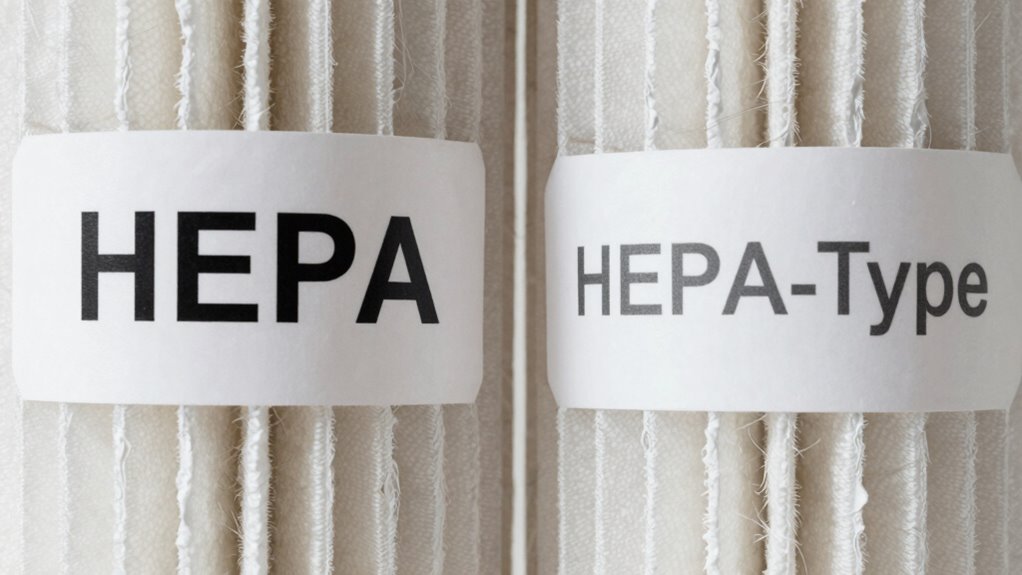

When choosing an air purifier, it’s important to know that a “HEPA” label guarantees the filter meets strict standards, capturing at least 99.97% of particles as small as 0.3 microns. In contrast, “HEPA-Type” indicates a less effective, uncertified filter that may not perform as well for allergy relief. Understanding this difference helps you select the right filter for cleaner, healthier indoor air. If you keep exploring, you’ll discover even more about making the best choice.

Prime made for students and young adults
- Fast, free delivery for dorm and study essentials
- Prime Video and Amazon Music included
- Member-only deals
Key Takeaways
- True HEPA filters capture ≥99.97% of 0.3-micron particles, while “HEPA-Type” filters generally have lower efficiency.
- “HEPA” labels indicate certified, standards-compliant filters; “HEPA-Type” suggests a less effective, uncertified alternative.
- True HEPA filters are more reliable for allergy relief and improving indoor air quality than “HEPA-Type” options.
- “HEPA-Type” filters are usually cheaper but may require more frequent replacement and offer less filtration performance.
- Recognizing the label difference helps ensure you select an air purifier that effectively reduces allergens and airborne particles.
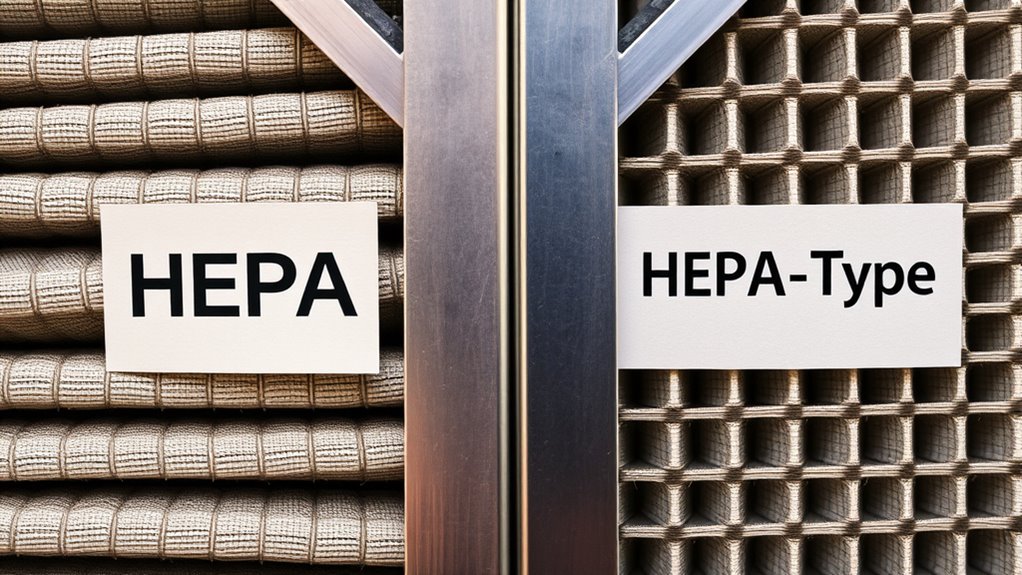
When shopping for air purifiers, you might notice labels like “HEPA” and “HEPA-Type,” but understanding the difference can save you from false expectations. These labels impact the air filtration quality and, ultimately, how well your purifier can help with allergy relief. A true HEPA filter is designed to capture at least 99.97% of airborne particles as small as 0.3 microns. If you’re seeking relief from allergies caused by dust, pollen, pet dander, or mold spores, a genuine HEPA filter provides the high level of filtration necessary to considerably reduce these triggers. It’s a reliable choice for those who want cleaner indoor air and better allergy management.
On the other hand, “HEPA-Type” filters are marketed as similar to HEPA but don’t meet the strict standards of true HEPA filters. They often use less dense filter media or different technologies that may only capture a smaller percentage of particles. This means your air filtration might not be as efficient, especially for the tiny particles that cause allergy symptoms. If you’re serious about allergy relief, relying solely on a “HEPA-Type” filter could be disappointing, as it might leave many allergens in the air. When you see “HEPA-Type” on a label, it’s a sign that the filter isn’t a true HEPA but a more affordable or less effective alternative.
Understanding this difference is vital because it affects your air quality and health. True HEPA filters are tested and certified to meet specific standards, providing confidence that they will perform as advertised. They’re especially important in homes with allergy sufferers or respiratory issues, where the goal is to remove as many irritants as possible from the air. While “HEPA-Type” filters may come at a lower cost, their lower efficiency can mean you end up spending more on replacements or still experiencing allergy symptoms. If your main concern is allergy relief, investing in a purifier with a true HEPA filter is a smarter choice, as it guarantees you’re getting the level of air filtration necessary to make a real difference. Additionally, considering the technology used in filters can help you select the most effective option for your needs.
As an affiliate, we earn on qualifying purchases.
Frequently Asked Questions
Can “Hepa-Type” Filters Meet the Same Standards as True HEPA Filters?
No, “HEPA-Type” filters don’t meet the same filtration standards and certification processes as true HEPA filters. True HEPA filters are tested to capture at least 99.97% of particles as small as 0.3 microns, ensuring high air quality. “HEPA-Type” filters often fall short of these standards, so you might not get the same level of filtration. Always check for proper certification to make sure you’re getting the real deal.
Are “Hepa-Type” Filters Safe for Allergy Sufferers?
They say, “Better safe than sorry,” and that’s true for allergy sufferers considering “HEPA-Type” filters. While they may improve air quality, they often don’t meet the strict standards of true HEPA filters. For reliable allergy relief, opt for true HEPA filters, which effectively trap allergens like dust, pollen, and pet dander. This guarantees better air quality and peace of mind for sensitive noses.
How Long Do “Hepa-Type” Filters Typically Last?
You can expect a HEPA-type filter to last about 3 to 6 months, depending on usage and air quality. To guarantee ideal performance, monitor the filter’s condition and replace it when it looks dirty or after the recommended replacement frequency. Proper maintenance maximizes filter lifespan, improves air quality, and keeps your allergy symptoms in check. Regular replacements are key to maintaining a healthy indoor environment.
Do “Hepa-Type” Filters Require the Same Maintenance as True HEPA Filters?
You don’t need to follow the same maintenance schedule for “HEPA-Type” filters as true HEPA filters. Instead, focus on regular filter replacement and cleaning frequency based on your usage and environment. “HEPA-Type” filters generally require less frequent changes, but keeping an eye on their condition and cleaning them when dirty helps guarantee ideal air quality. Always check manufacturer instructions for specific maintenance recommendations.
Can “Hepa-Type” Filters Be Used in Medical or Industrial Settings?
You can use “HEPA-type” filters in medical or industrial settings, but you must check if they meet specific air filtration standards required for those environments. While they may be compatible with certain medical equipment, they typically don’t provide the same level of filtration as true HEPA filters. Always verify the filter’s certification and confirm it complies with industry standards to ensure safety and effectiveness.
As an affiliate, we earn on qualifying purchases.
Conclusion
Understanding the difference between HEPA and “HEPA-type” filters isn’t just about labels; it’s about ensuring your air truly meets your needs. Recognize the standard, check the certification, and prioritize quality over convenience. Don’t settle for less; demand clarity and accuracy. Because when it comes to your health, precision matters, standards matter, and labels matter. Choose wisely, trust informed decisions, and breathe confidently knowing you’ve made the right choice.
As an affiliate, we earn on qualifying purchases.
As an affiliate, we earn on qualifying purchases.
Halloween Picks
halloween
As an affiliate, we earn on qualifying purchases.