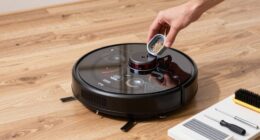
Robot mops excellently clean smooth, hard surfaces like tile, laminate, and sealed hardwood, effectively removing dust, dirt, and light stains. They work best for regular maintenance and can handle large areas quickly. However, they often struggle with stubborn or greasy spills, sometimes smearing instead of removing them, and aren’t suitable for textured or thick carpets. If you’re curious about how to get the best results and avoid pitfalls, continue exploring more tips.
Key Takeaways
- Robot mops excel at cleaning smooth, hard surfaces like tile, laminate, and sealed hardwood by removing dust, dirt, and light stains effectively.
- They are designed for regular maintenance and can cover large areas quickly with optimized navigation.
- They tend to smear or streak when cleaning sticky, greasy spills or using inappropriate solutions.
- They are not suitable for deep cleaning or heavily soiled or textured floors, which require manual scrubbing.
- Proper maintenance, such as cleaning mop pads and using suitable solutions, minimizes smearing and improves cleaning performance.

Robot mops are revolutionizing the way you clean your floors by offering an effortless and efficient solution. With advancing robot mop technology, you no longer need to spend hours scrubbing or sweeping. Instead, these devices handle the dirty work while you focus on other tasks. One of the key benefits of modern robot mops is their ability to optimize your cleaning schedule. You can set them to run at specific times or intervals, ensuring your floors stay consistently clean without you needing to intervene. This scheduling feature helps you maintain pristine surfaces, especially in busy households or workplaces where messes happen regularly. As you program your robot mop, it learns your home’s layout and adapts its routes accordingly, making each cleaning session more thorough and efficient. This level of cleaning schedule optimization means you get better results with less effort, and you can trust your robot to cover every nook and cranny.
Additionally, some models incorporate advanced navigation systems, allowing them to avoid obstacles and optimize their cleaning paths even further. However, it’s important to understand what robot mops excel at cleaning and where they might fall short. These devices are fantastic at cleaning smooth, hard surfaces like tile, laminate, and sealed hardwood floors. They excel at removing dust, dirt, and light stains from these surfaces, making your floors look fresh and inviting. Their built-in mopping pads and intelligently designed navigation allow them to clean large areas quickly and evenly. Still, they’re not ideal for deep cleaning or heavily soiled floors. For instance, if you’ve spilled something sticky or greasy, a robot mop might smear the mess rather than clean it thoroughly. Thick or textured carpets are also off-limits, as most robot mops are designed solely for hard floors.
Another aspect to evaluate is that robot mops can sometimes leave streaks or smears if the cleaning system isn’t optimized or if the mop pads are worn out. Using the right cleaning solution and maintaining the device can minimize these issues. It’s also worth noting that some robot mops are equipped with sensors to detect obstacles and avoid spreading dirt around, but they may struggle with pet hair or fine debris, which can clog the brushes or reduce cleaning effectiveness. Overall, robot mops are excellent for regular maintenance of smooth, hard surfaces, but they aren’t a substitute for deep or heavy-duty cleaning. When used correctly and with proper maintenance, they can markedly reduce your cleaning workload, keep your floors looking good, and give you more free time to enjoy your clean space.
Frequently Asked Questions
How Long Do Robot Mop Batteries Typically Last per Charge?
You can expect your robot mop’s battery lifespan to last around 60 to 120 minutes per charge, depending on the model and cleaning mode. Charging time usually takes between 2 to 4 hours to fully recharge the battery. To get the best performance, make sure you regularly monitor the battery level and allow it to fully recharge before the next use, ensuring peak cleaning efficiency and prolonging battery life.
Can Robot Mops Handle Different Floor Types Effectively?
Yes, robot mops handle different floor types effectively, offering good flooring versatility. They clean hardwood, tile, laminate, and vinyl floors with ease, adapting to each surface’s needs. Their cleaning effectiveness varies depending on the floor material, but most models are designed to deliver consistent results. You’ll find that choosing the right mop with adjustable settings enhances their performance across various flooring types, ensuring a thorough and efficient clean every time.
Are Robot Mops Suitable for Pet Hair and Dander Removal?
Did you know that robot mops can remove up to 85% of pet hair and dander? They’re surprisingly effective for pet hair removal and dander cleaning, especially on hard floors. However, they might struggle with embedded pet hair in carpets or thick layers of dander. For best results, combine robot mops with regular vacuuming. They’re a helpful tool, but not a complete solution for heavy pet hair and dander cleanup.
How Often Should I Replace the Mop Pads or Brushes?
You should replace your robot mop’s pads and brushes regularly for ideal cleaning. Typically, change mop pads every 1-2 weeks, depending on usage and dirt levels, to maintain mop pad maintenance. Follow the brush replacement schedule suggested by the manufacturer, usually every 3-6 months, or sooner if you notice wear or hair buildup. Regular maintenance ensures your robot mop cleans effectively and lasts longer.
Do Robot Mops Work Well in Cluttered or Narrow Spaces?
You might be surprised, but robot mops can handle narrow spaces and cluttered areas surprisingly well. Their compact design lets them squeeze into tight corners, and advanced sensors help them navigate around obstacles. However, in extremely cluttered zones, they may struggle or need manual intervention. Still, with careful setup, you can trust your robot mop to clean those tricky, cluttered corners effectively, making your chores easier.
Conclusion
Robot mops can make cleaning easier, but they’re not perfect. They excel at regular spills and light dirt, saving you time and effort. However, they might smear or miss stubborn grime. Did you know that over 60% of users report better cleanliness with robotic mops compared to traditional methods? If you choose the right one, you’ll enjoy a cleaner home with less hassle—just remember, they’re best suited for routine cleaning, not heavy-duty scrubbing.