
Many believe a second brain must be large and complex to work well, but that’s a myth. Size and complexity often slow you down, cause clutter, and make retrieval harder. A smaller, streamlined system can be more effective, helping you stay focused, organized, and productive without overwhelm. Overloading your notes or adding unnecessary categories only hampers progress. Keep your system simple and sustainable—if you’re curious about how to do that, there’s more to explore below.
Key Takeaways
- Bigger second brains are not inherently better; size can lead to overwhelm and reduced efficiency.
- Overcomplex systems hinder quick retrieval and increase time spent searching for information.
- Maintaining a small, focused system improves clarity, ease of use, and long-term sustainability.
- Minimalist, streamlined setups support better organization and prevent digital overload.
- Regular pruning and simplicity are more effective than expanding the system indefinitely.
What Is a Second Brain and Why Should You Build One?

Have you ever felt overwhelmed by the sheer amount of information you need to remember or manage daily? That’s where a second brain comes in. It’s a system designed to extend your brain capacity, helping you organize, store, and retrieve knowledge efficiently. Contrary to popular belief, it’s not about building a massive, complex system; it’s about creating a streamlined, personalized setup that works for you. Your brain has limited capacity, so offloading tasks and ideas can free mental space for creativity and critical thinking. A second brain isn’t just for storing notes; it’s a tool to enhance productivity, reduce stress, and keep your ideas accessible. Building one allows you to focus on what truly matters, without feeling overwhelmed by information overload. Additionally, understanding the role of technology in projectors can help you choose the right tools to support your second brain. Incorporating cloud-based solutions can further enhance your system’s efficiency and accessibility. For example, integrating routine health checks for signs of illness or injury can keep your system running smoothly and prevent potential problems.
Common Myths About the Size and Complexity of Second Brains

Many believe that bigger second brains are automatically better, but size isn’t everything. In fact, too much complexity can make your second brain harder to use effectively. Focusing on efficiency rather than size helps you build a tool that truly supports your needs. By streamlining your organization with effective planning techniques, you ensure your second brain remains a practical and powerful resource. Simplifying your system can also improve your daily management and reduce overwhelm. Remember, a well-structured smartphone organization can make all the difference in keeping your second brain manageable. Additionally, avoiding unnecessary system complexity helps maintain clarity and ease of use over time.
Bigger Isn’t Always Better
While it might seem intuitive that a larger, more complex second brain is better, this isn’t always the case. A bigger system can lead to overwhelm and reduced productivity. Instead, focus on minimal design to keep your second brain streamlined and efficient. Clutter reduction is essential; unnecessary notes and tangled categories slow you down. Remember, a smaller, well-organized system helps you find information faster and stay focused. Overloading yourself with too many tools or vast amounts of data can backfire, making your second brain harder to use rather than easier. Keep it simple, prioritize quality over quantity, and regularly prune your system to maintain clarity. A concise, intentionally designed second brain will serve you better than a sprawling, overly complex one. Additionally, tools like Techno Capture for converting content or managing digital notes can enhance your system’s effectiveness. Focusing on information management, such as system organization, ensures your second brain remains a helpful tool rather than a burdensome one. Incorporating efficiency practices, including regular review and cleanup, can further optimize your workflow and prevent system bloat.
Complexity Can Hinder Use
Although it might seem logical that a more complex second brain offers greater flexibility, increased complexity often makes it harder to use effectively. When your system becomes cluttered or overly intricate, you spend more time searching and less time benefiting from your notes. Simplifying your setup requires minimal effort and reduces mental load, making it easier to find what you need quickly. Additionally, simplicity in organization can foster a more intuitive workflow, especially as a growth in AI-related jobs can also influence how you organize your knowledge system, emphasizing the importance of minimalism in design to adapt efficiently. Recognizing that user-friendly interfaces are crucial can help prevent overwhelm and ensure your second brain remains a practical tool rather than an obstacle. Keeping your system straightforward encourages consistent use and prevents it from becoming a source of overwhelm, which can discourage regular engagement.
Efficiency Over Size
A common myth is that a larger or more complex second brain automatically means greater efficiency. This is a scaling misconception that often leads to content overload, making your system harder to navigate. More isn’t always better; adding more notes or categories can bog you down instead of helping you find what you need quickly. The organization structure of your second brain plays a crucial role in how easily you can retrieve information. The way you categorize and prioritize information impacts the system’s overall usability and effectiveness. The goal isn’t to build a massive repository but to create a streamlined, focused system that enhances your productivity. When your second brain grows unnecessarily large, it can slow you down and reduce clarity. Efficiency comes from smart organization and thoughtful curation, not size. Keeping your system simple and intentional helps you access valuable insights faster, avoiding the trap of equating complexity with productivity. Well-designed information architecture and thoughtful curation are key to creating a second brain that works for you, especially when considering scalability and long-term usability.
Why Small Second Brain Systems Can Be Just as Powerful

A smaller second brain keeps your focus sharp by highlighting only what matters most. It’s easier to maintain and update, reducing clutter and overwhelm. Plus, quick access to key information can considerably boost your productivity.
Focused Content Catches Attention
Small second brain systems can be surprisingly effective because they focus on capturing and organizing only the most important information. By prioritizing what truly matters, you avoid digital clutter and reduce knowledge overload. When your system is streamlined, it’s easier to find and recall key ideas without sifting through unnecessary details. This focused approach ensures that your second brain becomes a powerful tool for attention and productivity. Instead of trying to save everything, you concentrate on meaningful content that genuinely supports your goals. As a result, your system remains manageable, and your mental energy isn’t wasted on sorting through distractions. Small, targeted systems catch your attention better and help you stay focused on what’s most valuable.
Easier Maintenance, Less Overload
Because they focus on only the most essential information, small second brain systems are easier to maintain and less prone to overload. With fewer notes, ideas, and references, you reduce digital clutter and stay organized. Smaller systems also help you avoid hitting storage limits, which can become a problem with massive amounts of data. To keep things manageable, consider:
- Limiting the number of categories or tags you use
- Regularly reviewing and deleting outdated notes
- Focusing only on core ideas rather than capturing everything
This approach ensures your second brain remains nimble, easier to update, and less overwhelming. By simplifying, you free yourself from constant maintenance and prevent overload, making your system more effective and sustainable.
Quicker Access Boosts Productivity
When your second brain contains only the key information, finding what you need becomes faster and easier. This improved access speed means you spend less time searching and more time acting. A smaller, simpler system allows you to navigate quickly without getting bogged down by unnecessary details. System simplicity enhances your ability to locate critical insights instantly, boosting your productivity. You don’t need a massive database to be effective; just focus on the essentials. With a streamlined setup, your second brain becomes a powerful tool that accelerates your workflow. Quick access ensures you’re always ready to seize opportunities, make decisions, and stay organized. Ultimately, a smaller, focused second brain can be more efficient and impactful than a sprawling, complex system.
How Overcomplicating Your Knowledge System Can Backfire

Overcomplicating your knowledge system might seem like a way to stay organized, but it often does more harm than good. When your system becomes too complex, it leads to mind clutter and information overload, making it harder to find what you need. Instead of helping, this chaos can stall your progress. To avoid this, focus on simplicity:
- Limit categories to essentials, preventing unnecessary subdivisions.
- Use straightforward tags or labels for quick retrieval.
- Regularly review and prune outdated or irrelevant information.
Overcomplicating creates a false sense of control while actually decreasing efficiency. You spend more time managing your system than leveraging it. A streamlined approach keeps your mind clear, boosts productivity, and ensures your second brain remains a helpful tool, not a source of stress.
Simple Tips for Building a Practical and Sustainable Second Brain

Building a practical and sustainable second brain starts with setting up a simple, consistent system you can easily maintain. Begin by focusing on digital decluttering—remove unnecessary apps, files, and clutter that distract you. This streamlines your workflow and makes information more accessible. Next, prioritize habit formation; develop routines for capturing, organizing, and reviewing your notes daily. Keep processes straightforward, so they become second nature. Use clear labels and minimal categories to avoid overwhelm. Remember, the key isn’t a perfect system but one you can stick with long-term. By simplifying and reinforcing regular habits, your second brain remains manageable and effective, supporting your productivity without feeling burdensome.
Do You Need a Larger System? When to Scale Up or Keep It Small
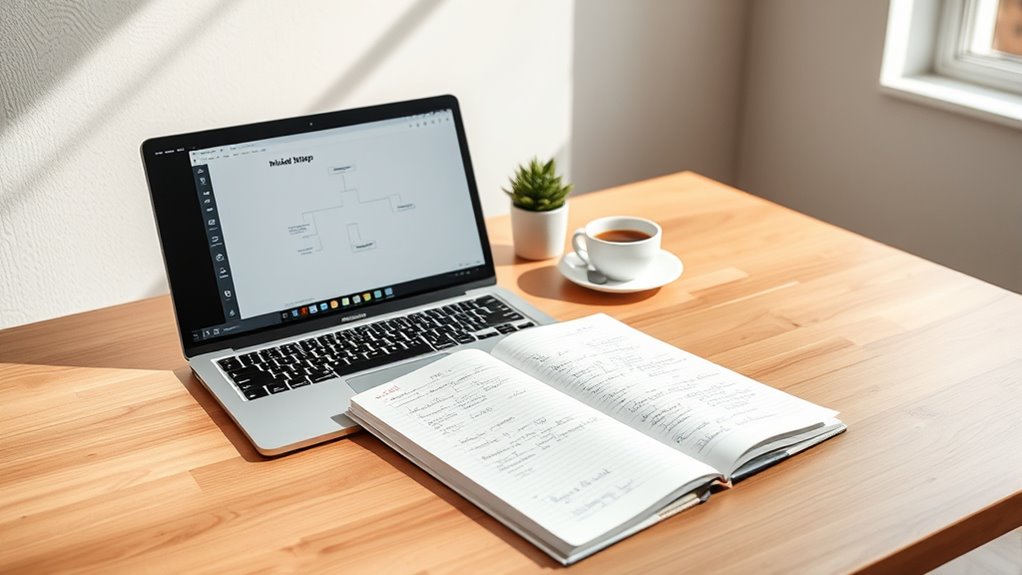
Deciding whether to scale up your second brain depends on your needs and goals. If you face scaling challenges or find your system becoming too complex, it might be time to reconsider. A larger system isn’t always better; it can compromise system simplicity and efficiency. Ask yourself:
- Are my notes and workflows becoming unmanageable?
- Do I struggle to find information quickly?
- Is my system hindering productivity rather than supporting it?
If you answered yes, scaling up may be necessary. However, if your current setup serves your needs without overwhelming you, keeping it small keeps things straightforward. Remember, a second brain should enhance your life, not complicate it. Focus on maintaining a balance between growth and simplicity.
Debunking the Biggest Myths About the Benefits of a Second Brain

Many people believe that a second brain automatically boosts productivity and memory, but these benefits are often oversold. While organizing information can help, it doesn’t guarantee better recall or efficiency without proper habits. Additionally, relying on external systems raises concerns about data privacy; storing sensitive info digitally can expose you to breaches if not managed carefully. More importantly, focusing too much on external tools can negatively impact your mental well-being, leading to anxiety or overwhelm if your system becomes cluttered or unmanageable. A second brain is a tool, not a magic fix. It’s essential to prioritize mental clarity and ensure your system supports your well-being rather than adding stress. Keep your system manageable, safe, and aligned with your mental health needs.
Frequently Asked Questions
Can a Second Brain Improve Productivity Without Being Extensive?
Yes, a second brain can boost your productivity without being extensive. Focus on scaling complexity gradually, rather than building a massive system. Keep your system simple and easy to manage, so it actively supports your tasks without overwhelming you. By prioritizing clarity and ease of use, you’ll find it easier to capture ideas, retrieve information, and stay organized—ultimately enhancing your efficiency without the need for a huge, complicated setup.
How Do I Prevent My Second Brain From Becoming Overwhelming?
You’ll want to tame your second brain before it spirals into chaos! Keep organization simple by creating clear categories and tags, so you don’t drown in endless notes. Regularly declutter—delete outdated info and streamline workflows. Limit your input to what truly matters, avoiding clutter buildup. With these steps, you prevent overwhelm, making your second brain a powerful tool, not a monster, that boosts your productivity without chaos.
Is a Digital or Physical Second Brain More Effective?
Digital second brains are generally more effective because they address scalability concerns easily. You can quickly add, search, and organize information without physical space limits. Physical systems might feel more tactile and personal, but they often become harder to expand or update over time. If you want flexibility and growth, a digital second brain is usually the better choice, helping you stay organized without feeling overwhelmed.
Can I Maintain a Second Brain With Minimal Time Investment?
Yes, you can maintain a second brain with minimal time investment by focusing on organization simplicity and time efficiency. You don’t need a complex or massive system; instead, keep it straightforward, using quick capture tools and simple categorization. Regularly review and update only essential notes, so your second brain stays useful without overwhelming you. This approach helps you stay organized and efficient without dedicating hours each day.
Does Size Impact the Long-Term Usefulness of My Second Brain?
Size doesn’t necessarily impact your second brain’s long-term usefulness. You might worry about scalability concerns or storage limitations, but as you organize effectively, your system can grow without issues. Focus on maintaining clarity and relevance, rather than size. A smaller, well-structured second brain often outperforms a massive, cluttered one. Prioritize quality over quantity, and you’ll find your system remains useful and adaptable over time.
Conclusion
Don’t fall for the myth that bigger equals better—your second brain should serve you, not overwhelm you. Like the wise old owl, simplicity often outshines complexity. Focus on what truly matters, and remember, even in an era of digital renaissance, a streamlined system can be just as powerful as a sprawling library. Keep it practical, stay consistent, and your second brain will work wonders—no need to summon a giant for greatness.