
TL;DR

Prime made for students and young adults
- Fast, free delivery for dorm and study essentials
- Prime Video and Amazon Music included
- Member-only deals
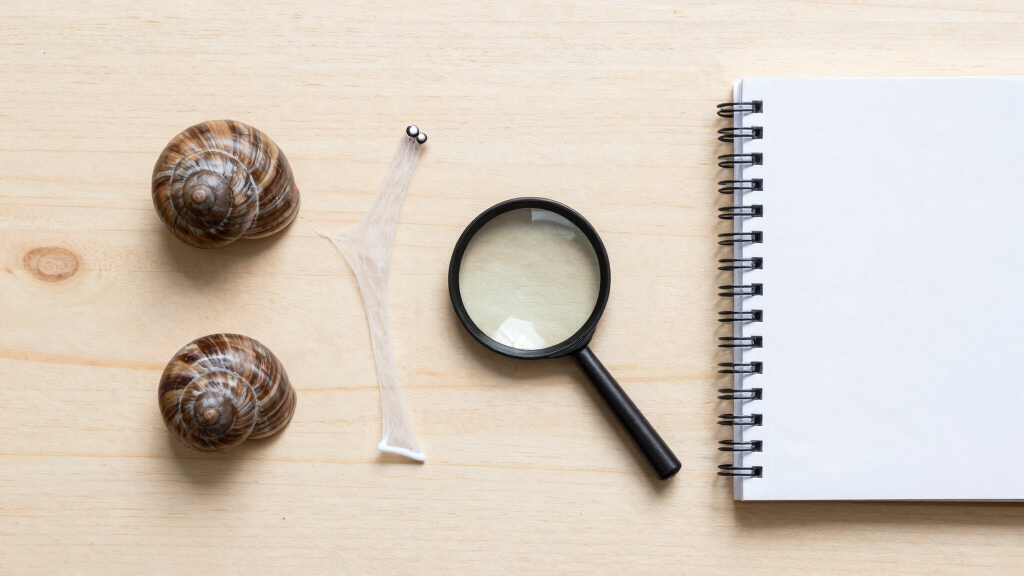
A 2015 study revealed that snail teeth surpass spider silk in strength, marking a significant discovery in natural materials. This finding could influence future biomaterial development and understanding of biological strength.
Research published in 2015 established that snail teeth are stronger than spider silk, a discovery that challenges longstanding beliefs about natural materials’ strength and durability. This finding has potential implications for biomaterials and bioengineering, making it a significant development in the field of natural material science.
The study, conducted by researchers at the University of Portsmouth, measured the tensile strength of snail radula teeth and compared it to that of spider silk. Results showed that snail teeth could withstand greater forces before breaking, indicating they are the strongest biological material discovered to date.
According to lead researcher Dr. David Taylor, ‘Our tests demonstrate that snail teeth outperform spider silk in terms of tensile strength, which was previously considered one of the strongest natural fibers.’ The research involved microscopic analysis and mechanical testing, confirming the exceptional durability of snail radula teeth.
Potential Impact on Biomaterials and Engineering
This discovery matters because it redefines the hierarchy of natural materials’ strength, opening new avenues for biomimicry in material science. Engineers and scientists could develop stronger, more durable synthetic materials inspired by snail teeth, impacting industries from medicine to manufacturing.
Furthermore, understanding how snails produce such resilient teeth could lead to innovations in sustainable, bio-based materials, reducing reliance on synthetic composites.
biomimetic materials inspired by snail teeth
As an affiliate, we earn on qualifying purchases.
As an affiliate, we earn on qualifying purchases.
Previous Assumptions About Natural Material Strengths
Before this study, spider silk was widely regarded as one of the strongest natural fibers, valued for its elasticity and tensile strength. The belief was that biological materials generally had limitations in strength compared to synthetic counterparts.
The 2015 research challenged this view by identifying snail radula teeth as surpassing spider silk, prompting a reevaluation of biological materials’ potential for strength and durability. The findings built on earlier work exploring biomaterials but provided a new benchmark for natural resilience.
“‘Our tests demonstrate that snail teeth outperform spider silk in terms of tensile strength, which was previously considered one of the strongest natural fibers.'”
— Dr. David Taylor
strong natural fiber spider silk alternative
As an affiliate, we earn on qualifying purchases.
As an affiliate, we earn on qualifying purchases.
Remaining Questions About Snail Tooth Strength and Production
While the study confirms the exceptional strength of snail teeth, it is still unclear how exactly snails produce such resilient material at a biochemical level, and whether this can be replicated synthetically. Further research is needed to understand the biological processes involved and the potential for engineering biomimetic materials.
Additionally, the durability of snail teeth under different environmental conditions and over time remains to be thoroughly tested.
bioengineering materials for durability
As an affiliate, we earn on qualifying purchases.
As an affiliate, we earn on qualifying purchases.
Future Research Directions and Potential Applications
Scientists are expected to investigate the biochemical composition of snail teeth more deeply, aiming to replicate their strength synthetically. Follow-up studies may explore how to harness this biological blueprint for industrial use, including creating stronger, bio-inspired materials.
Research efforts will likely focus on bioengineering techniques to mimic snail radula teeth, with potential applications in medicine, manufacturing, and sustainable material development. The next major milestone could be the successful synthesis of snail-inspired biomaterials.
As an affiliate, we earn on qualifying purchases.
Key Questions
Why are snail teeth stronger than spider silk?
Snail teeth, specifically their radula, are composed of highly mineralized, resilient biominerals combined with organic proteins, giving them exceptional tensile strength. In contrast, spider silk is primarily a protein fiber optimized for elasticity and toughness, but not necessarily for maximum tensile strength.
Could this discovery lead to new materials for human use?
Yes, understanding the structure and composition of snail teeth could inspire the development of new, stronger biomimetic materials for use in medical implants, industrial applications, and sustainable manufacturing.
Are there limitations to the current research?
Yes, the study primarily measured tensile strength in laboratory conditions. How these materials perform in real-world environments and how to replicate their properties synthetically are still under investigation.
Has this changed the view on natural material limits?
Yes, this research challenges previous assumptions that natural materials are inherently weaker than synthetic ones, highlighting the potential of biological systems to produce extraordinarily resilient materials.
Source: hn
Halloween Picks
halloween
As an affiliate, we earn on qualifying purchases.