
TL;DR

Get school and study supplies delivered free — and shop member deals
- Fast, free delivery on millions of items
- Access to Prime Big Deal Days deals on October 6–7
- Prime Video, Amazon Music and more included
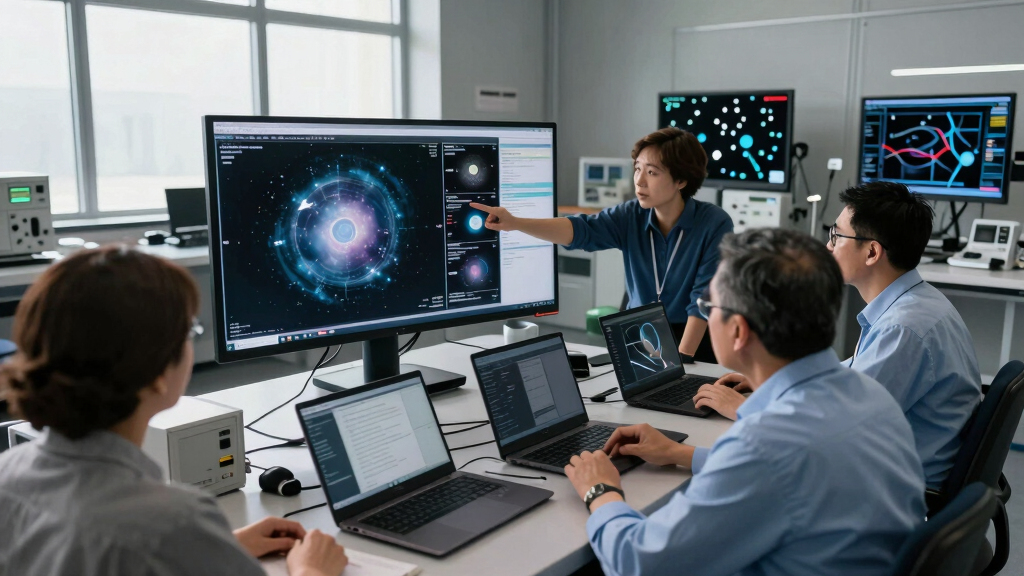
The James Webb Space Telescope has detected phenomena that do not align with existing models of the early universe. Astrophysicists are now analyzing these findings to determine their significance and implications.
Scientists are examining unexpected observations from the James Webb Space Telescope that suggest the universe may be evolving differently than current models predict. These anomalies could alter understanding of galaxy formation and the timeline of cosmic evolution, making this a significant development for astrophysics.
Since its deployment, the James Webb Space Telescope (Webb) has provided unprecedented images and data of the early universe. Recently, researchers identified unexpected features in the formation and distribution of some of the earliest galaxies, which appear to be more mature and diverse than existing models suggest. These observations were reported by teams at NASA and collaborating institutions, based on data collected over the past few months.
While Webb’s initial mission focus was to observe the universe’s first billion years, these latest findings indicate the presence of galaxies with properties that challenge current theories about how quickly galaxies form and evolve after the Big Bang. Some scientists have described the data as showing anomalous brightness and structure that do not fit the expected timeline, prompting further analysis.
Experts caution that these results are preliminary and require additional validation. The data are currently being reviewed by astrophysicists worldwide, with some emphasizing the importance of ruling out observational errors or biases before drawing definitive conclusions.
Implications for Cosmology and Galaxy Formation
The observations from Webb could influence current understanding of the early universe. If these findings are confirmed, they may suggest that galaxies formed more rapidly or through different processes than previously thought. Such results could lead to revisions in models related to dark matter, cosmic inflation, and the development of large-scale structures. These findings also prompt a reassessment of the timeline for galaxy formation after the Big Bang.
Additionally, these observations may guide future research directions and influence the interpretation of other astronomical data. They demonstrate Webb’s potential to provide insights that could refine or challenge existing cosmological models.
telescope for astrophysics research
As an affiliate, we earn on qualifying purchases.
As an affiliate, we earn on qualifying purchases.
Recent Webb Discoveries and Theoretical Expectations
The James Webb Space Telescope, launched in December 2021, was anticipated to shed light on the universe’s first billion years. Its advanced instruments have already contributed to significant discoveries, including identifying some of the earliest galaxies and stars. Prior to these observations, prevailing theories suggested that galaxy formation was a gradual process, with small proto-galaxies merging over time to form larger structures.
Recent data indicating the presence of mature-looking galaxies at earlier epochs than predicted has raised questions about the timeline of cosmic evolution. While Webb was expected to refine existing models, these new findings suggest that some aspects of galaxy formation may need to be reconsidered.
“While these observations are preliminary, they could have implications for our understanding of the early universe if validated.”
— Professor Mark Delgado, cosmologist at Harvard University
astronomy binoculars for stargazing
As an affiliate, we earn on qualifying purchases.
As an affiliate, we earn on qualifying purchases.
Validity and Interpretation of Webb’s Anomalous Data
It remains uncertain whether the observed anomalies are due to instrumental effects, data processing issues, or genuine astrophysical phenomena. Scientists are reviewing the data and conducting additional observations to verify the results. There is ongoing discussion about how these findings might fit within current cosmological frameworks or whether they indicate the need for new theories.
Until the data undergo peer review and further analysis, the scientific community remains cautious about interpreting these results and assessing their significance across Webb’s datasets.
As an affiliate, we earn on qualifying purchases.
Further Data Collection and Peer Review Processes
Researchers plan to analyze additional Webb observations, focusing on similar early universe regions, to determine whether these anomalies are consistent. Upcoming data releases and peer-reviewed publications will be essential for evaluating the findings. International collaborations are also underway to compare Webb’s data with other telescopes and simulations, aiming to clarify the nature of these phenomena and their implications for cosmology.
Further scrutiny of the data and potential revisions to existing models of galaxy formation are anticipated if these anomalies are confirmed through additional observations.
As an affiliate, we earn on qualifying purchases.
Key Questions
What specific anomalies has Webb detected in early galaxies?
Webb has observed galaxies with properties such as higher-than-expected brightness and mature structures that appear earlier than current models predict, which may suggest different or faster formation processes.
Could these findings be due to errors or biases?
Scientists are actively reviewing the data to identify and rule out potential instrumental errors or processing biases. The findings are preliminary and require further validation.
How might this change current theories of the universe?
If validated, these observations could lead to modifications in models of galaxy formation, dark matter, and early universe physics, potentially affecting the estimated timeline of cosmic structure development.
When will more definitive results be available?
Additional observations and peer-reviewed publications are expected within the coming months, which will help clarify the significance of these findings.
What are scientists most cautious about regarding these findings?
Scientists emphasize the importance of verifying the data’s accuracy and ruling out non-astrophysical explanations before revising established theories.
Source: hn
Fall Picks
fall essentials
As an affiliate, we earn on qualifying purchases.