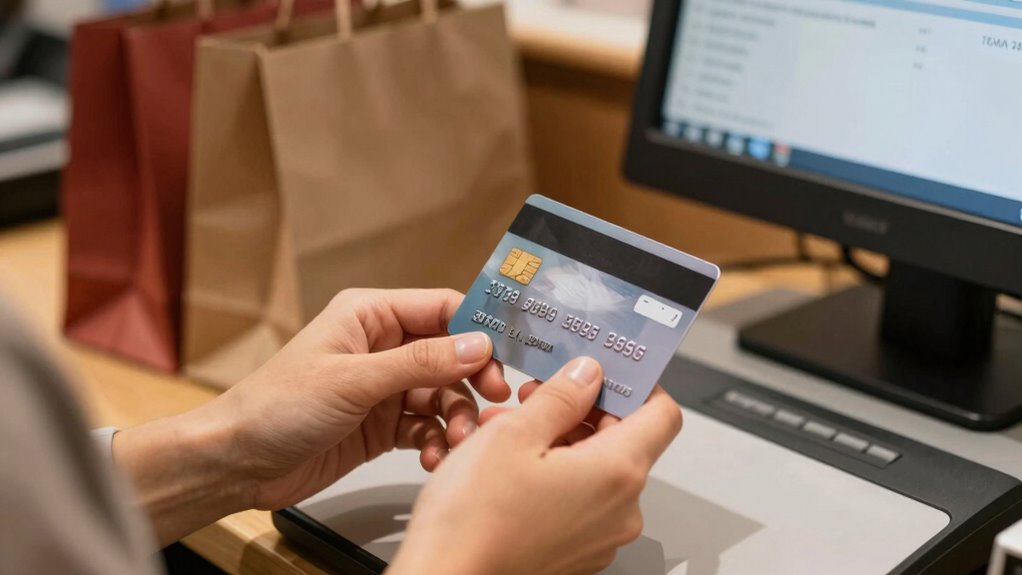

Before you checkout, ask yourself if the purchase fits within your budget. This simple question acts as a mental checkpoint, helping you avoid impulsive spending driven by discounts or emotions like FOMO. It keeps your focus on your financial goals and prevents buyer’s remorse. Considering whether the item aligns with your priorities can help you make smarter choices. Stay with us, and you’ll discover more ways to guarantee you shop wisely and stay financially healthy.

Prime made for students and young adults
- Fast, free delivery for dorm and study essentials
- Prime Video and Amazon Music included
- Member-only deals
Key Takeaways
- Ask yourself if the purchase fits within your overall financial plan and long-term goals.
- Consider whether the item is a necessity or a impulsive desire driven by emotion.
- Evaluate if the price aligns with its value and if it’s a genuine bargain or marketing trick.
- Reflect on how the purchase impacts your budget and overall financial health.
- Pause to assess if the item contributes to sustainable living or personal priorities.

When you’re about to click “buy,” it’s easy to get caught up in the excitement and overlook your budget. That rush of anticipation can make any price seem justified, especially when you’re caught up in the moment. But before you finalize your purchase, taking a moment to ask yourself a simple, powerful question can save you from buyer’s remorse: “Does this fit within my budget?” This question acts as a mental checkpoint, grounding you amid the chaos of pricing strategies that online stores and marketers use to tempt you. Retailers often employ tactics like limited-time offers, discounts, or bundle deals to create a sense of urgency, making emotional spending feel almost automatic. Recognizing these strategies allows you to step back and assess whether the purchase aligns with your financial reality, rather than your fleeting desires. Incorporating awareness of sustainable living practices can also help you prioritize purchases that contribute to a greener future. Additionally, understanding psychological pricing tactics can make you more aware of how prices are presented to influence your decisions. Being aware of consumer psychology can further help you recognize when your emotions are being manipulated to push a purchase. Pricing strategies are designed to make you feel like you’re saving or getting a deal, but they can also cloud your judgment. When you’re tempted by a “50% off” tag, it’s easy to forget that the core question should be whether you need the item and if it fits your budget. Recognizing these marketing techniques can help you stay grounded and make more informed choices. Moreover, taking a moment to reflect on your financial goals can reinforce your decision-making process and prevent impulsive buying. Emotional spending kicks in when you’re swayed by feelings of happiness, excitement, or even FOMO (fear of missing out). These emotions can override rational thought, pushing you toward impulsive purchases that may not be necessary. By asking yourself the budget question first, you bring your emotions into check. You remind yourself that a purchase isn’t just about the price tag but also about your overall financial health and priorities.
As an affiliate, we earn on qualifying purchases.
Frequently Asked Questions
How Do I Set a Realistic Shopping Budget?
To set a realistic shopping budget, start with personal finance and assess your income and expenses. Use budget planning to allocate a specific amount for shopping each month, considering essential needs and savings goals. Track your spending to stay within that limit and adjust it if necessary. Prioritize your purchases and avoid impulse buys. This approach keeps your finances healthy and prevents regret at checkout.
What if I Find a Better Deal After Purchasing?
If you find a better deal after purchasing, check the store’s return policies first. Many places offer price matching or returns within a specific window. Before buying, do a quick price comparison online to avoid missing better deals. This way, you can return or exchange your purchase if needed. Staying informed about return policies and comparing prices helps you save money and avoid regret, even if better deals pop up later.
How Can I Stick to My Budget During Sales?
To stick to your budget during sales, set clear limits beforehand and avoid impulse buying, especially on luxury items. Make a list of must-haves and stick to it, resisting the urge to splurge on tempting but unnecessary luxury pieces. Use a shopping cart or notes app to track your spending in real-time. Remember, patience and discipline help you enjoy sales without regret or overspending.
Should I Prioritize Needs Over Wants?
You should prioritize needs over wants to avoid impulse buying and emotional spending. Picture yourself in a store, tempted by a flashy item that sparks excitement but isn’t necessary. By focusing on your needs first, you resist that urge, saving money and preventing regret. This mindset keeps your budget in check, helping you make conscious choices and ensuring your spending aligns with your true priorities.
How Do I Handle Unexpected Expenses While Shopping?
When unexpected expenses arise while shopping, stay calm and rely on your financial planning. Keep an emergency fund accessible for such situations, so you don’t overspend or regret your purchase. Before shopping, set aside a small emergency fund and stick to it. If surprises happen, pause, reassess your budget, and use your emergency savings if needed. This approach keeps your finances stable and prevents impulsive decisions.
As an affiliate, we earn on qualifying purchases.
Conclusion
By asking yourself the simple, yet powerful, budget question before checkout, you prevent pricey pitfalls and pesky regrets. This quick check keeps your spending in check, curbing careless cravings and cultivating confident choices. Remember, a mindful moment now can mean a more fulfilling finish later. So, stop, scrutinize, and steer your spending smartly—saving yourself from sorrow and securing satisfaction in every purchase. Your wallet will thank you, and your peace of mind will flourish!
As an affiliate, we earn on qualifying purchases.
psychological pricing awareness book
As an affiliate, we earn on qualifying purchases.
As an affiliate, we earn on qualifying purchases.
Fall Picks
fall essentials
As an affiliate, we earn on qualifying purchases.