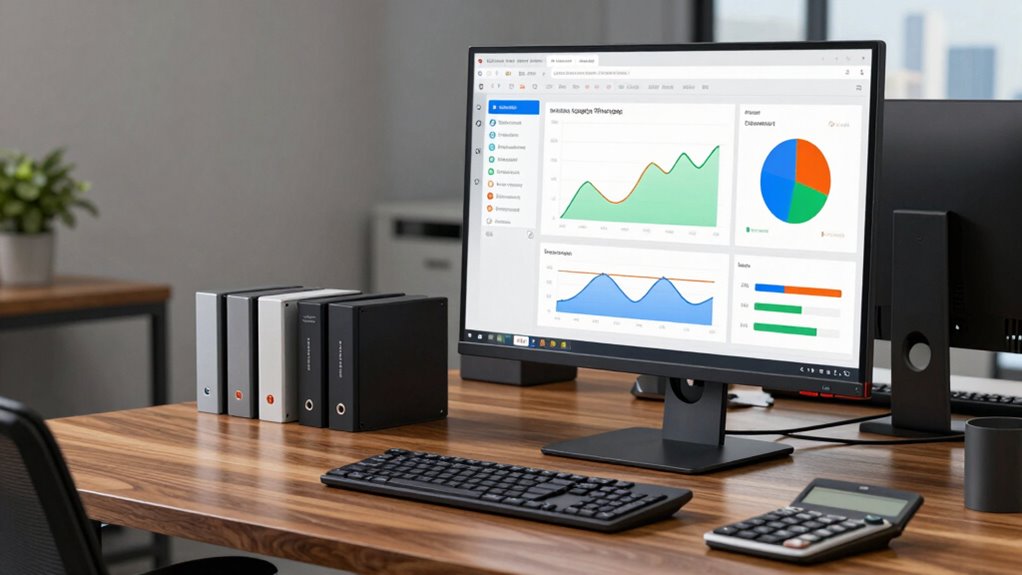

To choose storage size confidently, focus on analyzing your current data growth trends and patterns using analytics tools. Consider future business expansion, new projects, or increased customer activity to refine your estimates. Leverage cloud scalability features for dynamic adjustments and avoid guesswork. By combining these insights with infrastructure knowledge, you can plan effectively and prevent over- or under-provisioning. Continuing this approach helps guarantee your storage capacity aligns perfectly with your needs.
Key Takeaways
- Analyze current data growth trends to forecast future storage needs accurately.
- Utilize analytics tools to monitor usage patterns and identify growth spikes.
- Incorporate business expansion plans and new projects into capacity estimates.
- Leverage cloud scalability features for flexible, on-demand storage adjustments.
- Regularly review and update capacity plans based on actual data growth and infrastructure capabilities.

Capacity planning is an essential process that helps you determine the resources your organization needs to meet future demand efficiently. When you’re managing storage, it’s necessary to avoid guessing your future needs. Instead, you should develop a clear strategy that aligns with your business goals. Cloud scalability plays a crucial role here because it allows you to adjust your storage resources dynamically as your data grows. With cloud solutions, you can increase or decrease storage capacity based on actual needs, preventing over-provisioning or under-provisioning. This flexibility ensures you’re never paying for more than you require, and you can respond quickly to spikes in data volume.
To effectively choose your storage size, you need to implement solid data growth strategies. Start by analyzing your current data trends—how much data do you generate daily, weekly, or monthly? Look for patterns and identify periods of rapid growth. This analysis provides a foundation for projecting future storage needs. Remember, data isn’t static; it continually expands, so your capacity planning must account for this ongoing increase. Setting realistic growth assumptions helps you avoid surprises and guarantees your infrastructure can handle future loads.
Leverage cloud scalability features to streamline this process. Many cloud providers offer auto-scaling options that automatically adjust storage as your data volume changes. This way, you don’t have to manually forecast every increase, reducing the risk of miscalculations. When planning, consider not just your current data but also potential business expansion, new projects, or increased customer activity, all of which could accelerate data growth. Incorporate these factors into your strategies, so your storage capacity remains aligned with your evolving needs.
Additionally, consider the type of data you store. Critical or frequently accessed data might require faster, more reliable storage solutions, while archival data can be stored more cost-effectively with slower, long-term storage options. Balancing cost and performance is part of good capacity planning. Regularly review your data growth and storage consumption to refine your estimates. Use analytics tools to track usage patterns, so your capacity planning stays accurate over time.
Understanding your cloud infrastructure capabilities is essential for designing scalable and sustainable storage solutions. In essence, avoiding guesswork in storage sizing relies on understanding your current data trends, leveraging cloud scalability, and implementing adaptive data growth strategies. This approach ensures you’re prepared for future demands without overspending or risking data bottlenecks. Proper capacity planning empowers you to optimize your infrastructure, support your organization’s growth, and maintain smooth operations across the board.
Frequently Asked Questions
How Often Should Storage Capacity Be Reviewed and Adjusted?
You should review and adjust your storage capacity regularly, ideally through scheduled storage audits every 3 to 6 months. During these audits, compare your current usage against capacity benchmarks to identify potential shortages or over-provisioning. Staying proactive guarantees you prevent disruptions, optimize storage, and avoid guessing, helping your infrastructure scale efficiently. Regular reviews keep your storage aligned with your evolving needs, maintaining smooth operations.
What Tools Can Help Accurately Forecast Future Storage Needs?
You can use forecasting tools like data analytics platforms and capacity planning software to accurately predict future storage needs. These tools analyze existing data migration trends and hardware upgrades, helping you identify growth patterns. By leveraging these insights, you prevent guesswork, optimize your storage allocation, and plan upgrades proactively. Regularly reviewing these forecasts ensures you stay ahead, maintaining efficient storage without risking shortages or unnecessary expenses.
How to Handle Unexpected Data Growth or Spikes?
Did you know that data growth can spike by 40% annually? To handle unexpected data surges, you should leverage data compression to reduce storage needs and storage virtualization to allocate resources flexibly. These strategies help you quickly adapt to sudden increases without over-provisioning, ensuring seamless performance. Keep monitoring trends and adjust your plans accordingly, so you’re always prepared for unpredictable data growth or spikes.
What Are Best Practices for Scaling Storage Infrastructure?
To scale your storage infrastructure effectively, regularly conduct storage audits to identify capacity needs and performance issues. Plan for hardware upgrades proactively to avoid bottlenecks during growth. Automate monitoring to detect usage trends early, allowing you to adjust capacity before problems arise. Implement scalable storage solutions like cloud options or modular hardware, ensuring flexibility for future expansion without disrupting operations. This approach keeps your infrastructure resilient and ready for growth.
How Does Cloud Storage Impact Capacity Planning Strategies?
Cloud storage simplifies capacity planning by offering scalable solutions that adapt to your needs, reducing guesswork. You can easily adjust storage size, avoiding overprovisioning and saving on cloud costs. Plus, cloud providers often include data redundancy, ensuring your data stays safe even if hardware fails. This flexibility helps you optimize storage efficiently, focusing on growth without stressing over capacity limits or unexpected expenses.
Conclusion
By understanding your needs, analyzing your growth, and choosing wisely, you prevent guesswork from dictating your storage decisions. You empower your business with the right capacity, avoid costly mistakes, and guarantee seamless performance. You plan with confidence, act with clarity, and build a future that’s resilient and scalable. Remember, thoughtful capacity planning isn’t just about storage; it’s about securing your success, embracing your potential, and taking control of your growth.