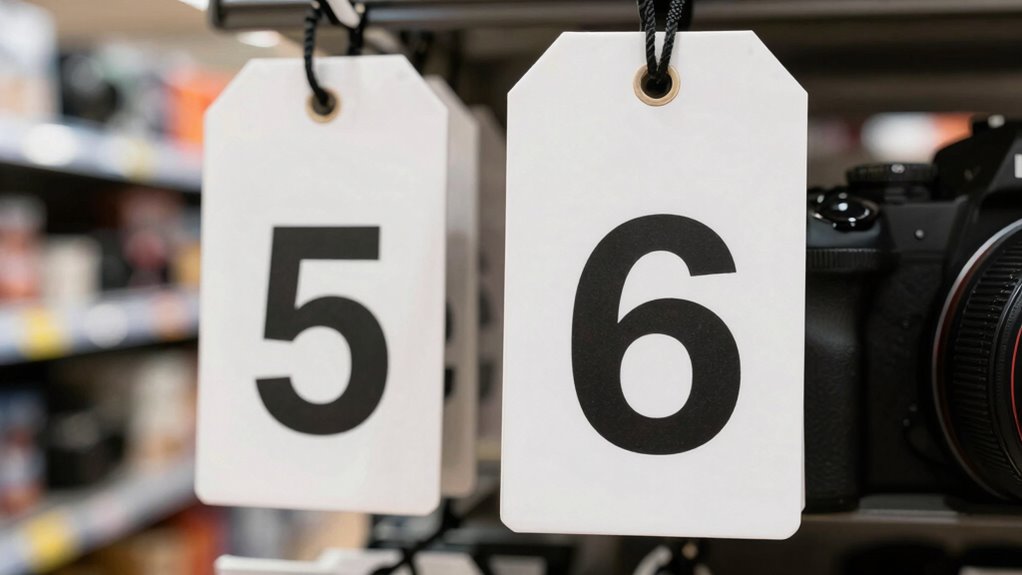

Retailers use the price anchor trick on bigger purchases by placing high-priced items next to slightly cheaper, yet still costly, options. This setup influences your perception of value, making the larger purchase seem more reasonable or like a good deal. The strategic placement creates a mental benchmark, guiding your decision-making without you realizing it. If you keep exploring, you’ll uncover more ways retailers shape what you think is fair and affordable.

Prime made for students and young adults
- Fast, free delivery for dorm and study essentials
- Prime Video and Amazon Music included
- Member-only deals
Key Takeaways
- Retailers place high-priced luxury items next to more affordable options to establish a reference point for value.
- High-end products act as anchors, making slightly cheaper items seem more reasonable or like bargains.
- Visual cues and strategic placement guide attention and influence perceptions of overall value.
- The presence of luxury items elevates the perceived quality and exclusivity of other offerings.
- Recognizing these cues helps consumers make more informed, rational purchasing decisions.
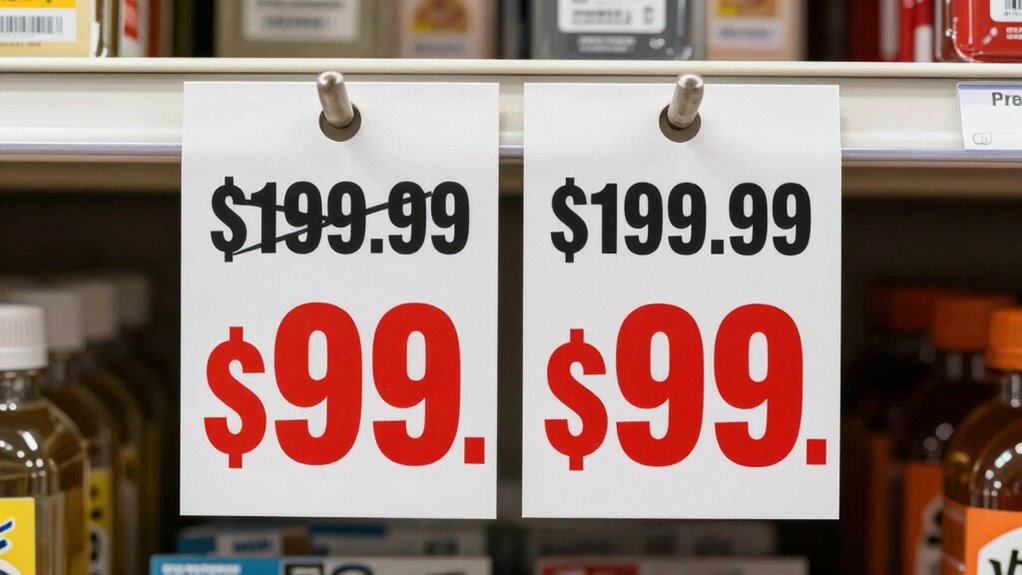
Have you ever noticed how retail stores seem to present a high-priced item next to a more affordable one? This isn’t accidental. It’s a strategic move rooted in pricing psychology, designed to influence your perception of value and, ultimately, your purchasing decisions. Retailers use this tactic—often called the “price anchor”—to make larger purchases seem more reasonable or even like a bargain. By placing a luxury item alongside a slightly less expensive but still costly alternative, they establish a reference point that skews your perception of what’s “normal” or “acceptable” for that category of product. This tactic is closely related to the concept of perception of value, where your mind is influenced by contextual cues. The core idea behind the price anchor trick is to leverage luxury branding’s power. When you see a high-end, premium-priced product, your mind associates that price with exclusivity, quality, and status. This sets a mental benchmark and influences how you perceive other options nearby. The luxury branding of the most expensive item acts as an anchor—your subconscious uses it as a reference point when evaluating the next item. As a result, the less expensive, yet still costly, product suddenly appears more affordable, making it easier for you to justify a purchase you might have otherwise hesitated on. Essentially, the high-priced item elevates your willingness to spend on the slightly cheaper alternative. Retailers also often use visual cues to reinforce these perceptions, further guiding your decision-making process. Additionally, they frequently employ product placement techniques to subtly influence which items catch your attention first and how they are perceived in relation to each other. Recognizing these psychological cues can help you make more informed choices and avoid being swayed by clever marketing strategies.
As an affiliate, we earn on qualifying purchases.
Frequently Asked Questions
How Do Retailers Decide Which Price to Anchor?
Retailers decide which price to anchor by analyzing pricing strategies that influence consumer psychology. They usually pick a higher, more noticeable price that makes other options seem more reasonable. This anchor sets a reference point, encouraging you to see a deal or discount as valuable. Retailers test different prices to see which one maximizes perceived value and persuades you to make a purchase, leveraging your instinct to compare and evaluate.
Can Consumers Recognize the Anchor Trick Easily?
Like a lighthouse guiding ships, your awareness of the price anchor trick helps you recognize the deception. Usually, your price perception is influenced by cognitive bias, making it easier for retailers to sway your judgments. While some shoppers see through it, others may still fall prey, especially when the initial anchor creates a mental benchmark. Staying vigilant and comparing prices can help you break free from the anchor’s subtle pull.
Does the Anchor Influence Online and In-Store Shopping Differently?
Yes, the anchor influences online and in-store shopping differently. In-store, you’re more likely to be swayed by immediate price perception, as physical displays enhance the impact of anchors. Online, shopping psychology relies heavily on digital cues like crossed-out prices or comparison charts, which may lessen the anchor’s effect. Overall, understanding these differences helps retailers manipulate price perception effectively across both environments.
Are There Ethical Concerns With Using Price Anchoring?
Yes, there are ethical concerns with using price anchoring. For example, a retailer might display a high-priced item next to a discounted product, leveraging pricing psychology to make the discount seem more attractive. This practice can manipulate consumer awareness, leading buyers to make decisions they might not otherwise consider. While effective, it raises questions about transparency and honesty, emphasizing the importance of ethical marketing in maintaining consumer trust.
How Can Shoppers Avoid Falling for the Anchor Trick?
To avoid falling for the anchor trick, stay aware of your price perception and recognize discount illusions. Always compare prices independently, rather than relying on the initial or inflated figures presented. Set a clear budget beforehand and focus on the actual value rather than flashy discounts. By questioning whether a deal genuinely offers savings or just plays with your perception, you’ll make smarter, more informed purchasing decisions.
high-end product pricing display
As an affiliate, we earn on qualifying purchases.
As an affiliate, we earn on qualifying purchases.
Conclusion
Now that you see the price anchor trick in action, it’s like having a secret map to navigate retail’s tricky terrain. Retailers set the stage, making their bigger purchases seem more appealing by comparison. Knowing this, you can spot the bait and avoid falling for it. Remember, it’s all about perspective—like a lighthouse guiding ships safely past hidden rocks. Stay sharp, and let your wallet sail smoothly through the shopping seas.
retail product placement strategies
As an affiliate, we earn on qualifying purchases.
As an affiliate, we earn on qualifying purchases.
As an affiliate, we earn on qualifying purchases.
Halloween Picks
halloween
As an affiliate, we earn on qualifying purchases.