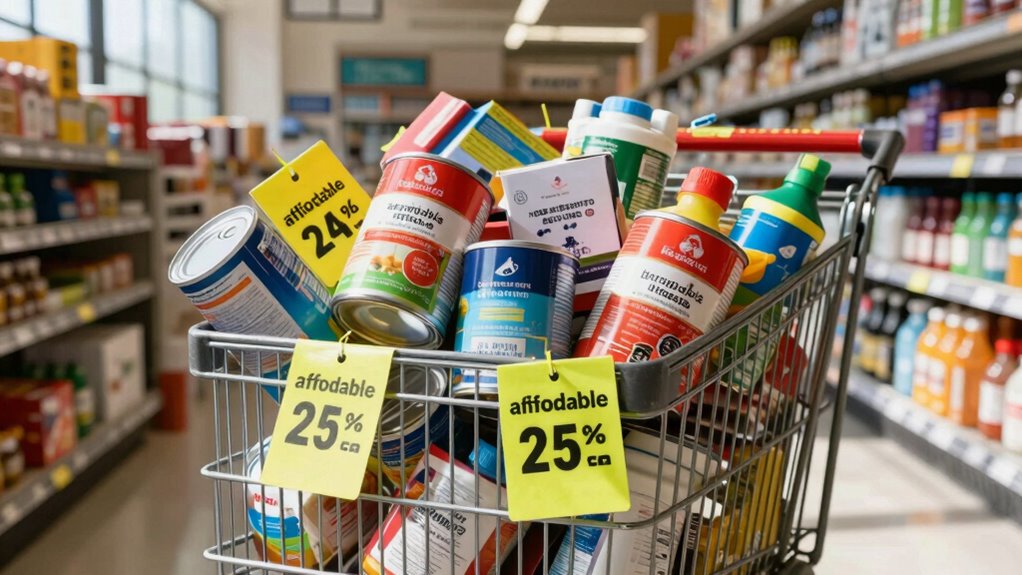

When you focus on affordability, you might end up spending more in the long run. Cheap products often lack durability and quality, leading to frequent replacements or repairs. Quick wear and tear mean higher costs over time, and trendy fast-fashion can quickly go out of style, requiring more purchases. Prioritizing long-term value and ethics can save you money and stress. Stick around to discover why smart shopping isn’t always about the lowest price.

Prime made for students and young adults
- Fast, free delivery for dorm and study essentials
- Prime Video and Amazon Music included
- Member-only deals
Key Takeaways
- Low prices often mean sacrificing quality, leading to frequent replacements and higher long-term costs.
- Buying cheap fast-fashion items results in quick obsolescence, increasing overall spending over time.
- Focusing on affordability can overlook ethical and environmental costs, which add to the true expense.
- Initial savings from cheap products may be offset by repair, maintenance, or early replacement expenses.
- Investing in durable, high-quality items offers better value and can be more cost-effective in the long run.

Many shoppers fall for the idea that “affordable” always means saving money, but sometimes, chasing the lowest prices can end up costing you more in the long run. When you focus solely on finding the cheapest options, you might overlook the hidden costs of quality, durability, and brand reputation. For example, opting for budget shopping might save you a few dollars upfront, but if the product wears out quickly or doesn’t perform as expected, you’ll end up spending more on replacements or repairs. That’s especially true when it comes to luxury brands, where the perceived value often exceeds the initial price tag. These brands invest in craftsmanship, materials, and timeless design, which means you’re paying for longevity and style that won’t fade after a few wears.
Choosing the cheapest options often leads to higher costs through frequent replacements and hidden quality trade-offs.
Chasing affordability can also lead you down a path where you compromise on quality to meet a tight budget. You might find yourself buying less durable clothing, electronics, or accessories, only to replace them repeatedly. Over time, these small, cheap purchases accumulate, making your overall spending higher than if you’d invested in a higher-quality item from a reputable brand. The concept of luxury isn’t just about status; it’s about investing in products that last, look better, and often save you money in the long run. While luxury brands may seem out of reach when shopping on a budget, many offer entry-level items or outlet deals that make high-end quality more accessible.
Moreover, when you focus on budget shopping, you often fall prey to buying trendy, fast-fashion pieces that go out of style quickly. These items may seem like a good deal initially, but their fleeting appeal means you’ll likely toss or donate them soon after. The cycle of constantly replacing trendy pieces can be more expensive than investing in timeless, versatile items from luxury brands. These timeless pieces may cost more initially, but they offer enduring style and better value over time. Additionally, understanding the importance of long-term value can help shoppers make smarter choices that benefit their wardrobe and wallet in the long run. Recognizing the impact of sustainable living practices can also influence smarter shopping decisions that support biodiversity and conservation efforts. Informed consumers who consider the true cost of their purchases are more likely to prioritize quality and ethics over mere price tags.
Furthermore, considering the true cost of a product—including its environmental and social impacts—can lead to more informed and responsible purchasing decisions. Additionally, choosing cost-effective products without considering their actual quality can lead to frequent replacements, which ultimately increases your expenses. Ultimately, “affordable” isn’t always a bargain if it leads you to make impulsive or short-sighted purchases. Sometimes, spending a little more on quality, whether from luxury brands or well-made staples, saves you money and hassle later. It’s about shifting your mindset from immediate savings to long-term value, recognizing that true affordability involves considering the durability, style, and overall worth of what you buy. When you do that, you’ll see that what seems cheap at first can turn out to be the most expensive choice in the end.
As an affiliate, we earn on qualifying purchases.
Frequently Asked Questions
How Do Brands Justify High Prices for Affordable Products?
Brands justify high prices for affordable products by emphasizing brand authenticity, showing they genuinely care about quality and ethics. They build consumer trust through transparent practices and consistent messaging, making you believe you’re getting more value. This trust allows them to charge higher prices, even on products marketed as affordable, because you feel confident in their authenticity and quality, ultimately making the product seem worth the extra cost.
Can “Affordable” Products Still Be Environmentally Sustainable?
Yes, affordable products can be environmentally sustainable. You should look for items made from eco-friendly materials and produced through sustainable manufacturing processes. Brands that prioritize eco-friendly materials and sustainable manufacturing often keep costs lower by streamlining their supply chains and using efficient techniques. By choosing these products, you support both your budget and the planet, ensuring you don’t have to sacrifice environmental responsibility for affordability.
Are “Affordable” Items More Likely to Have Hidden Costs?
You might think affordable items are a bargain, but they often hide costly surprises. Hidden fees can skyrocket the total price, and quality compromises might lead to frequent replacements or repairs. These hidden costs make cheap products more expensive in the long run. So, while an item seems affordable upfront, the true expense can pile up quickly, turning what seemed like a deal into a costly mistake.
How Does Marketing Influence Perceptions of Affordability?
Marketing influences your perception of affordability through perception manipulation and branding strategies. Companies craft messages and visuals that make products seem budget-friendly, even if they’re not. They use clever branding to evoke trust and value, prompting you to perceive the price as reasonable. This manipulation can lead you to overlook hidden costs or quality issues, believing you’re getting a good deal when, in reality, the product may be more expensive in the long run.
What Are the Long-Term Financial Impacts of Choosing “Affordable” Options?
Choosing affordable options might save you money upfront, but it can lead to higher long-term costs if you overlook quality or durability. You may face opportunity costs, like needing to replace items sooner or missing out on better investments. Good financial planning involves weighing these factors, ensuring your choices align with your goals. Otherwise, what seems affordable today could become a costly mistake down the road.
As an affiliate, we earn on qualifying purchases.
Conclusion
So, next time you see “affordable,” remember it’s not just a word—it’s a trap! That tiny price tag might be hiding the biggest wallet drain of your life. You could end up spending more than you’d ever imagine on things you didn’t really need, all because you fell for the illusion of savings. Beware the siren call of “affordable,” because it might just be the most expensive word you’ll ever fall for in shopping!
As an affiliate, we earn on qualifying purchases.
As an affiliate, we earn on qualifying purchases.
Halloween Picks
halloween
As an affiliate, we earn on qualifying purchases.