
Fraudsters hook you by exploiting your trust, emotions, and quick decision-making habits. They create messages that seem credible or urgent, convincing you to act without thinking. By playing on fears, greed, or compassion, scammers manipulate your feelings and bypass rational judgment. They also use social proof and a sense of authority to make their schemes seem legitimate. If you pay attention, you’ll uncover how these psychological tricks work and learn how to protect yourself from falling victim.

Prime made for students and young adults
- Fast, free delivery for dorm and study essentials
- Prime Video and Amazon Music included
- Member-only deals
Key Takeaways
- Scammers manipulate trust by impersonating authority figures, exploiting natural tendencies to rely on credible sources.
- Emotional triggers like fear, greed, and compassion cloud rational judgment, making victims more susceptible.
- Creating urgency and social proof encourages impulsive decisions and reduces critical evaluation.
- Mimicking authentic communication channels enhances deception, making scams appear legitimate.
- Awareness of psychological manipulation tactics helps individuals recognize and resist scam techniques.
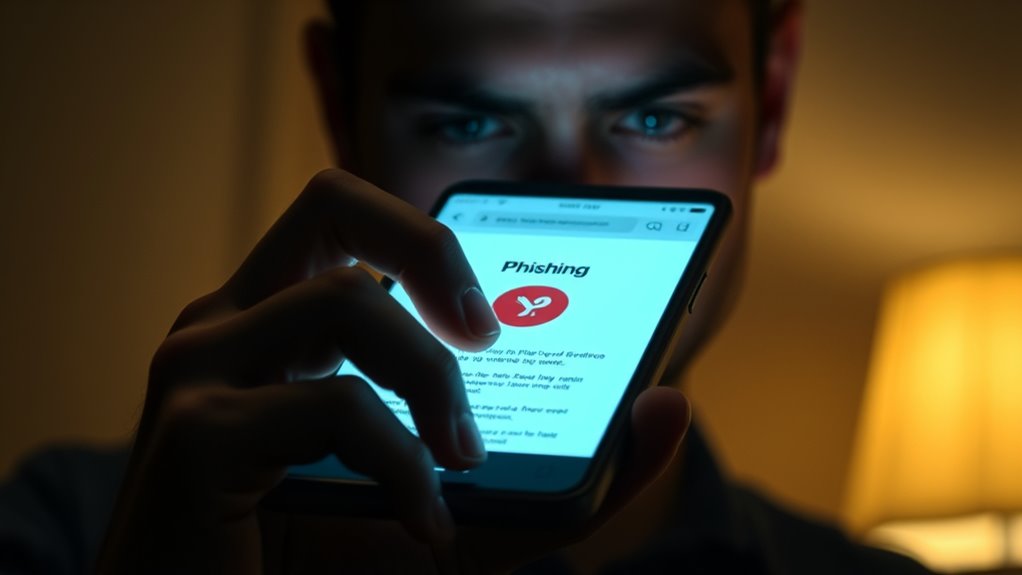
Scams exploit psychological vulnerabilities by tapping into your emotions, biases, and cognitive shortcuts. They’re designed to manipulate your trust and exploit emotional triggers that make you more likely to act impulsively or overlook warning signs. When a scammer gains your trust, they often do so by creating a false sense of familiarity or authority, making it easier to influence your decisions. Trust manipulation is at the heart of many scams; scammers craft their messages to seem credible, reliable, or urgent, nudging you to ignore your skepticism. For example, they might pose as a bank representative or a government official, leveraging your existing fears or concerns to make their story seem legitimate. This manipulation plays on your natural tendency to trust authority figures or people who appear knowledgeable, which can override your critical thinking.
Scammers manipulate trust by pretending to be authorities, exploiting fears to influence your decisions.
Emotional triggers are another powerful tool scammers use to hook you in. They understand that strong feelings—such as fear, greed, or compassion—can cloud your judgment. A scammer might invoke fear by claiming you’ve been targeted by hackers or that your account is compromised, prompting you to act quickly without verifying the information. Conversely, they might exploit greed by promising huge returns on an investment or a limited-time opportunity that seems too good to miss. Compassionate appeals, like fake charity requests, tug at your desire to help others, making you more receptive to their messages. These emotional triggers bypass your rational mind and push you toward impulsive decisions, making it harder to spot the scam. Additionally, scammers often use sophisticated techniques to mimic authentic communication channels, further increasing their ability to deceive.
Scammers are also keen to exploit cognitive shortcuts—these mental rules of thumb that help you make quick judgments. They rely on social proof, for instance, showing fake testimonials or pretending to be part of a trusted community to increase their credibility. They might create a sense of urgency, insisting you act now or lose out, triggering a fear of missing out that compels immediate action. By playing on your biases—such as assuming that something too good to be true must be legitimate—they reduce your ability to scrutinize the scam critically. The combination of trust manipulation and emotional triggers forms a potent recipe that clouds your judgment, making it easier for scammers to deceive you.
Understanding how these psychological tactics work can help you recognize when someone is trying to manipulate you. If you stay aware of your emotional reactions and question the motives behind urgent or too-good-to-be-true messages, you can better protect yourself from falling prey to scams. Remember, scammers thrive when they exploit your vulnerabilities, but awareness is your best defense. Recognizing the influence of cognitive shortcuts can significantly improve your ability to spot scams before they succeed.
Frequently Asked Questions
What Common Cognitive Biases Make People Susceptible to Scams?
You’re often susceptible to scams because of cognitive biases like confirmation bias, which makes you believe information that confirms your existing beliefs, and authority bias, causing you to trust figures of authority without question. Scammers exploit these biases by presenting themselves as credible or aligned with what you want to believe. Recognizing these biases helps you stay alert and question suspicious messages, reducing the chances of falling victim to fraud.
How Does Emotional Manipulation Influence Scam Victims?
When scammers use emotional appeals, you might feel an overwhelming sense of trust betrayal, making you vulnerable. For example, a fake charity might evoke sympathy, convincing you to donate. This emotional manipulation clouds your judgment, making you less likely to see warning signs. By tapping into your feelings, scammers create a false sense of connection, making it easier to exploit your trust and deceive you into giving away personal information or money.
Are Certain Personality Types More Vulnerable to Scams?
Certain personality traits and vulnerability factors make you more susceptible to scams. If you’re overly trusting, impulsive, or lack skepticism, scammers see you as an easy target. High levels of loneliness, stress, or low self-esteem also increase your risk. Recognizing these vulnerability factors helps you stay alert and cautious, so you can avoid falling for fraudulent schemes. Being aware of your personality traits is key to protecting yourself effectively.
How Does Social Proof Play a Role in Scam Success?
Social proof substantially boosts scam success by showcasing viral marketing and influencer impact, which persuade you to follow the flock. When you see others engaging or endorsing something, it’s easy to believe it’s legit. This collective confidence creates a compelling cue, convincing you to jump in and trust the scam. The power of peer pressure, amplified by social media, manipulates your perception, making you more likely to fall for the fraud.
Can Education Alone Prevent Falling for Scams?
Education alone can’t fully prevent you from falling for scams, but improving your financial literacy and scam awareness considerably lowers your risk. By understanding common tactics scammers use and staying informed about current scams, you become more vigilant. Remember, scammers constantly adapt, so ongoing education is essential. Combining knowledge with cautious skepticism helps you recognize red flags early, making you less vulnerable to fraud attempts.
Conclusion
Understanding the psychology behind scams is like learning to spot the spider’s web before you get caught. Once you recognize the subtle threads of manipulation, you can avoid falling into their trap. By staying vigilant and questioning suspicious offers, you become the spider’s immune rather than its prey. Remember, awareness is your shield, and knowledge is the web you weave to protect yourself from falling into the scammer’s trap. Stay sharp, and don’t get caught in their web.
Fall Picks
fall essentials
As an affiliate, we earn on qualifying purchases.