
Netter’s Anatomy Flash Cards are my best overall pick for learners who want detailed anatomical illustrations, while Anatomy Flashcards: 300 Flashcards suits students seeking a large, drawing-led deck and Anatomy & Physiology Flash Cards reaches beyond structure into function. The main choice is between visually rich, anatomy-focused cards and broader decks that cover more introductory material or physiology. Latin terminology, card count, and how much explanatory text you want also affect which set will help you study. I compare all 12 options by subject coverage, visual clarity, usability, and learner fit. Continue reading for the full breakdown and a guide to choosing the right deck for your course.

Get school and study supplies delivered free — and shop member deals
- Fast, free delivery on millions of items
- Access to Prime Big Deal Days deals on October 6–7
- Prime Video, Amazon Music and more included
Key Takeaways
- Detailed illustrations separate the strongest anatomy-first choices: Netter’s and the 300-card set are aimed at learners who need visual structure identification, rather than a quick overview.
- Scope changes the study task: Anatomy & Physiology Flash Cards includes physiology alongside anatomy, while Latin Nomenclature is tailored to terminology practice.
- QuickStudy titles serve a reference-minded approach: their names signal a blend of study cards and reference material, which may suit learners who want information at hand as well as recall prompts.
- Barron’s has multiple titles in this lineup: compare the specific edition and card set rather than assuming every Barron’s deck has identical content or organization.
- A larger deck is not automatically the better fit: card count, level of visual detail, and alignment with a course’s vocabulary matter more than volume alone.
| Anatomy 2 Flash Cards: A QuickStudy Reference Tool |  | Best for Quick Reference | Format: Flash cards | Series or brand: QuickStudy | Stated purpose: Reference tool | VIEW LATEST PRICE | See Our Full Breakdown |
| Anatomy Flash Cards (Barron’s Test Prep) |  | Best for Exam Review | Format: Flash cards | Subject: Human anatomy | Publisher: Barron’s | VIEW LATEST PRICE | See Our Full Breakdown |
| Netter’s Anatomy Flash Cards |  | Best for Visual Learning | Format: Flash cards | Subject: Human anatomy | Illustration style: Netter anatomical illustrations | VIEW LATEST PRICE | See Our Full Breakdown |
| Anatomy Flashcards |  | Best for Buyers Checking a Specific Edition | Format: Flashcards | Subject: Anatomy | Title: Anatomy Flashcards | VIEW LATEST PRICE | See Our Full Breakdown |
| Anatomy Flashcards |  | Best for a Confirmed-Contents Check | Format: Flashcards | Subject: Anatomy | Title: Anatomy Flashcards | VIEW LATEST PRICE | See Our Full Breakdown |
| Anatomy Flashcards: 300 Flashcards with Anatomically Precise Drawings and Descriptions |  | Best for Visual, Broad-Coverage Study | Number of flashcards: 300 | Subject: Anatomy | Illustrations: Anatomically precise drawings | VIEW LATEST PRICE | See Our Full Breakdown |
| Anatomy & Physiology Flash Cards | 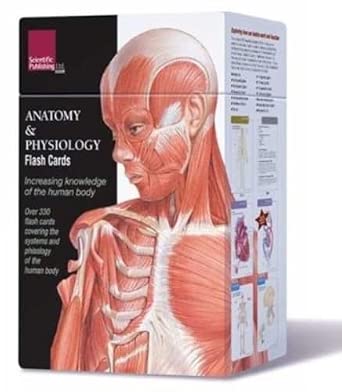 | Best for Anatomy and Physiology Students | Subject: Anatomy and physiology | Product format: Flash cards | Card count: Not specified | VIEW LATEST PRICE | See Our Full Breakdown |
| Anatomy Flash Cards: A QuickStudy Reference & Study Tool | 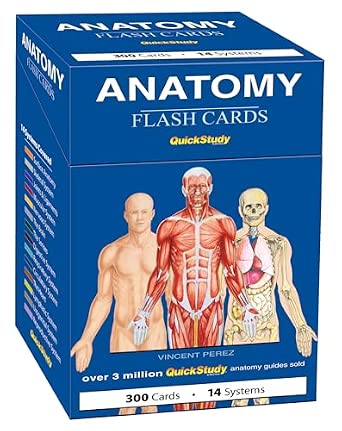 | Best for Quick Reference | Product format: Flash cards | Subject: Anatomy | Intended use: Quick reference and study | VIEW LATEST PRICE | See Our Full Breakdown |
| Anatomy Flash Cards – Latin Nomenclature: Anatomy on the Go |  | Best for Latin Terminology Practice | Subject: Anatomy | Terminology focus: Latin nomenclature | Product format: Flash cards | VIEW LATEST PRICE | See Our Full Breakdown |
| Our World in Pictures: Human Body Flash Cards |  | Best for General Human Body Exploration | Subject: Human body | Product format: Flash cards | Series or framing: Our World in Pictures | VIEW LATEST PRICE | See Our Full Breakdown |
| Barron’s Anatomy Flash Cards, 2nd Edition |  | Best for Visual Review | Edition: 2nd | Publisher: Barron’s Educational Series | Format: Flash cards | VIEW LATEST PRICE | See Our Full Breakdown |
| Barron’s Anatomy Flash Cards |  | Best for Essential-Term Review | Format: Flash cards | Subject: Human anatomy | Coverage: Essential anatomical terms and key concepts | VIEW LATEST PRICE | See Our Full Breakdown |
| human anatomy flashcard | Subject | Format | Card count |
|---|---|---|---|
| Anatomy 2 Flash Cards: A Quick | Anatomy | Flash cards | Not specified |
| Anatomy Flash Cards | Human anatomy | Flash cards | — |
| Netter’s Anatomy Flash Cards | Human anatomy | Flash cards | — |
| Anatomy Flashcards | Anatomy | Flashcards | Not specified |
| Anatomy Flashcards | Anatomy | Flashcards | Not specified |
| Anatomy Flashcards: 300 Flashc | Anatomy | — | — |
| Anatomy & Physiology Flash Car | Anatomy and physiology | — | Not specified |
| Anatomy Flash Cards: A QuickSt | Anatomy | — | Not specified |
| Anatomy Flash Cards | Anatomy | — | Not specified |
| Our World in Pictures: Human B | Human body | — | Not specified |
| Barron’s Anatomy Flash Cards | Human anatomy | Flash cards | — |
| Barron’s Anatomy Flash Cards | Human anatomy | Flash cards | — |
More Details on Our Top Picks
Anatomy 2 Flash Cards: A QuickStudy Reference Tool
Anatomy 2 Flash Cards is identified as a QuickStudy reference tool, which makes it a possible fit for learners who want anatomy material in a card-based format. The supplied information does not specify its topics, diagrams, card count, or level of detail, so I can’t rank it above the better-documented Barron’s Anatomy Flash Cards for structured exam review or Netter’s Anatomy Flash Cards for illustrated study. Its clearest distinction is the reference-tool positioning: it may suit short lookup sessions better than a course resource, but that should not be taken as evidence of particular coverage. The tradeoff is limited product detail, leaving buyers unable to judge whether it matches their syllabus or preferred study method. I’d choose it only when the QuickStudy format itself is the priority and its contents can be checked before purchase.
Pros:- Presented as a flash-card reference tool
- QuickStudy branding gives buyers a clear format cue
- Could suit brief reference sessions if its contents match the learner’s needs
Cons:- Supplied information does not identify the anatomy topics or body systems covered
- Card count, illustration style, and study level are unspecified
- Hard to compare confidently with Barron’s or Netter’s based on available details
Best for: Learners who specifically want a QuickStudy-branded anatomy card reference and can verify its contents against their course needs
Not ideal for: Students who need confirmed topic coverage, detailed illustrations, or a clearly documented exam-prep set
- Format:Flash cards
- Series or brand:QuickStudy
- Stated purpose:Reference tool
- Subject:Anatomy
- Card count:Not specified
- Coverage details:Not specified
Our verdict“Choose this QuickStudy option only if you can confirm its contents and want a reference-oriented card format.”
Anatomy Flash Cards (Barron’s Test Prep)
Barron’s Anatomy Flash Cards is the clearest choice here for students who want a defined test-prep purpose: its cards combine concise facts, diagrams, and key terms arranged by body system. That organization helps turn scattered memorization into focused review, while the portable format suits short study sessions between classes. Compared with Netter’s Anatomy Flash Cards, which foregrounds detailed anatomical illustrations, Barron’s is more explicitly framed around exam preparation and quick recall. The tradeoff is depth: these cards are not a substitute for a textbook when a topic needs a fuller explanation, and the supplied details note no digital or interactive version. I’d rank it ahead of the less-documented Anatomy Flashcards titles for buyers who want a known structure and study purpose, but not for learners seeking extensive visual or conceptual coverage.
Pros:- Organized by body system for orderly review
- Combines diagrams, concise facts, and key terms
- Portable format supports short study sessions away from a desk
- Explicitly designed for test preparation
Cons:- Cards offer less depth than a full anatomy textbook
- No digital or interactive version is specified
- Quick-review format may not explain complex concepts in enough detail
Best for: Students preparing for anatomy exams who want portable, body-system-organized prompts for quick recall
Not ideal for: Learners who need textbook-level explanations, an accompanying digital study tool, or extensive coverage of every structure
- Format:Flash cards
- Subject:Human anatomy
- Publisher:Barron’s
- Intended use:Test preparation
- Organization:By body system
- Card content:Concise facts, diagrams, and key terms
- Digital version:Not included, according to supplied product information
Our verdict“Pick Barron’s when exam-focused, portable review matters more than textbook depth or digital features.”
Netter’s Anatomy Flash Cards
Netter’s Anatomy Flash Cards puts anatomical illustrations at the center of study: each card pairs an image with labels and concise information on the reverse. That image-first approach can help learners connect structures with their names, making this a stronger visual-review pick than Barron’s Anatomy Flash Cards, whose description emphasizes concise exam facts and body-system organization. Netter’s portable format also supports self-study in short sessions. The compromise is coverage: the supplied details warn that the set may contain too few cards for all anatomical structures, so it is better treated as a visual aid than a complete course resource. Buyers who need broad exam preparation should compare its coverage with Barron’s; those who learn best by linking labels to anatomical drawings may find Netter’s format the more useful starting point.
Pros:- Detailed Netter anatomical illustrations anchor the cards
- Image and reverse-side information connect visual recognition with recall
- Clear labels support identification practice
- Portable format suits self-study sessions
Cons:- The set may not cover every anatomical structure
- Concise reverse-side information cannot replace fuller explanations
- The supplied details do not specify card count or system-by-system coverage
Best for: Visual learners who want to practice identifying anatomy from labeled illustrations during independent review
Not ideal for: Students who need a confirmed, exhaustive structure-by-structure set or broad exam coverage from one resource
- Format:Flash cards
- Subject:Human anatomy
- Illustration style:Netter anatomical illustrations
- Card layout:Image on one side; labels and concise information on the reverse
- Study use:Quick review and self-study
- Portability:Portable
- Coverage:May not include all anatomical structures
Our verdict“Choose Netter’s for illustration-led anatomy practice, but pair it with a broader resource if complete coverage is required.”
Anatomy Flashcards
Anatomy Flashcards has a straightforward title, but the supplied product information offers no details about its card content, illustration style, intended level, or coverage. That makes it a weak choice for buyers who need to match a set to a course. By comparison, Barron’s Anatomy Flash Cards identifies body-system organization and exam preparation, while Netter’s Anatomy Flash Cards describes its image-and-label format. This listing may still suit someone searching for a particular edition or title, but the title alone does not show whether it supports memorization, visual identification, or reference. I would check the product’s contents before choosing it over those better-documented alternatives. Its main drawback is not a confirmed flaw in the cards; it is the lack of evidence needed to judge their usefulness for human anatomy study.
Pros:- Clearly identified as a flashcard product
- Title specifies anatomy as the subject
- May suit buyers searching for this exact listing or edition
Cons:- No card content or topic coverage is described
- Illustration style and study level are unspecified
- Difficult to compare with the documented formats from Barron’s or Netter
Best for: Buyers looking for this specific Anatomy Flashcards listing who can verify its contents and intended study level before buying
Not ideal for: Students choosing a set to match a syllabus or seeking confirmed diagrams, body-system coverage, or exam-focused content
- Format:Flashcards
- Subject:Anatomy
- Title:Anatomy Flashcards
- Card count:Not specified
- Coverage:Not specified
- Illustration details:Not specified
Our verdict“Consider this listing only after checking the actual card contents, since the available information does not establish its study fit.”
Anatomy Flashcards
Anatomy Flashcards is listed without a description, leaving no confirmed information about what its cards teach or how they present anatomy. I can’t recommend it over Barron’s Anatomy Flash Cards for exam preparation, since Barron’s specifies concise facts, diagrams, and body-system organization, or over Netter’s Anatomy Flash Cards for visual learning, which identifies its illustration-led layout. This title could be relevant to a buyer seeking a particular version, but the listing details do not establish whether it is aimed at beginners, advanced students, or general review. That uncertainty is the central tradeoff: without card count, coverage, or sample content, it is hard to tell whether the set will support a course or a particular learning style. I’d treat it as a conditional option and verify the physical contents before relying on it for study.
Pros:- Product title identifies a flashcard format
- Anatomy is the stated subject
- Could meet a buyer’s need for a specific edition if its contents are verified
Cons:- No product description is supplied
- Card count, topics, and organization are unknown
- No stated features distinguish it from better-documented options
Best for: A buyer searching for this specific Anatomy Flashcards edition who can inspect or confirm its contents first
Not ideal for: Learners who need a reliable match for an anatomy course, a defined study level, or known visual and topic coverage
- Format:Flashcards
- Subject:Anatomy
- Title:Anatomy Flashcards
- Card count:Not specified
- Topic organization:Not specified
- Intended study level:Not specified
Our verdict“Buy this only if you can confirm the edition and card contents, since the listing provides too little detail to judge its study value.”
Anatomy Flashcards: 300 Flashcards with Anatomically Precise Drawings and Descriptions
Three hundred cards give this set the clearest case for learners who want a substantial anatomy deck rather than a compact quick-reference aid. Its combination of anatomically precise drawings and detailed descriptions can support both visual recognition and terminology review. Compared with Anatomy Flash Cards: A QuickStudy Reference & Study Tool, which is framed around concise reference and memorization, this deck appears better suited to longer study sessions where richer explanations are useful. The tradeoff is that the available product details do not identify specific body systems, card dimensions, or how information is organized, so I can’t confirm how easily it supports targeted revision. Choose it for the stated card count and illustrated format; skip it if you need verified topic-by-topic coverage or a tightly specified portable deck.
Pros:- Includes 300 flashcards for a substantial study pool
- Features anatomically precise drawings
- Pairs illustrations with detailed descriptions
- Supports both visual recognition and terminology review
Cons:- Product information does not specify which body systems or topics are covered
- Card dimensions and portability are not provided
- The level of detail may be more than learners seeking brief recall prompts need
Best for: Anatomy students who want a large illustrated deck with descriptions for sustained review of structures and terms.
Not ideal for: Students seeking confirmed system-by-system coverage, a compact format, or clearly documented study organization.
- Number of flashcards:300
- Subject:Anatomy
- Illustrations:Anatomically precise drawings
- Descriptions:Detailed descriptions included
- Product format:Flashcards
- Card dimensions:Not specified
Our verdict“Choose this deck if a large set of illustrated cards and detailed descriptions matter more than confirmed topic coverage or compact portability.”
Anatomy & Physiology Flash Cards
The title points to a useful distinction: this deck is framed around both anatomy and physiology, rather than anatomy alone. That scope may suit students who need to connect body structures with function, while Anatomy Flash Cards: A QuickStudy Reference & Study Tool is described more narrowly as a concise anatomy reference for terms and structures. But the available product information gives no card count, illustrations, topic breakdown, or format details, so I can’t judge how much depth or visual support the deck provides. This makes it a plausible match for coursework spanning structure and function, not a confident pick for buyers who need a particular system, diagram style, or clearly stated volume of material. I’d compare its actual contents with a course outline before choosing it over better-documented options.
Pros:- The stated scope includes anatomy and physiology
- May suit courses that teach structure alongside function
- Offers an alternative to anatomy-only reference decks
Cons:- No card count is provided
- Illustration style and study format are not described
- The available details do not establish topic coverage or depth
Best for: Students in introductory anatomy and physiology courses who want a deck whose stated subject includes both structure and function.
Not ideal for: Buyers who need confirmed card count, diagrams, topic coverage, or a specific format before selecting study materials.
- Subject:Anatomy and physiology
- Product format:Flash cards
- Card count:Not specified
- Illustrations:Not specified
- Topic breakdown:Not specified
- Card dimensions:Not specified
Our verdict“Consider this for a course covering both anatomy and physiology, but verify the card contents first because key product details are not provided.”
Anatomy Flash Cards: A QuickStudy Reference & Study Tool
Concise visual aids and definitions make this a practical choice for short recall sessions and quick checks of anatomical terms. Its reference-tool approach is a different fit from the 300-card Anatomy Flashcards: 300 Flashcards with Anatomically Precise Drawings and Descriptions, which promises more cards and detailed descriptions for extended study. Here, the emphasis is on convenient review, with portability useful for filling spare moments between classes or clinical tasks. That brevity also limits depth: learners looking for extended explanations or broad textbook-style teaching will need another resource alongside it. The product information also warns that the cards may wear with frequent handling, so it may be less suited to heavy daily use without protection. I’d choose it for accessible terminology practice, not as a standalone anatomy course.
Pros:- Portable format supports study away from a desk
- Concise definitions help with quick term review
- Visual aids can support structure recognition
- Designed as both a reference and study tool
Cons:- Provides less depth than a full textbook
- Cards may wear with repeated handling
- The supplied details do not state the card count
Best for: Students and professionals who want portable, concise visual prompts for reviewing key anatomical structures and terms.
Not ideal for: Learners who need in-depth explanations, textbook-level coverage, or cards designed for frequent unprotected handling.
- Product format:Flash cards
- Subject:Anatomy
- Intended use:Quick reference and study
- Learning aids:Visual aids and concise definitions
- Portability:Described as portable and convenient for on-the-go study
- Card count:Not specified
Our verdict“Pick this for portable, quick anatomy review, but pair it with a deeper resource if you need extensive explanations.”
Anatomy Flash Cards – Latin Nomenclature: Anatomy on the Go
This set has a distinct focus: Latin anatomical names are the central study target, making it more specialized than the general term-and-visual approach of Anatomy Flash Cards: A QuickStudy Reference & Study Tool. Its compact, on-the-go framing suits learners who want to rehearse nomenclature away from a desk, and the described durable cardstock is a practical advantage for repeated handling. The limitation is equally clear: the supplied description says the cards are text only, so they won’t offer the diagrams that help many students identify structures visually. Its anatomy-only scope also makes it less useful as a broader science study resource. I’d choose it when Latin labels are the priority; for visual learning or a wider range of anatomy prompts, the 300-card illustrated deck is a better fit.
Pros:- Focuses on Latin anatomical terminology
- Compact format is suited to studying on the go
- Durable cardstock is described as suitable for frequent handling
- Provides a focused alternative to broader anatomy decks
Cons:- Text-only cards do not provide illustrative diagrams
- The anatomy-specific scope does not cover other subjects
- Card count and detailed topic coverage are not specified
Best for: Anatomy students who need repeated practice with Latin structure names in short, portable study sessions.
Not ideal for: Visual learners who rely on diagrams, or students seeking physiology material or cross-subject study cards.
- Subject:Anatomy
- Terminology focus:Latin nomenclature
- Product format:Flash cards
- Illustrations:Text only; no illustrative diagrams
- Portability:Compact, on-the-go format
- Card material:Durable cardstock
- Card count:Not specified
Our verdict“Choose this for portable Latin nomenclature drills, but look to an illustrated deck if you need visual identification practice.”
Our World in Pictures: Human Body Flash Cards
The title positions this set around the human body and a picture-led approach, which may appeal to learners who prefer broad visual exploration over memorizing Latin labels. That makes it a contrast to Anatomy Flash Cards – Latin Nomenclature: Anatomy on the Go, whose stated purpose is focused terminology practice. However, the supplied product details don’t confirm what the pictures show, how many cards are included, or whether the material is aimed at children, school students, or advanced anatomy learners. I wouldn’t assume it matches a course syllabus or offers the precise structure labels found in more explicitly described anatomy decks. It may suit a general introduction to the body, but buyers who need detailed descriptions or known topic coverage should favor the 300-card illustrated set, whose contents are more clearly specified.
Pros:- Clearly focused on the human body
- Picture-led framing may suit visual exploration
- Offers a broader introductory alternative to Latin-only terminology practice
Cons:- The supplied details do not state the number of cards
- Specific topics and learning level are not described
- The depth of explanations and labeling is unknown
Best for: Learners seeking a general, picture-oriented introduction to the human body rather than a specialized terminology drill.
Not ideal for: Anatomy students who need confirmed card quantity, course-aligned topic coverage, or detailed labels and explanations.
- Subject:Human body
- Product format:Flash cards
- Series or framing:Our World in Pictures
- Card count:Not specified
- Illustration details:Not specified
- Intended learning level:Not specified
Our verdict“Consider this for general human-body exploration, but choose a more fully described deck when you need course-specific anatomy study.”
Barron’s Anatomy Flash Cards, 2nd Edition
I’d choose the 2nd edition when visual recall is a bigger priority than extended explanations. Its detailed illustrations pair with key terminology, making it useful for quick passes over anatomical structures between classes or during clinical-study breaks. Compared with Netter’s Anatomy Flash Cards, this Barron’s set is positioned as a concise review aid rather than a heavily specified visual reference, so it may suit learners who want portable prompts without committing to a larger study resource. The tradeoff is limited depth: cards can reinforce names and locations, but they won’t provide the context needed to untangle complex physiological processes. I’d use it alongside a textbook or course materials, not as a stand-alone anatomy curriculum.
Pros:- Detailed illustrations support visual recognition of anatomical structures
- Concise card format works well for short review sessions
- Portable format is convenient for studying away from a desk
Cons:- Provides less depth than a textbook or extended course resource
- Flashcards may not explain complex physiological processes in context
Best for: Medical and healthcare students who want illustrated, portable prompts for revisiting anatomical terminology between classes
Not ideal for: Learners who need detailed explanations of physiology or a stand-alone resource for learning anatomy from scratch
- Edition:2nd
- Publisher:Barron’s Educational Series
- Format:Flash cards
- Subject:Human anatomy
- Content:Detailed illustrations and key terminology
- Intended audience:Medical students and healthcare professionals
Our verdict“Choose this edition for portable, illustration-led review, but pair it with a textbook when you need deeper explanations.”
Barron’s Anatomy Flash Cards
This Barron’s set is a straightforward option for learners who want to revisit essential anatomical terms in a portable card format. The product information highlights durable cards and clear, legible printing, practical qualities for repeated handling in a classroom or during study breaks. Compared with Barron’s Anatomy Flash Cards, 2nd Edition, this listing does not specify an edition or mention detailed illustrations, so I’d favor the second edition if visual detail is a deciding factor. Here, the appeal is simpler: a convenient physical review aid for reinforcing core concepts. The tradeoff is the format itself; cards offer limited room for explanation, and this set has no digital component for learners who prefer app-based practice.
Pros:- Covers essential anatomical terms for focused review
- Portable format supports studying away from a desk
- Durable cards are suited to repeated handling
- Clear, legible printing makes card content easy to read
Cons:- Flash-card format limits explanation and broader context
- No digital component is specified
- The product details do not specify an edition or illustration depth
Best for: Students and healthcare learners who want physical cards for repeated review of essential anatomy terms in class or on the go
Not ideal for: Visual-first learners seeking explicitly detailed illustrations, or students who need digital practice and expanded explanations
- Format:Flash cards
- Subject:Human anatomy
- Coverage:Essential anatomical terms and key concepts
- Card material:Durable cards
- Printing:Clear, legible printing
- Digital component:None specified
Our verdict“Pick this set for simple, portable term review, but choose the 2nd Edition if specified illustration detail matters more.”

How We Picked
I ranked these human anatomy flashcards by how directly they support learning anatomical structures and terminology. The key criteria were subject coverage, usefulness of illustrations, clarity of the card format, portability for short study sessions, and how well each title appears suited to a particular learner or study task. I also separated anatomy-focused decks from sets that include physiology, child-oriented body topics, or a narrower Latin-vocabulary emphasis; those can be useful, but they answer different needs.
Netter’s Anatomy Flash Cards leads for its strong fit with visual anatomy study, while the 300-card illustrated set stands out for learners who want a substantial drawing-led collection. I placed broader or more specialized options lower when their scope may not match a buyer seeking anatomy recall alone. Similar titles are not treated as interchangeable: edition, naming, and stated scope can point to different study needs, so buyers should verify the specific set’s contents before choosing.
| human anatomy flashcard | Format | Subject |
|---|---|---|
| Anatomy 2 Flash Cards: A Quick | Flash cards | Anatomy |
| Anatomy Flash Cards | Flash cards | Human anatomy |
| Netter’s Anatomy Flash Cards | Flash cards | Human anatomy |
| Anatomy Flashcards | Flashcards | Anatomy |
| Anatomy Flashcards | Flashcards | Anatomy |
| Anatomy Flashcards: 300 Flashc | — | Anatomy |
| Anatomy & Physiology Flash Car | — | Anatomy and physiology |
| Anatomy Flash Cards: A QuickSt | — | Anatomy |
| Anatomy Flash Cards | — | Anatomy |
| Our World in Pictures: Human B | — | Human body |
| Barron’s Anatomy Flash Cards | Flash cards | Human anatomy |
| Barron’s Anatomy Flash Cards | Flash cards | Human anatomy |
Factors to Consider When Choosing Human Anatomy Flashcards
Choosing anatomy cards is less about finding the biggest deck and more about matching the cards to what you need to recall. I would start with your course level and exam format, then check whether you need visual identification, precise terminology, or a wider introduction to body systems.
Match the Deck to Your Course Level
A deck that works for an introductory survey may not include the distinctions expected in a higher-level anatomy course. Check whether the cards focus on broad body regions or finer structures and terminology. A common mistake is buying a beginner-friendly set because it feels approachable, then finding its prompts too shallow for coursework. At the other extreme, dense cards can slow down a learner who is still building a basic mental map. Match the vocabulary and detail to your syllabus rather than relying on a title that simply says “anatomy.”
Choose Between Illustration and Text
Illustrations help with spatial relationships and structure identification, while text-heavy cards can support definitions and factual recall. Think about the questions you need to answer: naming a structure on a diagram is different from explaining its role or location. If your study plan relies on labeling, inspect the illustration style and how clearly labels or prompts are presented. A visually rich card can still be a poor fit if its diagrams are too crowded for your current level. For balanced study, pair image-based prompts with a separate method for recalling functions and relationships.
Check Whether You Need Physiology Too
Anatomy describes structures; physiology addresses how those structures work. Combined decks can reduce the need for separate materials, but they may give less space to detailed anatomy than a specialist set. Before choosing one, review your course outline and identify whether exams test structure, function, or both. Buyers sometimes assume a combined title automatically offers equal depth in each subject. If your immediate goal is identifying bones, muscles, or organs, a focused anatomy deck may make practice more direct; if your course links form and function, broader coverage may be worth the tradeoff.
Treat Card Count as a Workload Signal
A high card count can offer more topics and repeated practice, but it also creates a larger sorting and review burden. Estimate how much time you can spend with the deck each week and whether you can break it into manageable units. A smaller set may be more practical for commuting or quick refreshers, while a substantial deck may better support a full course sequence. Do not use card count as a shortcut for completeness: two decks can count cards differently or cover topics at different levels. Look for a contents list or sample images when available, then compare coverage with the material you actually need.
Decide How Much Latin Terminology You Need
Latin and Greek roots appear throughout anatomical vocabulary, but not every learner needs a dedicated terminology deck. If your course expects exact names, a focused set can help separate similar terms and build recall. If you are still learning basic body regions, specialized nomenclature may feel disconnected from the structures you are studying. A practical approach is to use general anatomy cards first, then add terminology practice where your course or assessments demand it. Check that the terms match the language used by your instructor or textbook, especially if your materials favor particular naming conventions.
Consider Portability and Study Habits
Flashcards work best when the format fits the way you will actually review them. A compact deck is easier to carry and use in short gaps, while a larger or more detailed set may be better kept at a desk for focused sessions. Think about whether you prefer shuffling physical cards, sorting them by topic, or working through a fixed sequence. Learners who study in brief sessions can benefit from clear prompts that make each card usable without extra setup. If your preferred routine is digital or depends on spaced-repetition tracking, check whether physical cards alone will support that workflow before buying.
Frequently Asked Questions
Are anatomy flashcards enough to prepare for a college anatomy exam?
Flashcards are useful for recalling names, locations, and definitions, but they rarely replace lectures, diagrams, lab work, or course readings. Use them to test what you can retrieve without looking, then return to your notes when an answer exposes a gap. For image-based exams, practice identifying structures on diagrams that differ from the card artwork. If your assessment asks you to explain relationships or processes, add written or verbal explanations alongside card review. The right deck supports a study plan; it does not define the whole plan.
Should I choose a deck with more cards or one with more detailed illustrations?
Choose based on the task your course emphasizes. A larger deck can spread practice across more structures, but detail-rich images may be more helpful when you need to locate or distinguish specific anatomy. Before deciding, compare sample cards or a contents list with your syllabus. If your current knowledge is limited, a smaller, clearer set may help you build foundations before adding more material. If you already know the basics and need wider coverage, a larger collection can provide a broader review.
Do I need anatomy and physiology flashcards, or should I keep them separate?
A combined deck makes sense when your course regularly links a structure to its function and you want both subjects in one study resource. Separate decks can be more useful when you need concentrated practice in anatomy or when one subject is a clear weakness. Check how much space the combined set gives each topic rather than assuming the coverage is evenly balanced. You can also begin with the deck that matches your next exam and add the other subject later. Let your course objectives, not the combined label alone, guide the choice.
Are Latin anatomy flashcards useful if my course teaches common English names?
They can help if your assessments require formal anatomical terms, or if you want to recognize vocabulary used in textbooks and clinical settings. They are less useful as a first resource when you have not yet connected terms to body structures. Check whether your course uses the same nomenclature as the deck, since naming conventions and preferred terms may vary. If formal vocabulary is only a small part of your assessment, general anatomy cards may deserve priority. A focused terminology set works best as a supplement to structure-based study.
How can I tell whether a flashcard set is too advanced for me?
Look at sample cards for unfamiliar terminology, the amount of detail in diagrams, and whether prompts assume knowledge of relationships between structures. If you cannot answer most cards even after reviewing your course material, the deck may be better as a later reference than as your first study tool. A useful set should challenge you without making every session a lookup exercise. Compare its vocabulary with your current textbook or lecture notes before buying. Starting with foundational material and moving to more detailed cards can be more efficient than forcing an advanced deck too early.
Conclusion
For most anatomy-focused learners, I recommend Netter’s Anatomy Flash Cards as the best overall fit, especially when diagram-based recognition matters. The 300-card illustrated set is my best value-style choice for broad visual practice, while the most detail-oriented or specialized buyers may prefer a premium anatomy-first deck after checking its coverage against their course. Beginners should favor clear, foundational prompts over a dense card count; learners who need body function alongside structure should choose an anatomy-and-physiology option. For specific needs, Latin Nomenclature suits formal term practice, and Our World in Pictures is better suited to an accessible human-body introduction than advanced course review. Pick the set whose scope and card style match your next study task, not simply the one with the broadest-sounding title.
Fall Picks
fall essentials
As an affiliate, we earn on qualifying purchases.