

The best student science reference book depends on how a student actually studies: quick-scan review before an exam or deep lookup during homework and projects. The American Heritage Student Science Dictionary, Second Edition earns my best overall pick for its clear definitions, age-appropriate depth, and usefulness across middle school and early high school. For rapid exam prep, the Science Fundamentals 3 QuickStudy guide packs an entire physical science curriculum into six laminated pages. The main tradeoff in this category is breadth versus focus — dictionaries cover everything shallowly, while laminated reference guides cover one subject deeply. Keep reading for the full breakdown, including which options suit beginners and which are better left to older students.

Prime made for students and young adults
- Fast, free delivery for dorm and study essentials
- Prime Video and Amazon Music included
- Member-only deals
Key Takeaways
- The category splits into two formats — full dictionaries and laminated QuickStudy guides — and they serve completely different study situations, not competing ones.
- The American Heritage Student Science Dictionary won best overall because its definitions and supporting visuals work across more grade levels than the Oxford equivalent.
- The three QuickStudy laminated guides ranked by subject fit: general physical science placed highest, while Materials Science is too specialized for most students.
- A Student’s Guide to Natural Science is the only philosophy-of-science title here, making it a strong pick for motivated high schoolers but a poor fit for homework lookup.
- Price gaps in this lineup are small; the real cost of a wrong choice is buying a format that doesn’t match how the student studies.
| Oxford Student’s Science Dictionary |  | Best Overall | Format: Paperback dictionary | Coverage: All major science disciplines | Target level: Middle school and up | VIEW LATEST PRICE | See Our Full Breakdown |
| Science Fundamentals 3 – Physical Science: for Middle School – A QuickStudy Laminated Reference & Study Guide |  | Best for Quick Exam Prep | Format: Laminated reference sheet | Subject: Physical science | Target level: Middle school | VIEW LATEST PRICE | See Our Full Breakdown |
| Materials Science: A QuickStudy Laminated Reference Guide |  | Best for Specialized Study | Format: Laminated reference sheet | Subject: Materials science | Target level: High school to early undergraduate | VIEW LATEST PRICE | See Our Full Breakdown |
| The American Heritage Student Science Dictionary, Second Edition |  | Best for Younger Students | Edition: Second Edition | Format: Paperback dictionary | Target level: Middle to early high school | VIEW LATEST PRICE | See Our Full Breakdown |
| Biology: A QuickStudy Laminated Reference Guide | 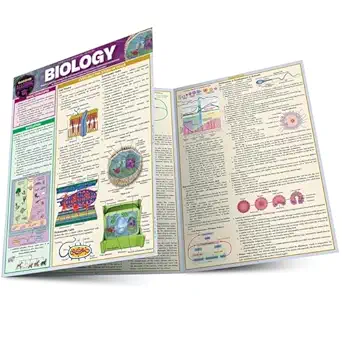 | Best Value Quick Reference | Format: Laminated reference sheet | Subject: Biology | Target level: Middle school through introductory college | VIEW LATEST PRICE | See Our Full Breakdown |
| A Student’s Guide to Natural Science |  | Best for Big-Picture Thinkers | Format: Paperback book | Subject Coverage: Multi-discipline overview of natural sciences | Intended Audience: Students new to natural science | VIEW LATEST PRICE | See Our Full Breakdown |
| student science reference book | Format | Target level | Subject | Durability |
|---|---|---|---|---|
| Oxford Student’s Science Dicti | Paperback dictionary | Middle school and up | — | — |
| Science Fundamentals 3 | Laminated reference sheet | Middle school | Physical science | Laminated, spill-resistant |
| Materials Science: A QuickStud | Laminated reference sheet | High school to early undergraduate | Materials science | Laminated |
| The American Heritage Student | Paperback dictionary | Middle to early high school | — | — |
| Biology: A QuickStudy Laminate | Laminated reference sheet | Middle school through introductory college | Biology | Laminated |
| A Student’s Guide to Natural S | Paperback book | — | — | — |
More Details on Our Top Picks
Oxford Student’s Science Dictionary
This dictionary earns the top spot because it does the one thing a science reference book genuinely needs to do: define terms accurately and clearly across every discipline a student will encounter. Where the QuickStudy guides excel at rapid recall for a single subject, this Oxford volume covers biology, chemistry, physics, and earth science in one place, which matters for homework that jumps between topics. The definitions are written for students rather than academics, so a middle schooler can actually parse them without a teacher nearby. Compared with The American Heritage Student Science Dictionary, the tradeoff is depth of vocabulary versus readability — Heritage leans slightly more visual-friendly, while Oxford leans denser and more thorough. The lack of multimedia or digital extras keeps it purely a print reference, which some students will find limiting.
Pros:- Comprehensive coverage across all major science disciplines in one volume
- Student-friendly definitions that don’t assume prior expertise
- Strong vocabulary depth for coursework and exam preparation
- Trusted academic publisher with rigorous editorial standards
Cons:- Print-only with no digital or multimedia companion content
- Heavier and less portable than laminated single-subject reference sheets
Best for: Middle and high school students who need one reliable, all-subject science dictionary for homework and revision
Not ideal for: Students who want a quick subject-specific revision aid — the QuickStudy laminated guides are faster for that job
- Format:Paperback dictionary
- Coverage:All major science disciplines
- Target level:Middle school and up
- Publisher:Oxford University Press
- Use case:Homework reference and vocabulary building
- Digital extras:None
Our verdict“The safest single purchase for a student who needs dependable definitions across every science subject they study.”
Science Fundamentals 3 – Physical Science: for Middle School – A QuickStudy Laminated Reference & Study Guide
This laminated guide occupies a completely different niche from the Oxford Student’s Science Dictionary: it is built for speed, not depth. Everything a middle schooler needs for physical science — formulas, units, key laws — is condensed onto a durable, spill-proof sheet that survives a backpack. That makes it ideal for the night before a test, when digging through a 300-page dictionary is the wrong tool. The obvious tradeoff is that it explains very little; it reminds you what a formula is, but it won’t teach the concept behind it the way a full reference book will. There are also no practice questions, so it reinforces memory rather than building skill. Compared with the Biology QuickStudy guide, this one is more tightly pitched at a specific grade band, which is a plus for fit.
Pros:- Laminated, spill-proof format that survives heavy backpack use
- Tightly focused on the middle school physical science curriculum
- Extremely fast to scan compared with a full dictionary
- Lightweight and fits inside a binder or folder
Cons:- Minimal explanation of underlying concepts
- No practice questions or exercises to test understanding
Best for: Middle school students who need fast, durable formula and concept recall during tests and homework
Not ideal for: Students trying to learn physical science from scratch — the condensed format assumes some classroom exposure
- Format:Laminated reference sheet
- Subject:Physical science
- Target level:Middle school
- Durability:Laminated, spill-resistant
- Portability:Binder-friendly panels
- Practice content:None
Our verdict“Best for Quick Exam Prep — Laminated, spill-proof format that survives heavy backpack use”
Materials Science: A QuickStudy Laminated Reference Guide
Of everything in this lineup, this is the most specialized pick — and that is both its strength and its limitation. Materials science is a niche subject that most general references barely touch, so the Oxford Student’s Science Dictionary will define a handful of terms while this guide actually organizes the field’s core concepts into a usable map. That makes it a smart companion for a high schooler or early undergraduate taking an engineering-adjacent course. The tradeoff is clear when compared with the Science Fundamentals 3 guide: this one assumes more background knowledge and isn’t tied to a school curriculum, so younger students may find it opaque. It is a supplement, never a substitute, for a textbook — the depth simply isn’t there for advanced coursework.
Pros:- Covers a specialized subject most general references ignore
- Compact enough to keep in a lab coat pocket or binder
- Laminated surface holds up to lab environments
- Well-organized conceptual overview of the field
Cons:- Too shallow for advanced or upper-level university study
- Narrow scope makes it poor value as an only reference purchase
Best for: High school and early college students taking engineering or materials-focused coursework who need a portable refresher
Not ideal for: Middle schoolers or general science students — the subject matter is too narrow and assumes prior knowledge
- Format:Laminated reference sheet
- Subject:Materials science
- Target level:High school to early undergraduate
- Durability:Laminated
- Portability:Pocket-sized panels
- Depth:Concise overview, not a textbook replacement
Our verdict“A worthwhile niche add-on for students whose coursework touches materials science, but not a general reference.”
The American Heritage Student Science Dictionary, Second Edition
Where the Oxford Student’s Science Dictionary aims at the older end of the student range, this American Heritage edition is pitched more accessibly, making it the friendlier entry point for middle schoolers and reluctant readers. Definitions are written plainly, and the vocabulary is scoped to what a grades 6–10 student will actually meet in class. Compared with the QuickStudy guides, it offers real explanatory depth rather than compressed summaries — but compared with Oxford, it sacrifices some vocabulary breadth and, in this edition, leans on fewer illustrations than many buyers expect from the brand. That visual sparseness is the main complaint: a younger audience benefits from diagrams, and this edition underdelivers them. Still, for a student who finds dense reference books intimidating, this is the easier book to actually open.
Pros:- Plain-language definitions accessible to younger readers
- Well matched to grades 6–10 coursework
- Easier entry point than denser academic dictionaries
- Solid coverage of core terminology across disciplines
Cons:- Fewer illustrations than expected for the age group
- Less vocabulary depth than the Oxford alternative
Best for: Middle school students and reluctant readers who need an approachable first science dictionary
Not ideal for: Advanced high schoolers needing broad, precise vocabulary — the Oxford dictionary covers more ground
- Edition:Second Edition
- Format:Paperback dictionary
- Target level:Middle to early high school
- Coverage:Core science terminology
- Reading level:Accessible, student-friendly
- Visuals:Limited illustrations
Our verdict“The right first dictionary for a younger student, as long as you accept narrower scope and sparse visuals.”
Biology: A QuickStudy Laminated Reference Guide
Biology is the subject where a condensed reference sheet earns its keep most often, because so much of the course is terminology, structures, and processes that need memorizing rather than deriving. This guide compresses cell biology, genetics, and body systems into a scannable format, and its low price makes it the cheapest confidence boost in this lineup. Compared with Science Fundamentals 3, it serves a broader age range — useful from middle school through introductory college biology — though that breadth means it isn’t tailored to any single curriculum. Like all the QuickStudy entries, it won’t teach concepts from nothing: a student who missed the lesson will still be lost. And unlike the dictionaries, there’s no digital companion for audio or interactive review.
Pros:- Extremely low cost relative to a full textbook or dictionary
- Broad age range from middle school to introductory college
- Laminated format survives daily backpack abuse
- Condenses terminology-heavy material into scannable panels
Cons:- Too basic for advanced or AP-level biology study
- No online or interactive companion resources
Best for: Biology students at almost any level who want a cheap, durable memorization aid for terms and structures
Not ideal for: Students preparing for AP or college exams needing detailed process explanations — the compression cuts too much
- Format:Laminated reference sheet
- Subject:Biology
- Target level:Middle school through introductory college
- Durability:Laminated
- Price tier:Budget
- Digital extras:None
Our verdict“The best value purchase here for biology students who need fast recall of terms and structures, not deep explanation.”
A Student’s Guide to Natural Science
Most of the other picks in this roundup are lookup tools — the Oxford Student’s Science Dictionary and the American Heritage Student Science Dictionary exist for finding definitions fast, while the QuickStudy laminated guides condense formulas into cheat-sheet form. This book does something different: it explains how the natural science disciplines connect to each other, giving students a conceptual map before they get lost in the details. That makes it a companion rather than a desk reference, and that distinction is exactly why it earns a slot here. The tradeoff is real, though. Where the QuickStudy Biology guide delivers dense, test-ready facts, this book stays at the survey level, so a student needing specific technical depth will outgrow it quickly. Pair it with a dictionary for vocabulary and it works well; on its own, it’s a starting point, not a finish line.
Pros:- Explains connections between science disciplines instead of isolating them
- Builds a conceptual framework that helps new students orient themselves
- Readable as a cover-to-cover introduction rather than just a lookup tool
- Complements definition-based references like the Oxford dictionary
Cons:- Lacks the detailed technical content needed for advanced coursework
- Not organized for quick fact-finding during homework or test review
- Shallow coverage of any single discipline compared to subject-specific guides
Best for: High school or early college students who want to understand how biology, chemistry, and physics fit together before diving into any single subject
Not ideal for: Students preparing for a specific exam who need formula-dense, lookup-style content — the laminated QuickStudy guides serve that job better
- Format:Paperback book
- Subject Coverage:Multi-discipline overview of natural sciences
- Intended Audience:Students new to natural science
- Content Type:Narrative survey and conceptual introduction
- Depth Level:Foundational; introductory concepts only
- Best Use Case:Orientation and framework-building, not quick lookup
- Complements:Science dictionaries and laminated study guides
Our verdict“Choose this if your student needs a conceptual roadmap across the sciences, not a last-minute lookup reference for one subject.”

How We Picked
I evaluated each book against four criteria: grade-level fit (can a middle schooler actually use it without adult help?), lookup speed (how fast can a student find an answer mid-homework), study value (does it support exam review, not just reference), and longevity (will it stay useful for more than one school year). Dictionaries were judged on definition clarity, visual support, and term coverage, while laminated guides were judged on organization, density, and whether the content aligns with standard curricula.
The ranking logic follows a simple principle: a reference book earns its place by matching a real study situation. Broad-coverage dictionaries placed higher overall because they serve more students across more years, while subject-specific laminated guides were slotted by how many students would realistically need that subject. A Student’s Guide to Natural Science landed lower not for quality but because its essay format serves a narrower, more advanced reader than the rest of the lineup.
| student science reference book | Format | Target level | Subject | Durability |
|---|---|---|---|---|
| Oxford Student’s Science Dicti | Paperback dictionary | Middle school and up | — | — |
| Science Fundamentals 3 | Laminated reference sheet | Middle school | Physical science | Laminated, spill-resistant |
| Materials Science: A QuickStud | Laminated reference sheet | High school to early undergraduate | Materials science | Laminated |
| The American Heritage Student | Paperback dictionary | Middle to early high school | — | — |
| Biology: A QuickStudy Laminate | Laminated reference sheet | Middle school through introductory college | Biology | Laminated |
| A Student’s Guide to Natural S | Paperback book | — | — | — |
Factors to Consider When Choosing Student Science Reference Books
Before choosing from the six books above, it helps to understand what separates a reference book a student will actually open from one that gathers dust. These are the factors that most often decide whether the purchase pays off.Format Determines Usage
The single biggest mistake buyers make is treating dictionaries and laminated study guides as interchangeable. A dictionary answers ‘what does this word mean’ during homework, while a laminated guide answers ‘what do I need to memorize before tomorrow’s test.’ Students who study by rereading notes get more from laminated guides; students who work through problem sets benefit from a dictionary sitting next to them. Many families end up buying both formats eventually, so it’s worth deciding which need comes first rather than guessing. A cheap dictionary plus a subject-specific guide often beats one expensive all-in-one book.
Match the Reading Level, Not Just the Grade
Publishers label books by grade range, but the honest measure is whether the student can read the definitions unassisted. A reference book that requires a parent to translate every entry stops being a reference and becomes a chore. Skew slightly below the student’s comfort level for reference material — struggling readers disengage quickly when a lookup takes five minutes. Advanced students, conversely, will outgrow entry-level dictionaries within a year, which pushes them toward essay-style books or subject guides sooner. If in doubt, sample a few definitions from each book’s online preview before committing.
Curriculum Alignment Matters More Than Coverage
A science reference book that covers topics your student’s curriculum never touches is dead weight. Physical science, biology, and earth science dominate middle school, while chemistry and physics take over in high school. Check the table of contents against this year’s syllabus before buying — the Science Fundamentals guide maps cleanly onto standard middle school physical science, while Materials Science maps onto almost no school curriculum at all. Homeschooling families have more freedom here, but they should still follow a standard scope-and-sequence so the reference stays relevant. Coverage that matches 80% of the coursework beats coverage that matches 40% of everything.
Physical Durability and Desk Space
This sounds trivial until a paperback dictionary loses its spine by November. Laminated guides survive backpacks, spilled drinks, and being used as coasters — that lamination is a genuine feature, not a gimmick. Hardbound dictionaries cost a bit more but last through multiple siblings, which changes the per-year cost dramatically. Also consider where the book lives: a six-page guide tucks into a binder, while a full dictionary needs permanent desk real estate. Students who study in different rooms will actually carry the laminated guide; the dictionary stays put.
When to Pay More — and When Not To
Reference book pricing is mostly flat, so paying more rarely buys dramatically better content — it buys more editions, more visuals, or more years of relevance. The upgrade that matters most is moving from a thin single-subject guide to a full dictionary once a student hits multi-subject coursework. What doesn’t justify a premium price: glossy photos, celebrity authors, or bundled digital access codes nobody redeems. Used copies of dictionary editions are also fine, since scientific vocabulary changes slowly at the student level. Save the budget for a second subject-specific guide instead of a fancier version of the first one.
Who Should Buy the Essay-Style Book
A Student’s Guide to Natural Science is the outlier in this lineup, and buyers should know what they’re getting. It teaches how science works as a method, not what specific terms mean, so it won’t help with tonight’s vocabulary homework. It shines for students preparing for science fairs, advanced coursework, or competitive exams that reward conceptual understanding. It’s also a strong gift for a student who already likes science but has never read about its foundations. Everyone else should treat it as a supplement, never a first reference book.
Frequently Asked Questions
Should I buy a science dictionary or a laminated study guide first?
Start with whichever matches the student’s most frequent pain point. If homework regularly stalls on unfamiliar vocabulary — ‘what’s the difference between mitosis and meiosis’ — a dictionary solves that immediately. If the problem is test anxiety and not knowing what to review, a laminated guide gives a structured cramming tool. For middle schoolers facing their first serious science courses, the dictionary generally comes first because vocabulary gaps are the earliest bottleneck. Add the subject guide once you know which specific class is hardest.
Are the Oxford and American Heritage student science dictionaries different enough to matter?
Yes, though the differences are subtle. The American Heritage edition leans on stronger visual support and slightly friendlier definitions, which helps younger or reluctant readers stay engaged. Oxford’s version carries the prestige of its name and is arguably a touch more precise in terminology, which suits stronger readers headed toward GCSE-style or advanced coursework. In practice, either book will handle 95% of middle school lookups. If forced to choose one for a mixed-age household, the American Heritage wins on accessibility; for a single ambitious student, either works.
Do laminated QuickStudy guides become outdated?
Far less than you’d expect, because the fundamentals they cover — periodic tables, force equations, cell biology basics — change rarely. A periodic table gains a name for a synthetic element every decade or so, and a biology guide might need updating after a major taxonomy shift, but the core content holds. This makes used and older editions a genuinely smart buy at this level. The one exception is any guide tied to a specific exam format or curriculum standard, which can shift with policy changes. For general subject guides, age is barely a factor.
Which of these books works for a homeschool curriculum?
The dictionary plus a general physical science guide is the strongest homeschool pairing, because homeschoolers need both vocabulary support and a structured review skeleton. Science Fundamentals 3 works well as a scope outline for a physical science unit, letting a parent build lessons around its six pages. A Student’s Guide to Natural Science is a valuable homeschool add-on for teaching scientific reasoning, which packaged curricula often skip. The specialized Materials Science guide is the weakest homeschool choice unless a student specifically requests it. Biology’s guide is worth adding the year you cover life science.
At what age should a student move past ‘student’ dictionaries?
Most students outgrow student-level science dictionaries around ninth or tenth grade, when coursework starts using precise technical language the simplified definitions can’t fully support. The telltale sign is a student who looks up a word, reads the definition, and still can’t apply it — that means the entry was simplified past usefulness. At that point, a standard adult science dictionary or the subject-specific laminated guides become better tools. Advanced middle schoolers can also make this jump early with adult supervision. Don’t rush it, though; a dictionary the student actually opens beats a rigorous one they avoid.
Conclusion
For most students, The American Heritage Student Science Dictionary is the best overall choice — it covers the widest range of subjects and grade levels, and it will still be useful three years from now. Best value goes to the Science Fundamentals 3 QuickStudy guide, which delivers an entire course review for the price of a coffee. Beginners and reluctant readers should start with the Oxford Student’s Science Dictionary, whose accessible definitions lower the barrier to actually using it. For the motivated high schooler, A Student’s Guide to Natural Science is the premium intellectual pick, best paired with a dictionary rather than bought alone. The Biology QuickStudy guide fills the specific need of a life-science year, while Materials Science belongs only with students pursuing engineering interests. Match the book to the study habit, not the other way around, and any of these picks will earn its shelf space.
Halloween Picks
halloween
As an affiliate, we earn on qualifying purchases.