Finding a telescope suitable for light-polluted environments can be challenging, as many models struggle to differentiate faint celestial objects amid city glow. The best overall pick is the Celestron NexStar 8SE, known for its powerful optics and computerized tracking that helps cut through light pollution. The ZWO Seestar S30 Pro excels as a smart, astrophotography-ready option, offering advanced imaging capabilities. Meanwhile, the Dwarflab Dwarf 3 stands out for portability and ease of use, ideal for quick setups near urban areas. The main tradeoffs often involve balancing aperture size, portability, and technology features. Continue reading for a detailed comparison that helps clarify which telescope matches your specific needs.

Prime made for students and young adults
- Fast, free delivery for dorm and study essentials
- Prime Video and Amazon Music included
- Member-only deals
Key Takeaways
- Aperture size remains the most critical factor for light pollution because larger apertures gather more light, helping to reveal faint objects even in bright skies.
- Smart telescopes and app-controlled models simplify locating targets and compensate for light pollution through enhanced tracking and imaging features.
- Filters like the Celestron UHC/LPR significantly improve contrast in light-polluted skies but are less effective alone without a suitable telescope.
- Portability and ease of setup matter if you plan to move between urban and rural locations frequently, but may limit aperture options.
- Entry-level models often lack the advanced features needed to combat light pollution effectively; investing in a more capable system can be worthwhile for serious enthusiasts.
| DWARFLAB Dwarf Mini Smart Telescope – Portable Astronomy Telescope |  | Best for Light Pollution Observation on the Go | Weight: 1.85 lbs | Sensor: Sony IMX662 (1/2.8-inch, 2.9μm pixels) | Auto GOTO: Yes | VIEW ON AMAZON | See Our Full Breakdown |
| Celestron NexStar 8SE Computerized Telescope – Schmidt-Cassegrain |  | Best for Deep-Sky Observation with Light Pollution Handling | Aperture: 8 inches | Type: Schmidt-Cassegrain | Mount: Computerized GoTo | VIEW ON AMAZON | See Our Full Breakdown |
| Celestron NexStar 102SLT Computerized Refractor Telescope |  | Best for Versatile Light Pollution Viewing in a Compact Form | Aperture: 102mm | Optical Design: Refractor | Computerized Mount: Yes | VIEW ON AMAZON | See Our Full Breakdown |
| Celestron UHC/LPR Light Pollution Reduction Filter for Telescopes – 1.25″ |  | Best Light Pollution Filter for Deep-Sky Clarity | Diameter: 1.25 inches | Type: UHC/LPR Light Pollution Reduction | Transmission: Over 97% | VIEW ON AMAZON | See Our Full Breakdown |
| Celestron StarSense Explorer 150mm App-Enabled Tabletop Dobsonian Telescope | 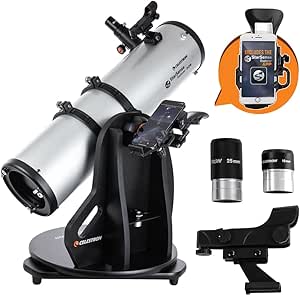 | Best for Light Pollution and Ease of Use in a Compact Form | Aperture: 150mm | Type: Reflector | Mount: Tabletop Dobsonian | VIEW ON AMAZON | See Our Full Breakdown |
| Dwarflab Dwarf 3 Smart Telescope, App-Controlled Astrophotography Camera |  | Best for Versatile Portable Imaging | Weight: 3 lb / 1.35 kg | Lens System: Dual lens (telephoto and wide-angle) | Auto-Tracking: Yes | VIEW ON AMAZON | See Our Full Breakdown |
| ZWO Seestar S30 Pro Smart Telescope, App-Controlled Astrophotography |  | Best for Beginner Urban Astronomers | Weight: 3.64 lbs | Imaging: Dual-camera 4K | Features: Automatic GOTO, AI Smart Imaging, Light Pollution Filters, Anti-dew | VIEW ON AMAZON | See Our Full Breakdown |
More Details on Our Top Picks
DWARFLAB Dwarf Mini Smart Telescope – Portable Astronomy Telescope
The DWARFLAB Dwarf Mini stands out for its exceptional portability, making it an excellent choice for astronomers who want to explore light-polluted skies without lugging heavy gear. Its compact design and app control simplify setup and navigation, especially compared with bulkier telescopes like the StarSense Explorer. While it excels in travel scenarios and basic astrophotography, its limited aperture and features restrict deep-sky observation quality for advanced users. The long exposure support and digital imaging are a plus, but reliance on a smartphone means battery life and connectivity can be concerns. This pick is ideal for casual astronomers and beginners who prioritize portability over raw power.Pros:- Extremely lightweight and portable, perfect for outdoor adventures
- User-friendly app control with integrated star maps
- Supports long exposure imaging for enhanced photos
- Includes useful accessories like filters and cleaning cloth
Cons:- Limited to beginner and family use, lacks advanced features
- Requires a smartphone for full functionality, which could impact battery life
Best for: Travelers and casual stargazers who need a lightweight, easy-to-use telescope for light-polluted environments
Not ideal for: Serious astronomers or astrophotographers seeking high-resolution deep-sky imaging or professional-grade features
- Weight:1.85 lbs
- Sensor:Sony IMX662 (1/2.8-inch, 2.9μm pixels)
- Auto GOTO:Yes
- Rotation:360°
- Exposure Support:Up to 90 seconds
- Includes:Filter, USB-C cable, cleaning cloth
Our verdict“This telescope is ideal for light pollution observation on the go, especially suited for beginners and casual users who value portability.”
Celestron NexStar 8SE Computerized Telescope – Schmidt-Cassegrain
The Celestron NexStar 8SE offers an 8-inch aperture that captures impressive detail even in areas with significant light pollution, outperforming smaller scopes like the NexStar 102SLT for faint objects. Its fully computerized GoTo system and SkyAlign technology make locating deep-sky objects straightforward, making it a favorite for more serious amateur astronomers. The tradeoff is its weight and size—less convenient for frequent travel—and a higher price point that might be prohibitive for entry-level users. It excels in providing bright, detailed views of nebulae, galaxies, and planetary details, but its bulk and learning curve mean it’s better suited for dedicated hobbyists rather than casual stargazers. If you want serious light pollution mitigation with high detail, this scope makes sense.Pros:- Large 8-inch aperture delivers bright, detailed images
- Automated GoTo system simplifies object location
- SkyAlign technology reduces setup complexity
- Ideal for deep-sky objects in light-polluted skies
Cons:- Heavy and less portable, challenging for frequent transport
- Requires some initial learning to operate effectively
- Higher cost compared to smaller or manual scopes
Best for: Amateur astronomers seeking detailed deep-sky views from moderately light-polluted areas
Not ideal for: Travelers or beginners who prefer lightweight, easy-to-setup telescopes
- Aperture:8 inches
- Type:Schmidt-Cassegrain
- Mount:Computerized GoTo
- Hand Control:NexStar+
- Object Database:40,000+ objects
- Warranty:2 years
Our verdict“This telescope is best suited for dedicated hobbyists aiming to observe deep-sky objects in light-polluted skies with high detail.”
Celestron NexStar 102SLT Computerized Refractor Telescope
The NexStar 102SLT offers a portable 102mm refractor with a computerized mount that makes it easy to find planets, the Moon, and brighter deep-sky objects, even in areas affected by light pollution. Its SkyAlign technology accelerates setup, and the included Sky Night software enhances the experience for beginners and casual users alike. Compared with larger, more complex scopes like the 8SE, this model sacrifices some aperture size for portability and ease of use. While it’s excellent for planetary and lunar observation and can handle light-polluted skies reasonably well, it doesn’t provide the deep-sky performance of larger apertures. Its simplicity makes it less suitable for astrophotography or advanced observing, but for general viewing, it hits the sweet spot.Pros:- Portable, lightweight, easy to transport
- Quick SkyAlign setup process
- Quality optics for detailed planetary and lunar views
- Includes interactive star software for learning
Cons:- Limited to visual observation, no astrophotography support
- Somewhat less suited for deep-sky in heavily light-polluted skies
- Requires basic familiarity with alignment procedures
Best for: Beginners or casual astronomers wanting a portable scope for planetary and lunar viewing in light-polluted areas
Not ideal for: Experienced astrophotographers or those seeking high-resolution deep-sky imaging
- Aperture:102mm
- Optical Design:Refractor
- Computerized Mount:Yes
- Hand Control:NexStar+
- Tripod:Adjustable steel
- Software Included:Starry Night Special Edition
Our verdict“This scope works well for beginners who want a compact, user-friendly telescope for planetary and lunar views despite light pollution.”
Celestron UHC/LPR Light Pollution Reduction Filter for Telescopes – 1.25″
The Celestron UHC/LPR filter provides a noticeable boost in contrast when observing nebulae and other faint deep-sky objects from light-polluted skies, making it a valuable accessory for scopes like the StarSense Explorer or NexStar 102SLT. Compared with no filter, it significantly enhances the visibility of emission nebulae, but it isn’t as effective for planetary observation where color and detail are less affected by light pollution. Its high transmission rate over 97% and multi-layer coatings ensure durability and minimal light loss. However, it remains a filter accessory, so it doesn’t address the fundamental limitations of small apertures or heavily light-polluted environments without a dedicated observing strategy. It’s best suited for users who already own a telescope and want to improve contrast for specific objects.Pros:- Enhances contrast and detail of nebulae in light-polluted skies
- High transmission with multi-layer coatings for durability
- Fits 1.25-inch eyepieces and accessories
- Relatively easy to attach and remove
Cons:- Limited effectiveness for planetary and lunar observation
- Requires additional filters for specific objects or imaging
- Price may be a consideration for casual users
Best for: Deep-sky observers using small to medium telescopes in light-polluted areas seeking enhanced nebula views
Not ideal for: Those primarily interested in planetary or lunar observation, or without a suitable telescope
- Diameter:1.25 inches
- Type:UHC/LPR Light Pollution Reduction
- Transmission:Over 97%
- Passband:60nm
- Material:Multi-layer dielectric coatings
Our verdict“This filter makes the most sense for deep-sky enthusiasts in light-polluted environments looking to improve nebula visibility.”
Celestron StarSense Explorer 150mm App-Enabled Tabletop Dobsonian Telescope
The StarSense Explorer 150mm combines a sizable 6-inch aperture with smartphone-based sky recognition technology, making it easier to find objects even amid light pollution. Its tabletop Dobsonian mount offers stability and simplicity, unlike bulkier full-sized models, but manual tracking can be less precise over extended viewing sessions. This scope is a strong choice for beginners and casual users who want high-quality views of the Moon, planets, and some deep-sky objects without the hassle of complex setup. Compared to the more advanced NexStar 8SE, it sacrifices some aperture size and advanced features but gains portability and ease of use. For light pollution in a compact, affordable package, it provides a great balance of performance and convenience.Pros:- Smartphone app integration with sky recognition technology
- High-quality 6-inch aperture for detailed views
- Simple setup with manual tracking
- Sturdy tabletop Dobsonian base
Cons:- Manual tracking may require adjustments for sustained viewing
- Tabletop design limits overall stability compared to full mounts
- Less suitable for astrophotography
Best for: Beginner and casual astronomers seeking an easy-to-use, portable scope for light-polluted skies
Not ideal for: Advanced users or those wanting precise tracking for astrophotography or extended observations
- Aperture:150mm
- Type:Reflector
- Mount:Tabletop Dobsonian
- Technology:StarSense Explorer app
Our verdict“This scope offers a practical, user-friendly solution for light-polluted skies, especially for beginners interested in visual astronomy.”
Dwarflab Dwarf 3 Smart Telescope, App-Controlled Astrophotography Camera
The Dwarflab Dwarf 3 stands out for its ultra-lightweight design and dual lens system, making it highly adaptable for both daytime wildlife and nighttime astrophotography. Compared with the ZWO Seestar S30 Pro, it offers greater portability and user-friendly auto-tracking, but it falls short on advanced deep-sky features and longer battery life, which are less critical for casual users. This telescope is ideal for travelers and outdoor enthusiasts who want a compact, all-in-one imaging tool, but those seeking high-precision astrophotography or deep-sky imaging may find it limiting. Its key strengths include its portability, 4K resolution, and simple app control. However, it requires a smartphone for full operation and lacks information on power sources, which can be inconvenient during extended outings. If you prioritize ease of use, portability, and versatile daytime/nighttime use, this is an excellent choice.Pros:- Ultra-lightweight and portable, perfect for travel and outdoor use
- Dual lens system offers versatility for daytime and nighttime photography
- Smart auto-tracking and 4K resolution enable professional-quality images
Cons:- Dependent on smartphone app for full functionality, which can limit flexibility
- Limited to beginner and amateur astrophotography levels, lacking advanced features
- No clear information on battery life or power source for extended use
Best for: Travelers and outdoor adventurers who want a lightweight, all-in-one imaging device for casual astrophotography and landscapes.
Not ideal for: Dedicated astrophotographers seeking advanced deep-sky imaging or long exposure capabilities, as the Dwarf 3 is more beginner-friendly and less feature-rich.
- Weight:3 lb / 1.35 kg
- Lens System:Dual lens (telephoto and wide-angle)
- Auto-Tracking:Yes
- Resolution:4K
- Connectivity:USB-C, App-controlled
- Included Accessories:Carrying bag, magnetic filters, pouch, wipe cloth, USB-C cable
Our verdict“This telescope suits casual users and travelers who want a portable, easy-to-use device for light pollution awareness and basic astrophotography.”
ZWO Seestar S30 Pro Smart Telescope, App-Controlled Astrophotography
The ZWO Seestar S30 Pro is tailored for those new to astrophotography and living in light-polluted areas, thanks to its automatic GOTO system and AI-enhanced imaging. Unlike the Dwarflab Dwarf 3, which emphasizes portability and daytime versatility, the S30 Pro provides more advanced astronomical features like GOTO targeting and anti-dew protection, making it better suited for serious beginner astronomers. Its high-resolution 4K dual-camera system captures detailed celestial images, yet it relies heavily on a stable smartphone setup, which could be a challenge for some users. This pick is ideal for urban dwellers eager to explore the night sky without complicated manual setup, but it may be too costly for casual stargazers or those without compatible devices. Its strengths include ease of use, AI imaging, and light pollution filters. The main tradeoff is its expense and dependence on a stable, compatible device for operation. If you’re seeking a straightforward, AI-powered telescope for light pollution areas, this model makes excellent sense.Pros:- User-friendly with automatic GOTO and app control
- High-resolution 4K imaging captures fine celestial details
- Includes light pollution filters and anti-dew protection for challenging environments
Cons:- Requires a compatible smartphone and stable setup, which can be limiting
- Higher price point may deter casual users or those on a budget
- Limited to beginner and light-polluted area use, not ideal for advanced astrophotography
Best for: Beginners and urban astronomers wanting easy, automated celestial imaging with light pollution mitigation.
Not ideal for: Experienced astrophotographers or those seeking long-exposure deep-sky imaging, as the S30 Pro is optimized for ease over advanced features.
- Weight:3.64 lbs
- Imaging:Dual-camera 4K
- Features:Automatic GOTO, AI Smart Imaging, Light Pollution Filters, Anti-dew
- Connectivity:App-controlled
Our verdict“This telescope is perfect for urban novices seeking a simple, automated way to explore the night sky with light pollution filters.”

How We Picked
The selection process focused on evaluating each telescope’s ability to perform under light-polluted conditions, emphasizing aperture size, optical quality, and technological features like computerized tracking or imaging capabilities. We also considered portability for urban use, ease of setup, and value for money. Products were ranked based on how well they balance these factors, with particular attention to those that help amateur astronomers see more in bright skies. This approach ensures the top picks are practical for city dwellers yet versatile enough for different usage scenarios.Factors to Consider When Choosing Telescope For Light Pollution
Choosing the right telescope for light pollution requires understanding key factors that influence how well you can observe in bright environments. The right model should maximize light collection, ease of use, and image contrast, often balancing size and portability. Being aware of common pitfalls, like overestimating the importance of portability at the expense of aperture, helps prevent costly mistakes. This guide highlights crucial factors to consider before purchasing, ensuring you select a telescope that enhances your urban stargazing experience.Aperture Size and Light Gathering Power
A larger aperture allows a telescope to collect more light, which is essential for observing faint objects obscured by light pollution. While bigger apertures generally deliver better performance, they also tend to be heavier and less portable. For city use, prioritizing a moderate to large aperture—around 80mm to 150mm—strikes a good balance between light-gathering ability and manageability. Avoid smaller telescopes if your goal is to see deep-sky objects in light-polluted skies, but also be mindful of the added weight and setup complexity that larger models can bring.
Optical Design and Image Contrast
Optical design impacts how well a telescope can handle light pollution. Schmidt-Cassegrain and Maksutov-Cassegrain models tend to offer higher contrast images in urban settings compared to simple refractors, thanks to their closed tube design reducing stray light. Refractors are often more straightforward and require less maintenance, but may struggle more with contrast in bright skies unless paired with filters. Choosing a design that minimizes internal reflections and stray light boosts your chances of seeing more detail despite light pollution.
Technological Features and Automation
Modern telescopes with computerized mounts and star-mapping apps simplify locating objects in light-polluted conditions. Features like GPS, built-in databases, and tracking automation reduce the time spent searching and help compensate for sky brightness. However, these systems add complexity and cost, so assess whether the added convenience justifies the expense. For beginners, simplified app controls or manual operation may be preferable, while experienced users benefit from advanced automation for efficient observing sessions.
Filters and Accessories
Light pollution filters, such as the Celestron UHC/LPR, can dramatically improve contrast by blocking specific wavelengths associated with city lighting. While filters alone won’t overcome heavy light pollution, pairing them with a suitable telescope enhances visibility of nebulae and other deep-sky objects. Be aware that filters can sometimes reduce overall brightness, so choosing a compatible telescope with a sufficiently large aperture is vital. Accessories like remote controls and lightweight tripods can also make urban observing more convenient.
Portability and Ease of Use
If you plan to move your telescope between urban and rural sites, portability becomes a key factor. Compact, lightweight models are easier to carry but often compromise on aperture size and advanced features. Conversely, larger, heavier telescopes provide better performance but require more effort to transport and set up. Consider your physical environment and frequency of travel to find a balance that matches your lifestyle. For urban use, quick setup features and sturdy but lightweight mounts are especially beneficial.
Frequently Asked Questions
Can a small aperture telescope work well in light-polluted skies?
While smaller aperture telescopes are more portable and easier to handle, they generally struggle more in light-polluted conditions because they gather less light. They can still be useful for bright objects like planets and the Moon, but observing faint deep-sky objects becomes difficult. To improve performance, pairing a small telescope with light pollution filters and using high-contrast eyepieces can make a noticeable difference, though for serious deep-sky viewing in urban areas, larger apertures tend to be more effective.
Are computerized or app-controlled telescopes better for light-polluted skies?
Automated telescopes with computerized mounts and star-mapping apps significantly ease object locating in bright skies, saving time and frustration. These systems can automatically find targets and track them precisely, compensating for light pollution’s masking effects. However, they tend to be more expensive and complex to operate, making them better suited for enthusiasts willing to learn the technology. For casual or beginner astronomers, simpler manual or semi-automated models may provide a more straightforward experience without sacrificing too much performance.
Should I invest in filters or a better telescope for light pollution?
Filters like UHC or LPR are effective supplementary tools that improve contrast and reveal more details in light-polluted skies. However, they are not substitutes for a capable telescope with sufficient aperture and optical quality. For the best results, combine a good telescope with filters tailored to your observing targets. Investing in a larger aperture telescope generally offers more significant improvements in urban settings, with filters serving as a helpful enhancement rather than a complete solution.
How important is portability if I only plan to observe from home?
If your observing sessions are limited to your backyard or a fixed location, portability becomes less critical. In such cases, you can prioritize larger apertures and more advanced features without worrying about transport. However, even at home, a manageable setup simplifies quick observations and reduces frustration. For those with limited space or who prefer quick setup, lightweight, compact models can still provide excellent performance without sacrificing too much optical power.
What’s the best type of telescope for a beginner in a city environment?
For beginners starting out in a city, a small to medium refractor or a tabletop Dobsonian offers a good balance of simplicity, portability, and decent performance. These models are generally easier to operate and require less maintenance, helping newcomers enjoy urban stargazing without being overwhelmed. As skills develop, investing in a telescope with a larger aperture or computerized features can expand your observing capabilities, but initial ease of use remains key for building confidence in light-polluted conditions.
Conclusion
For city dwellers eager to explore the night sky, the Celestron NexStar 8SE offers unmatched versatility and performance, making it the best overall choice. Budget-conscious observers will find the Dwarflab Dwarf 3 provides excellent portability and ease of use at a lower price point. Serious astrophotographers should consider the ZWO Seestar S30 Pro for its imaging capabilities, while beginners or casual stargazers benefit from simpler models like the Celestron StarSense Explorer 150mm. Ultimately, your choice depends on whether you prioritize power, ease, portability, or affordability—each of these picks is tailored to different needs in light-polluted environments.
Halloween Picks
halloween
As an affiliate, we earn on qualifying purchases.