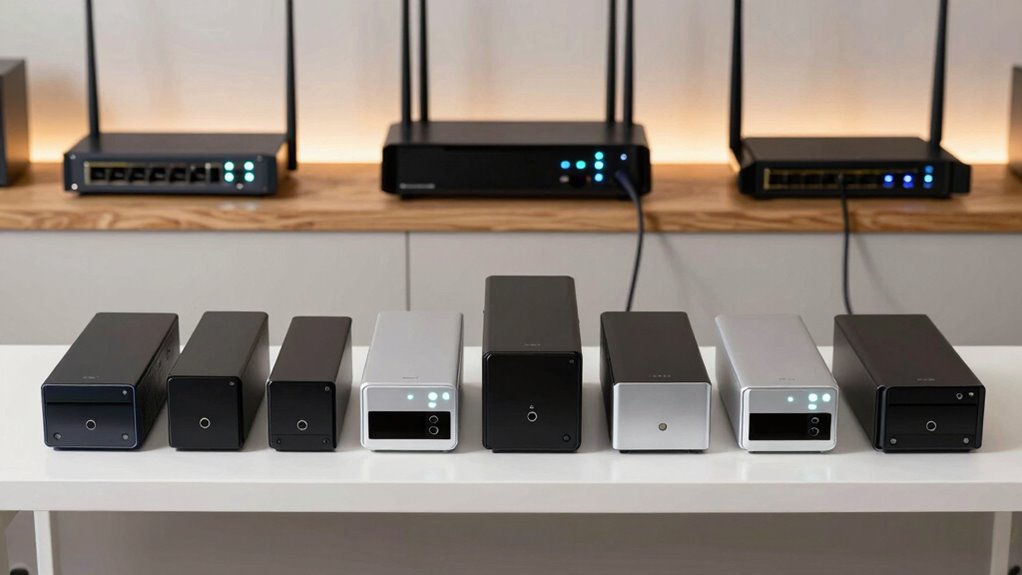

Choosing the right UPS for NAS and router setups is essential for maintaining network uptime during power outages. The APC BE850G2 stands out as a reliable overall choice, offering solid backup power for home or small office networks. The CyberPower CP1500PFCLCD provides a premium sinewave output for sensitive equipment, while the APC BE600M1 offers a compact, budget-friendly option for smaller setups. The main challenge lies in balancing capacity, price, and compatibility—larger backups cost more but provide longer runtime, while smaller units save money but may fall short during extended outages. Continue reading for the full breakdown of these options and how they compare for your specific needs.

Prime made for students and young adults
- Fast, free delivery for dorm and study essentials
- Prime Video and Amazon Music included
- Member-only deals
Key Takeaways
- The best overall UPS for NAS and router is the APC BE850G2 due to its balance of capacity, reliability, and affordability.
- High-capacity units like the CyberPower CP1500PFCLCD excel for setups with multiple devices or longer outage durations.
- Compact and budget-friendly models such as the APC BE600M1 are suitable for small-scale or temporary backup needs.
- Pure sinewave output is critical for sensitive electronics, making premium models worth considering for high-end setups.
- Capacity and runtime are the most important factors; choosing a UPS with sufficient wattage prevents unexpected shutdowns.
| APC BE850G2 UPS Battery Backup & Surge Protector for Computer, Router, NAS |  | Best Overall for Home Office and Small NAS Setups | Capacity: 850VA/450W | Runtime at 100W: up to 35 minutes | Outlets: 9 (6 battery backup + 3 surge-only) | VIEW ON AMAZON | See Our Full Breakdown |
| APC 1050VA/600W UPS Battery Backup for Computer, Office, Wi-Fi, BE1050G3 |  | Best Value for Medium-Sized Home Office and Network Equipment | Capacity: 1050VA/600W | Runtime at 100W: up to 36 minutes | Outlets: 8 (6 backup + surge, 2 surge-only) | VIEW ON AMAZON | See Our Full Breakdown |
| APC BX1000M 1000VA/600W Pro UPS Battery Backup for Office Electronics |  | Best for Continuous Office Electronics and Small NAS | Capacity: 1000VA/600W | Runtime at 100W: over 42 minutes | Outlets: 8 (4 backup + surge, 4 surge-only) | VIEW ON AMAZON | See Our Full Breakdown |
| CyberPower ST425 Standby UPS Battery Backup and Surge Protector |  | Best Compact Option for Basic Home Office and Entertainment Devices | Capacity: 425VA/260W | Outlets: 8 | Form Factor: Compact | VIEW ON AMAZON | See Our Full Breakdown |
| CyberPower CP1500PFCLCD PFC Sinewave UPS Battery Backup and Surge Protector |  | Best for High-Power, Active PFC Systems and Critical Network Devices | Capacity: 1500VA/1000W | Outlets: 12 (6 backup + surge, 6 surge-only) | Waveform: Pure sine wave | VIEW ON AMAZON | See Our Full Breakdown |
| APC BE600M1 UPS Battery Backup & Surge Protector for Computer, Router, NAS |  | Best for Short-Term Backup and Surge Protection | Runtime at 100W load: 23 minutes | Outlets: 5 battery backup + surge protection, 2 surge-only | USB port: 1.5A | VIEW ON AMAZON | See Our Full Breakdown |
| ups for nas and router | Outlets | Capacity | Warranty | Runtime at 100W |
|---|---|---|---|---|
| APC BE850G2 UPS Battery Backup | 9 (6 battery backup + 3 surge-only) | 850VA/450W | 3 years | up to 35 minutes |
| APC 1050VA/600W UPS Battery Ba | 8 (6 backup + surge, 2 surge-only) | 1050VA/600W | 3 years | up to 36 minutes |
| APC BX1000M 1000VA/600W Pro UP | 8 (4 backup + surge, 4 surge-only) | 1000VA/600W | — | over 42 minutes |
| CyberPower ST425 Standby UPS B | 8 | 425VA/260W | 3 years | — |
| CyberPower CP1500PFCLCD PFC Si | 12 (6 backup + surge, 6 surge-only) | 1500VA/1000W | 3 years including battery | — |
| APC BE600M1 UPS Battery Backup | 5 battery backup + surge protection, 2 surge-only | — | — | — |
More Details on Our Top Picks
APC BE850G2 UPS Battery Backup & Surge Protector for Computer, Router, NAS
This UPS excels in providing reliable backup power for small to medium NAS and router setups, with a solid 850VA/450W capacity. Compared to the CyberPower CP1500PFCLCD, it offers a more compact form factor but with less capacity, making it ideal for users with modest power needs. The user-replaceable battery is a significant plus, simplifying maintenance over time, yet it requires purchasing a separate replacement model, which could be inconvenient. Its 35-minute runtime at 100W is sufficient for most small office outages, though higher loads will drain it faster. The multiple outlets and USB ports cover most home office devices, and surge protection is integrated, but it lacks advanced network surge features found in pricier models. Overall, this pick is best for users needing dependable, straightforward backup without high power demands.
Pros:- Provides up to 35 minutes of backup power at 100W
- Multiple outlets and USB ports for comprehensive device coverage
- User-replaceable battery simplifies ongoing maintenance
Cons:- Battery replacement requires purchasing a separate model
- Limited runtime at higher loads
- No advanced network surge protection features
Best for: Small office users or home NAS owners seeking reliable backup with easy maintenance.
Not ideal for: Power users with high-capacity or high-load systems, as runtime and capacity are limited.
- Capacity:850VA/450W
- Runtime at 100W:up to 35 minutes
- Outlets:9 (6 battery backup + 3 surge-only)
- USB Ports:2 USB-A (5V/2.4A)
- Warranty:3 years
- Protection Coverage:$75,000
Our verdict“This UPS suits small-scale setups needing dependable backup and straightforward operation.”
APC 1050VA/600W UPS Battery Backup for Computer, Office, Wi-Fi, BE1050G3
The APC BE1050G3 offers a robust 1050VA/600W capacity, ideal for users with multiple devices like routers, NAS, and computers. Compared with the APC BE850G2, it provides a higher power capacity and longer runtime—up to 36 minutes at 100W—making it better suited for slightly larger setups. Its automatic voltage regulation helps extend battery life and stabilize power, which is crucial during fluctuating power conditions. The inclusion of both USB-C and USB-A ports adds versatility for charging modern devices, and the user-replaceable battery simplifies ongoing maintenance. However, it shares the same drawback of requiring a separate purchase for replacement batteries, and it doesn’t include built-in software for automated shutdowns, which may be a concern for some users. This model makes the most sense for those needing a step up in capacity without extra complexity.
Pros:- Provides up to 36 minutes of backup at 100W
- Includes multiple outlets with surge protection and USB-C/USB-A ports
- Automatic voltage regulation protects devices during power fluctuations
Cons:- Battery replacement requires purchasing a separate model
- Limited runtime at higher loads
- No built-in automated shutdown software
Best for: Medium-sized home office users or small business setups with multiple connected devices.
Not ideal for: Users with very high power demands or those requiring integrated management software.
- Capacity:1050VA/600W
- Runtime at 100W:up to 36 minutes
- Outlets:8 (6 backup + surge, 2 surge-only)
- USB Ports:USB-C & USB-A (5V/3A shared)
- Battery:User-replaceable (Model: APCRBC164)
- Warranty:3 years
Our verdict“This UPS is ideal for users needing more capacity and reliable power regulation in a home office environment.”
APC BX1000M 1000VA/600W Pro UPS Battery Backup for Office Electronics
The APC BX1000M offers a dependable 1000VA/600W capacity with over 42 minutes of runtime at 100W, making it well-suited for continuous operation of essential office devices and small NAS units. Compared to the APC BE1050G3, it has a similar capacity but stands out with a real-time LCD display, which simplifies monitoring power status and battery health. Its automatic voltage regulation ensures stable power during surges or dips, and the multiple surge-protected outlets safeguard connected equipment. The battery is user-replaceable, but like others, it requires buying a separate replacement. It does not include USB charging ports or integrated software for automatic shutdown, which could be drawbacks for some users. This pick makes sense for users prioritizing clear monitoring and stable power for critical small office setups.
Pros:- Over 42 minutes of runtime at 100W
- Real-time LCD for easy status checks
- Automatic voltage regulation for power stability
Cons:- Battery replacement requires purchasing a separate battery
- Limited to 600W capacity, not for high-power devices
- No integrated software for automated shutdown
Best for: Small business or office users needing reliable backup with easy-to-read monitoring displays.
Not ideal for: High-power or multimedia-intensive setups requiring more capacity or integrated management features.
- Capacity:1000VA/600W
- Runtime at 100W:over 42 minutes
- Outlets:8 (4 backup + surge, 4 surge-only)
- Display:LCD
- Battery:User-replaceable
- Protection Coverage:$75,000
Our verdict“This UPS suits office environments where monitoring and stable backup power for essential devices are priorities.”
CyberPower ST425 Standby UPS Battery Backup and Surge Protector
The CyberPower ST425 offers a compact 425VA/260W capacity, suitable for small setups like single routers, modems, or a modest NAS. Compared with larger models like the CyberPower CP1500PFCLCD, it’s limited in power and runtime but excels in size and simplicity, making it perfect for spaces where space is tight. Its high-efficiency design reduces power consumption, and the multiple outlets with surge protection cover essential devices. The simulated sine wave output is less ideal for sensitive or active PFC power supplies, which can experience minor issues. Its 3-year warranty and connected equipment guarantee add peace of mind, but the limited runtime and outlet count restrict its use for more extensive setups. This model makes a good choice for minimal, space-constrained needs.
Pros:- Reliable backup and surge protection for small devices
- High efficiency reduces power consumption
- Compact size fits tight spaces
Cons:- Limited runtime for extended outages
- Only 8 outlets may be insufficient for larger setups
- Simulated sine wave output may not suit sensitive equipment
Best for: Single-device users or small home offices with minimal power backup requirements.
Not ideal for: Larger setups or critical systems needing extended runtime or clean sine wave power.
- Capacity:425VA/260W
- Outlets:8
- Form Factor:Compact
- Protection Coverage:$75,000
- Waveform:Simulated sine wave
- Warranty:3 years
Our verdict“This UPS is best for minimal setups where space is limited and backup needs are modest.”
CyberPower CP1500PFCLCD PFC Sinewave UPS Battery Backup and Surge Protector
The CyberPower CP1500PFCLCD stands out with its 1500VA/1000W capacity and pure sine wave output, making it ideal for active PFC power supplies like high-end computers and network equipment. Comparing it with the APC BX1000M, it offers significantly higher capacity and a clear color LCD display for detailed power monitoring, which is beneficial for managing larger or more sensitive setups. Its multiple outlets, including surge-only and backup, along with USB-C and USB-A ports, provide versatile device connectivity. The automatic voltage regulation helps stabilize power during outages or fluctuations. However, its capacity limits may not suffice for very high-power systems, and the battery may require replacement after the warranty period, increasing long-term costs. This model makes the most sense for users with demanding, power-sensitive equipment that benefits from sine wave output and detailed monitoring.
Pros:- Provides a pure sine wave output suitable for sensitive equipment
- Includes a color LCD display for detailed monitoring
- High capacity with 1500VA/1000W for demanding setups
Cons:- May require battery replacement after warranty
- Capacity may still be insufficient for very high-power systems
- Relatively higher cost compared to smaller models
Best for: Power users with active PFC devices, servers, or high-performance workstations needing clean power and real-time info.
Not ideal for: Basic setups or users with low power needs, as capacity might be overkill and more expensive.
- Capacity:1500VA/1000W
- Outlets:12 (6 backup + surge, 6 surge-only)
- Waveform:Pure sine wave
- Display:Color LCD
- USB Ports:1 Type-A, 1 Type-C
- Warranty:3 years including battery
Our verdict“This UPS is designed for users with critical, high-power equipment needing clean, stable power with detailed insights.”
APC BE600M1 UPS Battery Backup & Surge Protector for Computer, Router, NAS
The APC BE600M1 offers a compact solution for maintaining power during brief outages, making it ideal for keeping routers and NAS devices online during short power dips. Compared to larger units like the APC BE850G2, it provides fewer outlets but is more space-efficient and easier to manage. Its 23-minute runtime at 100W covers typical short-term power interruptions, though it falls short for extended outages or high-power devices. The inclusion of surge protection helps shield sensitive equipment from spikes, and the easy battery replacement feature keeps long-term costs manageable. However, its limited runtime at higher loads means it’s not suitable for prolonged outages, and replacing the battery requires purchasing separate units, adding to maintenance. This pick makes the most sense for users needing reliable short-term backup without the bulk of larger models.
Pros:- Provides immediate backup power during outages to keep network devices running
- Surge protection shields devices from damaging power spikes
- Easy battery replacement reduces long-term maintenance costs
Cons:- Limited runtime at higher power loads may not cover long outages
- Battery replacement requires purchasing additional batteries
Best for: Small office setups or home users who need reliable short-term backup for router and NAS during power outages.
Not ideal for: Users seeking extended backup power or supporting high-power loads, as the runtime is limited for prolonged outages.
- Runtime at 100W load:23 minutes
- Outlets:5 battery backup + surge protection, 2 surge-only
- USB port:1.5A
- Battery type:Replaceable sealed lead-acid
- Surge protection:Yes
- Form factor:Compact, tabletop
- Weight:11.4 lbs
- Dimensions:10 x 3.5 x 6 inches
- Input voltage:120V
Our verdict“This UPS is well-suited for users needing quick, reliable shutdown support for essential network equipment during brief power disruptions.”

How We Picked
These products were evaluated based on their capacity to power NAS devices and routers reliably during outages, build quality, ease of use, and value. We prioritized units with sufficient wattage to support typical home or small office setups, focusing on reliability and longevity. The ranking also considers features like surge protection, user interface, and compatibility with sensitive electronics. Size and price were secondary factors, ensuring options suited a range of budgets and space constraints. Our goal was to identify units that balance performance with practicality for everyday use in NAS and router configurations.| ups for nas and router | Runtime at 100W |
|---|---|
| APC BE850G2 UPS Battery Backup | up to 35 minutes |
| APC 1050VA/600W UPS Battery Ba | up to 36 minutes |
| APC BX1000M 1000VA/600W Pro UP | over 42 minutes |
| CyberPower ST425 Standby UPS B | — |
| CyberPower CP1500PFCLCD PFC Si | — |
| APC BE600M1 UPS Battery Backup | — |
Factors to Consider When Choosing Ups For Nas And Router
When selecting a UPS for NAS and router setups, understanding key factors helps prevent common mistakes such as underestimating capacity or choosing incompatible units. The right UPS ensures your network remains operational during outages, protecting data integrity and reducing downtime. Here are critical considerations to keep in mind:Capacity and Wattage
Choosing a UPS with sufficient capacity is crucial. Look for units that provide at least 20-30% more wattage than your maximum load to allow for future expansion and to prevent overloads. Underestimating capacity can lead to abrupt shutdowns, risking data loss. Consider the combined wattage of your NAS, router, and any other connected devices to select a model that can handle your total load comfortably.
Runtime
The primary role of a UPS is to keep devices running long enough for a safe shutdown or to bridge short outages. Think about how long you might need backup power during an outage—longer runtimes typically require larger batteries, which cost more and take up more space. For most home setups, 5-10 minutes of runtime is sufficient, but if you want more, expect to pay a premium for higher capacity units.
Output Waveform
Pure sinewave UPS units produce clean power similar to the grid, which is essential for sensitive electronics like NAS drives and network equipment. Modified sinewave models are cheaper but can cause noise, overheating, or reduced lifespan in sensitive devices. Investing in a sinewave UPS is often worth the extra cost for reliable operation and device longevity.
Size and Placement
Consider the physical size and weight of the UPS, especially if space is limited. Compact models are easier to place on desks or shelves but may offer less capacity. Larger units provide more runtime and power but require more space and may be heavier. Balance your space constraints with your power needs to find the best fit.
Additional Features
Look for features like automatic voltage regulation (AVR), surge protection, and easy-to-read displays. These add convenience and enhance device safety. Some units offer network management options or USB connectivity for monitoring, which can be valuable for proactive maintenance or integration into home automation systems.
Frequently Asked Questions
How much backup time do I need for my NAS and router?
The backup time depends on your total power load and the UPS capacity. For most home users, 5-10 minutes is enough to save work and shut down safely. If you experience frequent outages or have a larger setup, consider a higher-capacity unit that can provide 15-30 minutes or more, giving ample time for proper shutdowns or to bridge longer power interruptions.
Is a pure sinewave UPS necessary for my NAS and router?
For most modern NAS and router setups, a pure sinewave UPS is recommended because it delivers cleaner power, reducing the risk of damage or data corruption. Cheaper models with modified sinewave output may cause noise or overheating in sensitive electronics, especially during longer outages or high loads. Investing in sinewave power can extend the lifespan of your equipment and improve stability.
Can I use a UPS with a higher capacity than my devices need?
Yes, using a UPS with a higher capacity provides longer runtime and allows for future expansion. However, larger units tend to be more expensive and bulkier. Ensure that the UPS’s wattage exceeds your total device load to avoid overloads, and balance capacity with your available space and budget.
What is the most common mistake when choosing a UPS for NAS and router?
The most frequent error is underestimating power requirements, leading to a unit that can’t sustain your setup during outages. This often results in abrupt shutdowns, risking data loss or hardware damage. Always calculate your total wattage and select a UPS with a buffer of at least 20-30% to ensure reliable backup power.
Should I prioritize features like LCD displays or network management?
Features like LCD screens and network management are useful for monitoring and maintaining your UPS, especially if used in a business or critical environment. For most home setups, these are nice-to-have rather than essentials. Focus on capacity, runtime, and waveform quality first, then consider additional features based on your specific needs and budget.
Conclusion
Overall, the best choice depends on your setup and priorities. For those seeking a reliable, all-around performer, the APC BE850G2 offers excellent value and dependable backup power. If you need extended runtime for a larger setup or sensitive electronics, the CyberPower CP1500PFCLCD is a strong premium option. Budget-conscious users or small setups will find the APC BE600M1 sufficient, especially for short outages. For newcomers or minimal needs, a compact model with basic surge protection can still provide essential backup. Match your power needs, space, and budget to pick the ideal UPS for your NAS and router in 2026.
Fall Picks
fall essentials
As an affiliate, we earn on qualifying purchases.