

To create an effective photo and video workflow, focus on organized storage, reliable backups, and consistent file management. Use clear folder structures, label files accurately, and update metadata immediately after import. Implement automatic backups to protect your work and maintain multiple copies in different locations. Regularly review and clean your library for easy access and efficient editing. Keep these practices in mind to stay organized—up next, you’ll discover how to streamline your process even further.
Listen free for 30 days with Audible
Thousands of audiobooks and originals — cancel anytime.
As an affiliate, we earn on qualifying purchases.
Key Takeaways
- Implement a consistent folder structure to organize photos and videos by date, project, or subject for easy access.
- Regularly back up files to multiple locations, including cloud storage and external drives, to prevent data loss.
- Use metadata to tag files with relevant details like date, location, and subject for efficient search and retrieval.
- Update metadata immediately after import and maintain standardized protocols for uniformity across all files.
- Incorporate routine file organization and backup practices into your daily workflow to ensure ongoing data integrity and accessibility.
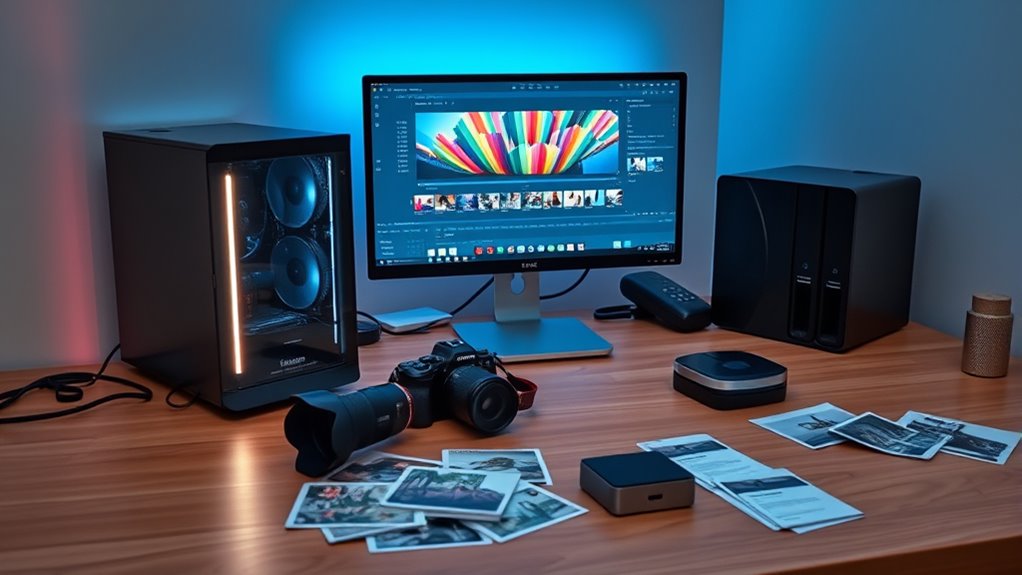
A well-organized photo and video workflow is essential to efficiently capture, edit, and deliver your content. One of the most critical aspects of this organization is metadata management. When you properly handle metadata, you ensure that your files are easily searchable and correctly categorized. This means consistently adding relevant details like date, location, subject, and camera settings. Metadata management helps you quickly locate specific shots or projects without sifting through countless folders, saving you time and reducing frustration. To stay on top of this, develop a habit of updating metadata immediately after importing your files. Use software that allows you to batch edit metadata for efficiency, and always double-check that your information is accurate and complete. Establishing consistent file organization practices further enhances your workflow by keeping your library neat and accessible.
external hard drives for photo backup
As an affiliate, we earn on qualifying purchases.
As an affiliate, we earn on qualifying purchases.
Frequently Asked Questions
What Are the Best Cloud Storage Options for Photographers?
You should consider using cloud storage options like Google Drive, Dropbox, or Adobe Creative Cloud. They offer strong cloud security, keeping your photos safe, and flexible storage plans to match your needs. While exploring options, compare storage costs to find the best deal. These services make it easy to access your files anywhere and collaborate efficiently, ensuring your valuable work stays protected without breaking the bank.
How Often Should I Back up My Photo and Video Files?
Think of your files as precious artifacts in a vault. You should back up your photo and video files regularly, ideally after each shoot or daily, to guarantee storage redundancy. This habit safeguards your work and aligns with effective archiving strategies. By doing so, you prevent loss from hardware failure or accidents, keeping your creative treasures secure and accessible whenever inspiration strikes.
What File Naming Conventions Improve Workflow Efficiency?
To improve your workflow efficiency, use consistent file naming conventions with descriptive filename strategies. Start with a clear date format like YYYYMMDD, followed by keywords that describe the content, such as location or subject. Avoid special characters and spaces, instead using underscores or hyphens. This way, you’ll easily sort and locate files, reducing confusion and saving time during editing or sharing. Consistent naming boosts organization and streamlines your entire workflow.
How Can I Organize Large Photo Libraries Effectively?
Ever wonder how to tame a massive photo library? Start by creating a clear folder structure based on events or dates. Use consistent file naming conventions and add metadata to categorize images efficiently. Regularly review and delete duplicates. Incorporate color correction tags to streamline editing. This approach keeps your library organized, making it easier to find, manage, and enhance your photos quickly and effectively.
What Hardware Specs Are Ideal for Video Editing?
For smooth video editing, you need a powerful setup. Aim for hardware upgrades like a multi-core CPU, at least 16GB of RAM, and a dedicated GPU. Your editing software runs best with a fast SSD for quick access to files. Consider a high-resolution monitor and ample storage. These specs guarantee efficient editing, faster render times, and a seamless workflow, making your creative process much more enjoyable.
As an affiliate, we earn on qualifying purchases.
Conclusion
By implementing a solid photo and video workflow, you’ll keep your files organized, safe, and easily accessible. Did you know that 30% of photographers lose their work due to poor backup habits? Don’t let that be you. Regularly back up your files, use reliable storage solutions, and stay organized. Taking these steps means you’ll spend less time searching and more time creating. Stay proactive, and your creative projects will stay protected and ready whenever inspiration strikes.
metadata editing software for photos
As an affiliate, we earn on qualifying purchases.
As an affiliate, we earn on qualifying purchases.
photo and video organization software
As an affiliate, we earn on qualifying purchases.
As an affiliate, we earn on qualifying purchases.
Labor Day sales Picks
labor day deals
As an affiliate, we earn on qualifying purchases.