TL;DR

Get school and study supplies delivered free — and shop member deals
- Fast, free delivery on millions of items
- Access to Prime Big Deal Days deals on October 6–7
- Prime Video, Amazon Music and more included
Researchers have confirmed that jellyfish can heal wounds within minutes. They are now investigating the biological processes behind this rapid healing to develop new medical treatments.
Scientists have confirmed that certain jellyfish species can heal wounds within minutes, a feat that has intrigued researchers and prompted investigations into their biological mechanisms. This discovery highlights a potential breakthrough in regenerative medicine and could lead to innovative treatments for human injuries.
Recent studies published in 2024 demonstrate that jellyfish, specifically species like Cassiopea and Aurelia, exhibit extraordinary rapid wound healing capabilities. Researchers from the Marine Biological Laboratory observed that these jellyfish can close and repair tissue damage in a matter of minutes, significantly faster than most known animals.
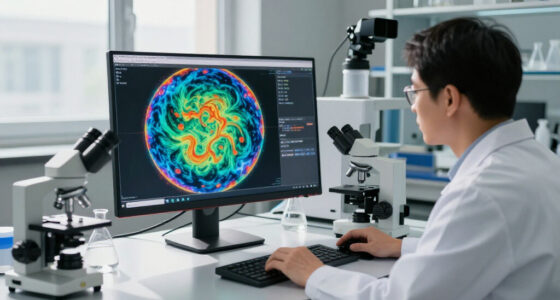
Dr. Lisa Chen, a marine biologist involved in the research, explained that the team used high-resolution imaging to monitor wound closure in live specimens. They identified that the process involves a rapid activation of cellular migration and tissue remodeling, driven by specific proteins and signaling pathways unique to these creatures.
While the exact biological mechanisms remain under investigation, initial findings suggest that jellyfish possess specialized cells and molecular tools that enable this swift regeneration. Scientists hope to isolate these factors to understand how they might be applied to human medicine.
Potential Medical Breakthroughs from Jellyfish Healing
The ability of jellyfish to heal wounds rapidly could revolutionize regenerative medicine, offering new avenues for developing treatments for injuries, burns, and chronic wounds. Understanding the underlying biological processes may lead to the creation of novel drugs or bioengineered tissues that mimic this natural healing capability.
Experts emphasize that translating these findings into human applications will require extensive research and testing. Nevertheless, the discovery underscores the importance of studying marine organisms as sources of innovative biomedical solutions.
As an affiliate, we earn on qualifying purchases.
Previous Research on Marine Regeneration and Wound Healing
Marine animals have long been studied for their regenerative abilities, with species like starfish and sea cucumbers demonstrating remarkable tissue regrowth. However, the rapid wound closure observed in jellyfish—sometimes within minutes—stands out as particularly extraordinary.
Scientists have been increasingly interested in jellyfish due to their simple body structure and unique biological features. Prior research has identified some molecules involved in their cellular processes, but the recent findings on wound healing speed are novel and significant.
This research builds on earlier studies from the early 2020s that explored jellyfish’s cellular responses to injury, but the recent focus on the speed of healing marks a new frontier.
“The rapid wound closure we observed in jellyfish is unlike anything seen in other animals. It suggests they have evolved specialized mechanisms for tissue repair that could inspire new medical therapies.”
— Dr. Lisa Chen
regenerative medicine research tools
As an affiliate, we earn on qualifying purchases.
As an affiliate, we earn on qualifying purchases.
Unanswered Questions About Jellyfish Healing Mechanisms
It remains unclear exactly which cellular and molecular processes enable jellyfish to heal so quickly, and whether these can be safely replicated or adapted for human use. Further research is needed to isolate specific proteins or genes involved.
Additionally, it is not yet confirmed how universal this ability is across different jellyfish species or how environmental factors might influence the healing process.
bioengineering tissue repair products
As an affiliate, we earn on qualifying purchases.
As an affiliate, we earn on qualifying purchases.
Next Steps in Jellyfish Wound-Healing Research
Researchers plan to conduct detailed molecular analyses to identify the key proteins and pathways involved in jellyfish rapid healing. They also aim to test whether these mechanisms can be replicated in laboratory-grown tissues or cell cultures.
Further studies will explore the potential for developing bio-inspired materials or drugs that mimic jellyfish’s regenerative abilities, with the goal of eventual clinical application.
advanced wound dressings for rapid healing
As an affiliate, we earn on qualifying purchases.
As an affiliate, we earn on qualifying purchases.
Key Questions
How do jellyfish heal wounds so quickly?
Scientists believe it involves rapid activation of cellular migration and tissue remodeling, driven by specific proteins and signaling pathways, but the exact mechanisms are still being studied.
Could this discovery lead to new human treatments?
Potentially, yes. If researchers can identify and replicate the biological processes involved, it could inspire new therapies for injuries, burns, and chronic wounds.
Are all jellyfish capable of this rapid healing?
It is not yet confirmed whether this ability is universal among jellyfish species or limited to specific ones like Cassiopea and Aurelia.
When might this research lead to practical medical applications?
It is still in the early research phase. Developing practical treatments could take several years, depending on the progress of ongoing studies and clinical trials.
Source: hn
Fall Picks
fall essentials
As an affiliate, we earn on qualifying purchases.